Updates
The enclosure has gone through two design studies and the v0 digital prototype. Nothing has been printed yet, and the firmware and agent connection have not started.
Progress log
Reading list expanded
Added six lab papers and four HRI 2024 papers covering robots that ask for help, overreliance on AI and physical presence.
Parts checked against local listings
Picked target modules available in Bangladesh and listed the measurements to take before printing.
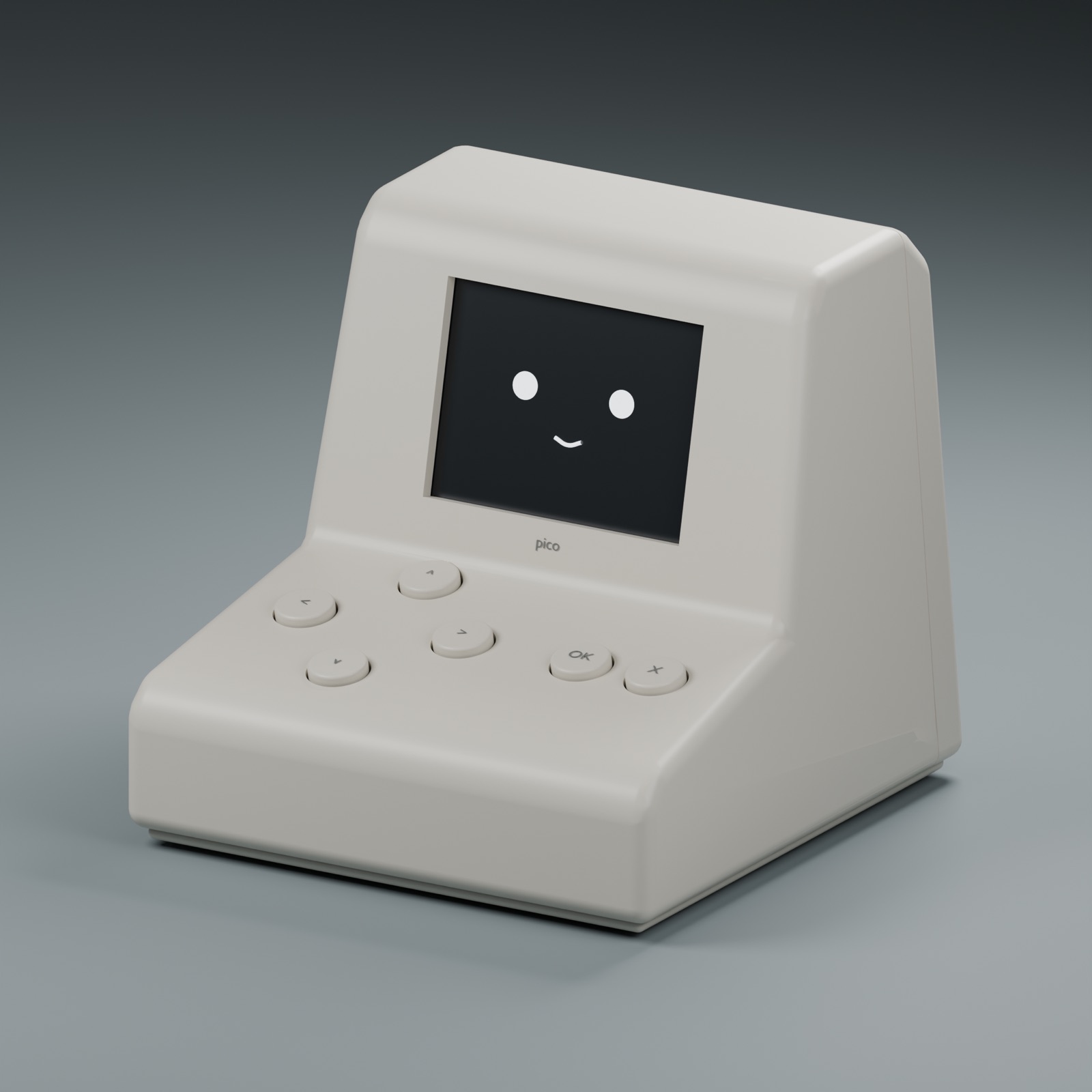
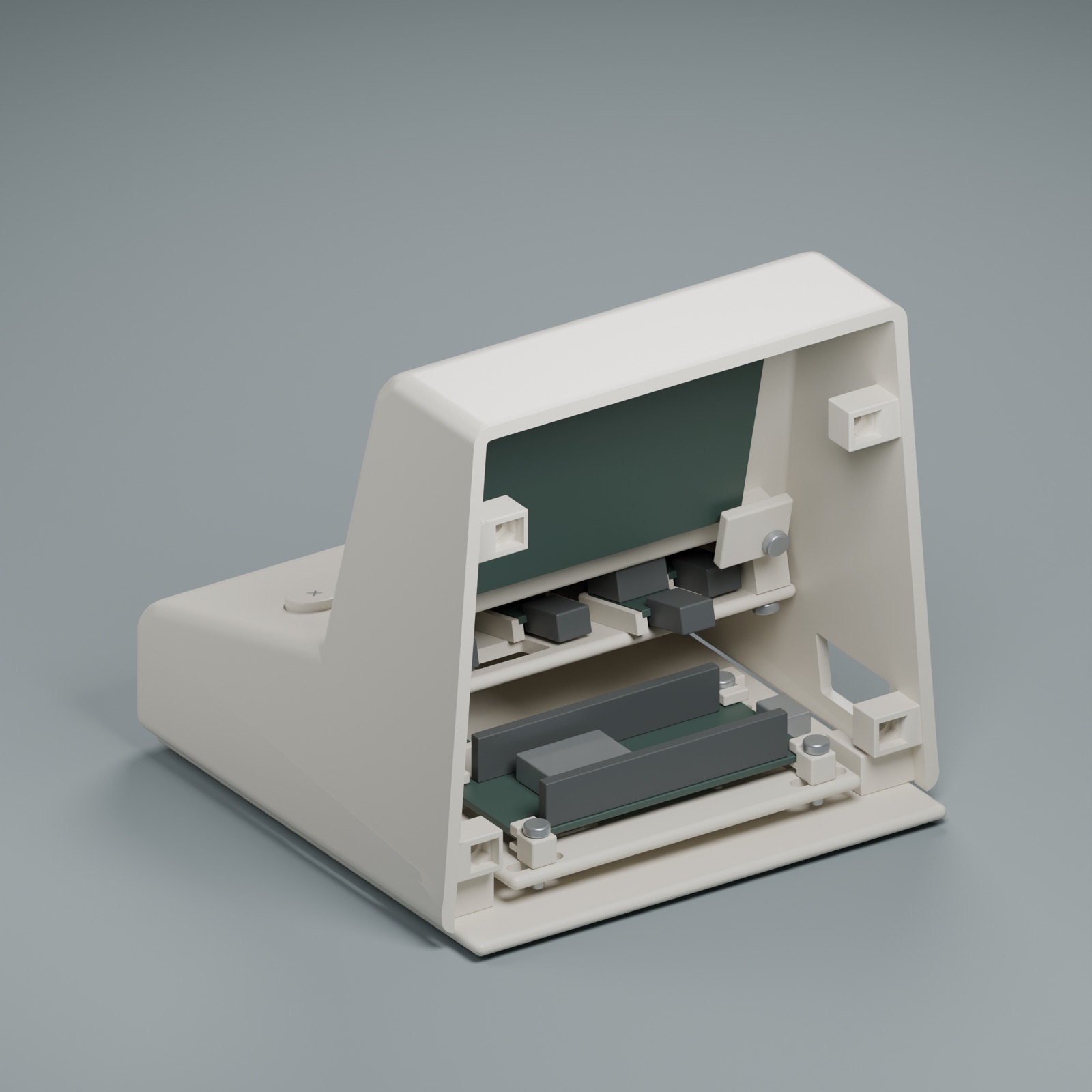
Pico v0 assembly prototype
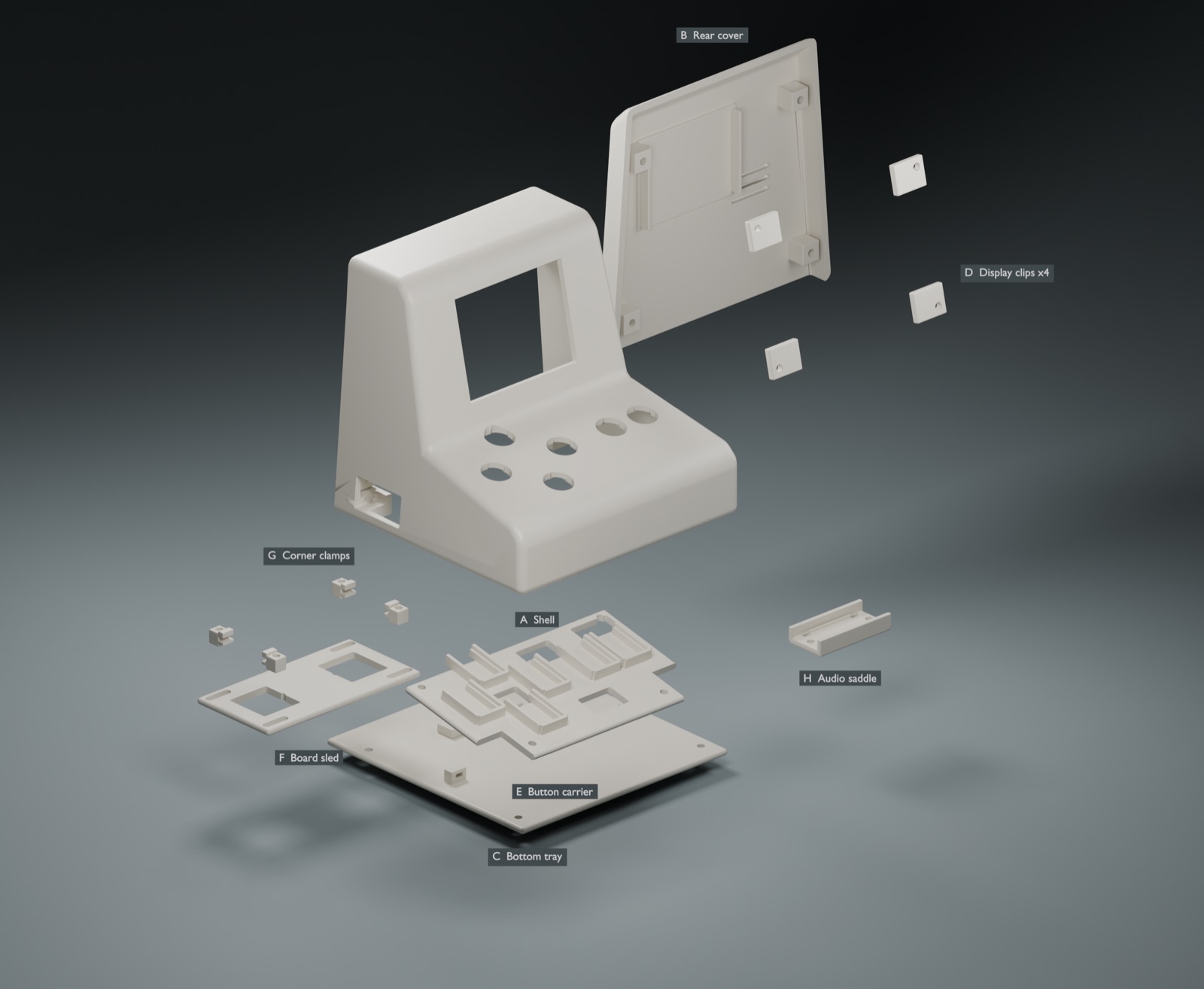
Removable rear cover and tray, display clips, button carrier, ESP32 sled and 20 printable STL files with interference checks.
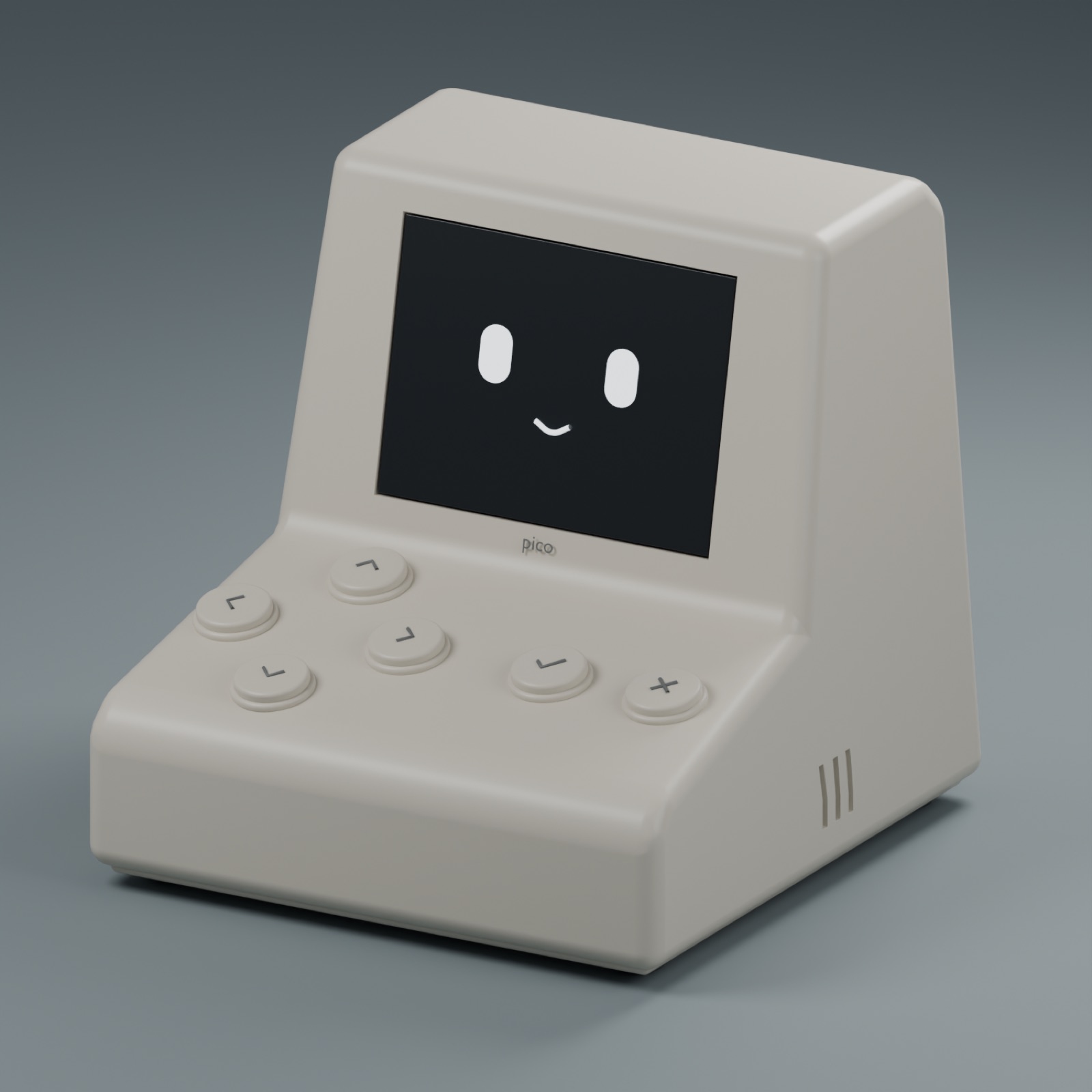
Compact body study
Shrunk the body to 100 × 104 × 100 mm, about 44% less desk space than the first layout.
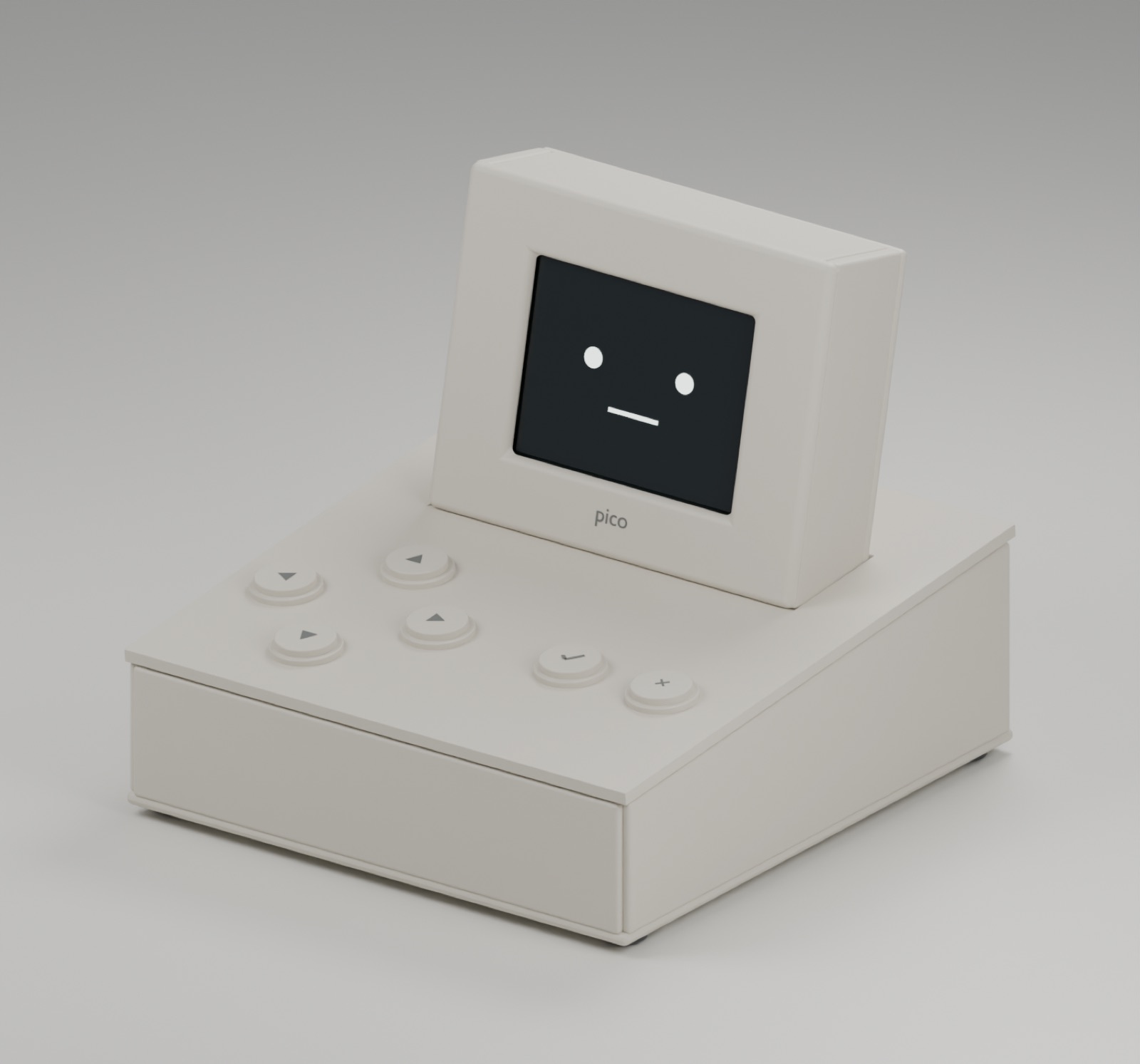
First layout study
First millimetre-scale Blender layout of the enclosure and components.
Hardware revisions
Reading list
These papers inform parts of Pico's design. None of them tests an approval device for coding agents.
| Paper | Source | Why it matters for Pico |
|---|---|---|
| Robots That Ask For Help: Uncertainty Alignment for Large Language Model Planners | Ren et al., CoRL 2023 | When an AI planner should stop and ask a person. |
| To Trust or to Think: Cognitive Forcing Functions Can Reduce Overreliance on AI | Buçinca, Malaya and Gajos, CSCW 2021 | Making people think before accepting AI output. |
| Tangible Bits: Towards Seamless Interfaces between People, Bits, and Atoms | Ishii and Ullmer, CHI 1997 | Physical controls and ambient displays. |
| Effects of Nonverbal Communication on Efficiency and Robustness in Human-Robot Teamwork | Breazeal et al., IROS 2005 | Expressive signals help people track robot state. |
| The Benefits of Interactions with Physically Present Robots over Video-Displayed Agents | Bainbridge et al., Int. J. Social Robotics 2011 | Physical presence versus an on-screen agent. |
| Asking Easy Questions: A User-Friendly Approach to Active Reward Learning | Bıyık et al., CoRL 2019 | Questions people can answer quickly. |
| Understanding Large-Language Model (LLM)-powered Human-Robot Interaction | Kim, Lee and Mutlu, HRI 2024 | Physical LLM robot versus text and voice agents. |
| Reactive or Proactive? How Robots Should Explain Failures | LeMasurier et al., HRI 2024 | How to present the error state. |
| When Do People Want an Explanation from a Robot? | Wachowiak et al., HRI 2024 | When to show more context on screen. |
| Dimensional Design of Emotive Sounds for Robots | Wolfe, Su and Wang, HRI 2024 | Designing notification sounds. |