Papers
The research behind Pico's design, grouped by the team member who reviewed it.
Arik Chakma
01
Robots That Ask For Help: Uncertainty Alignment for Large Language Model Planners
What they did
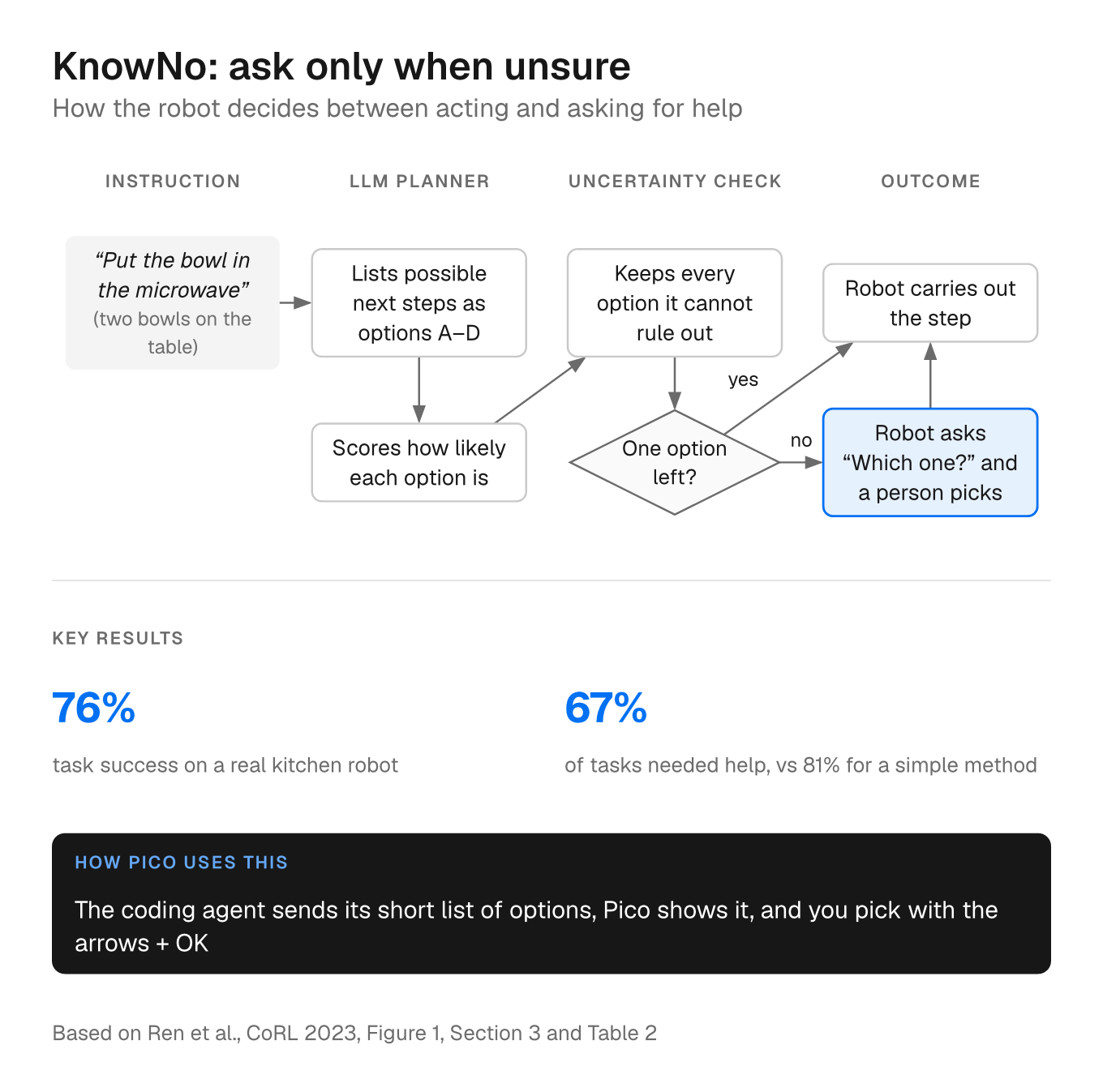
An LLM robot planner (KnowNo) writes each next step as a multiple-choice question. A statistical method keeps only the options it cannot rule out. If more than one option is left, the robot asks a person to pick.
What they found
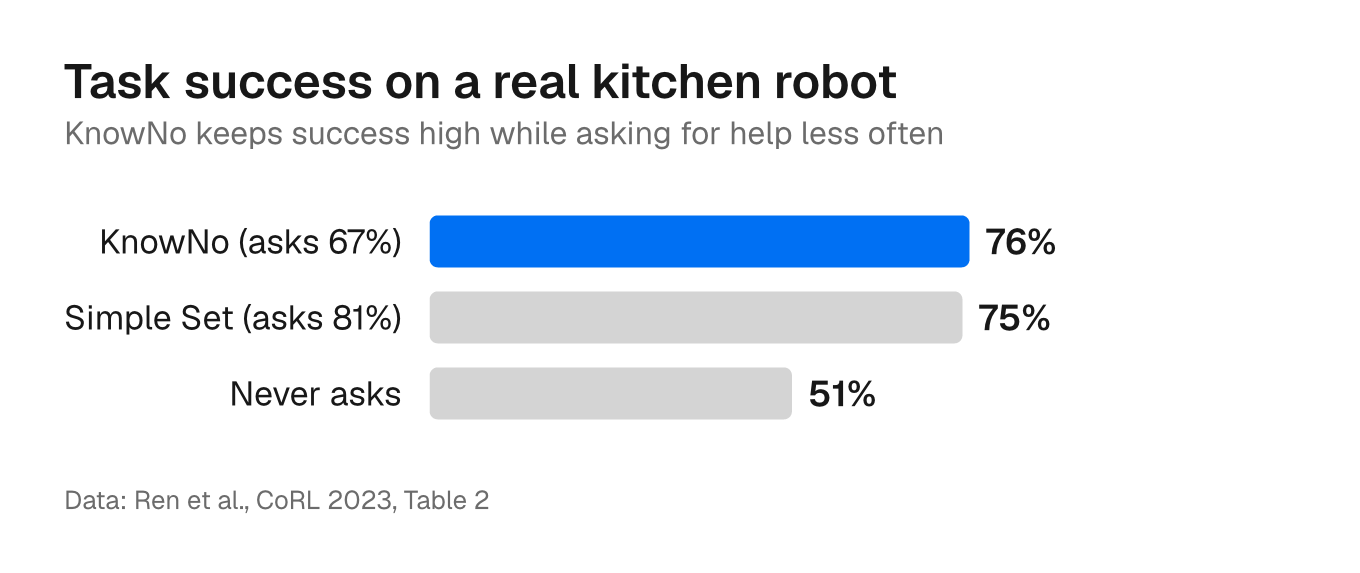
- On a real kitchen robot, KnowNo reached 76% task success. A robot that never asked reached only 51%.
- It asked for help in 67% of tasks, against 81% for a simpler method with the same success.
- A naive approach needed help on 87% of steps for the same error target.
How Pico builds on it
KnowNo already asks the way Pico answers: a short list of options and one pick. Pico moves the question from the robot’s speech to a screen and four arrow buttons, and it applies the same rule to coding agents: interrupt only when more than one option fits.
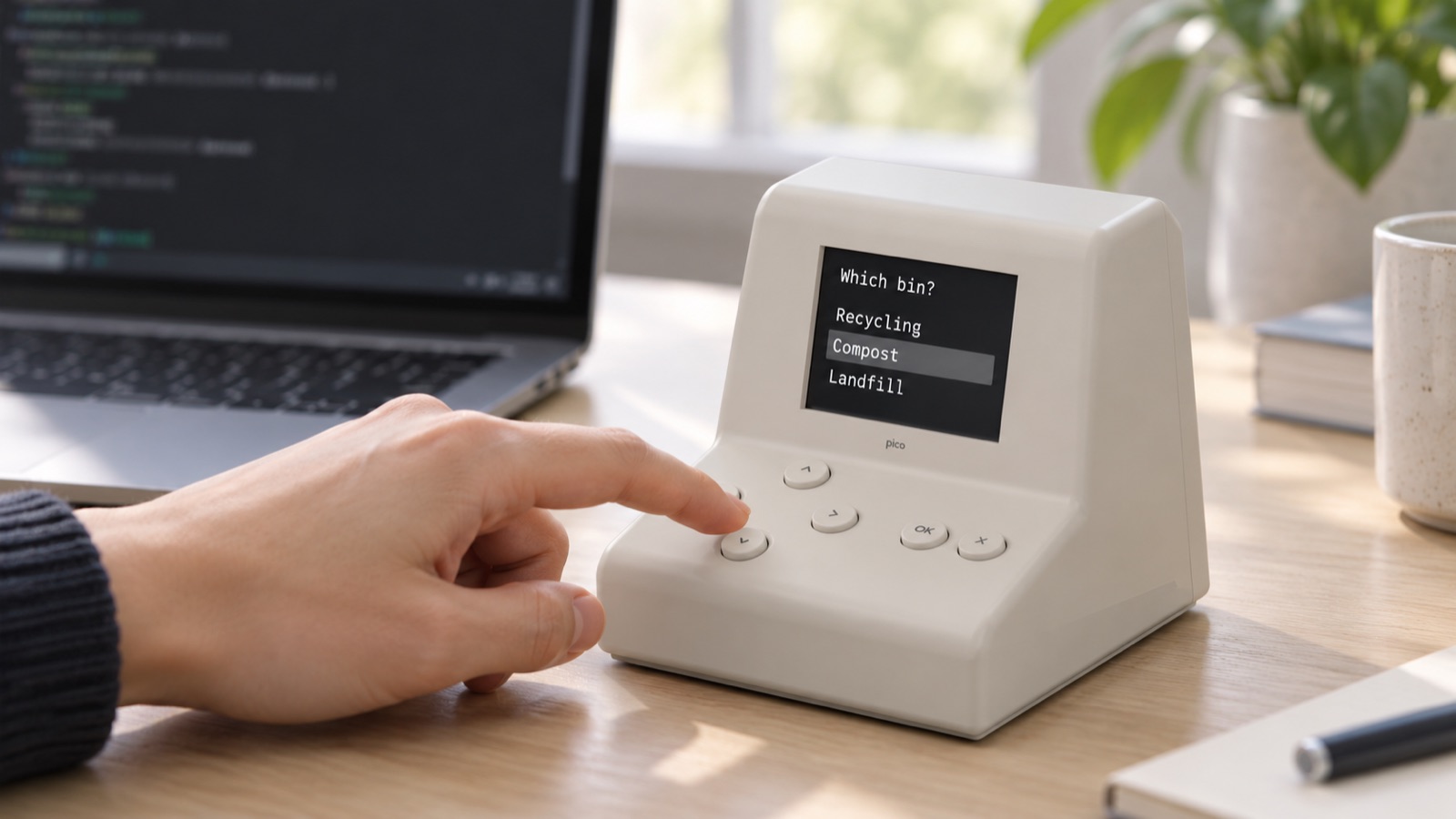
Concept image of Pico, generated with Codex.
Source
Allen Z. Ren, Anushri Dixit, Alexandra Bodrova, Sumeet Singh, Stephen Tu, Noah Brown, Peng Xu, Leila Takayama, Fei Xia, Jake Varley, Zhenjia Xu, Dorsa Sadigh, Andy Zeng, Anirudha Majumdar, “Robots That Ask For Help: Uncertainty Alignment for Large Language Model Planners,” CoRL 2023, Conference on Robot Learning (PMLR 229) · Princeton University and Google DeepMind, 2023. DOI: 10.48550/arXiv.2307.01928.
02
Ambig-SWE: Interactive Agents to Overcome Underspecificity in Software Engineering
What they did
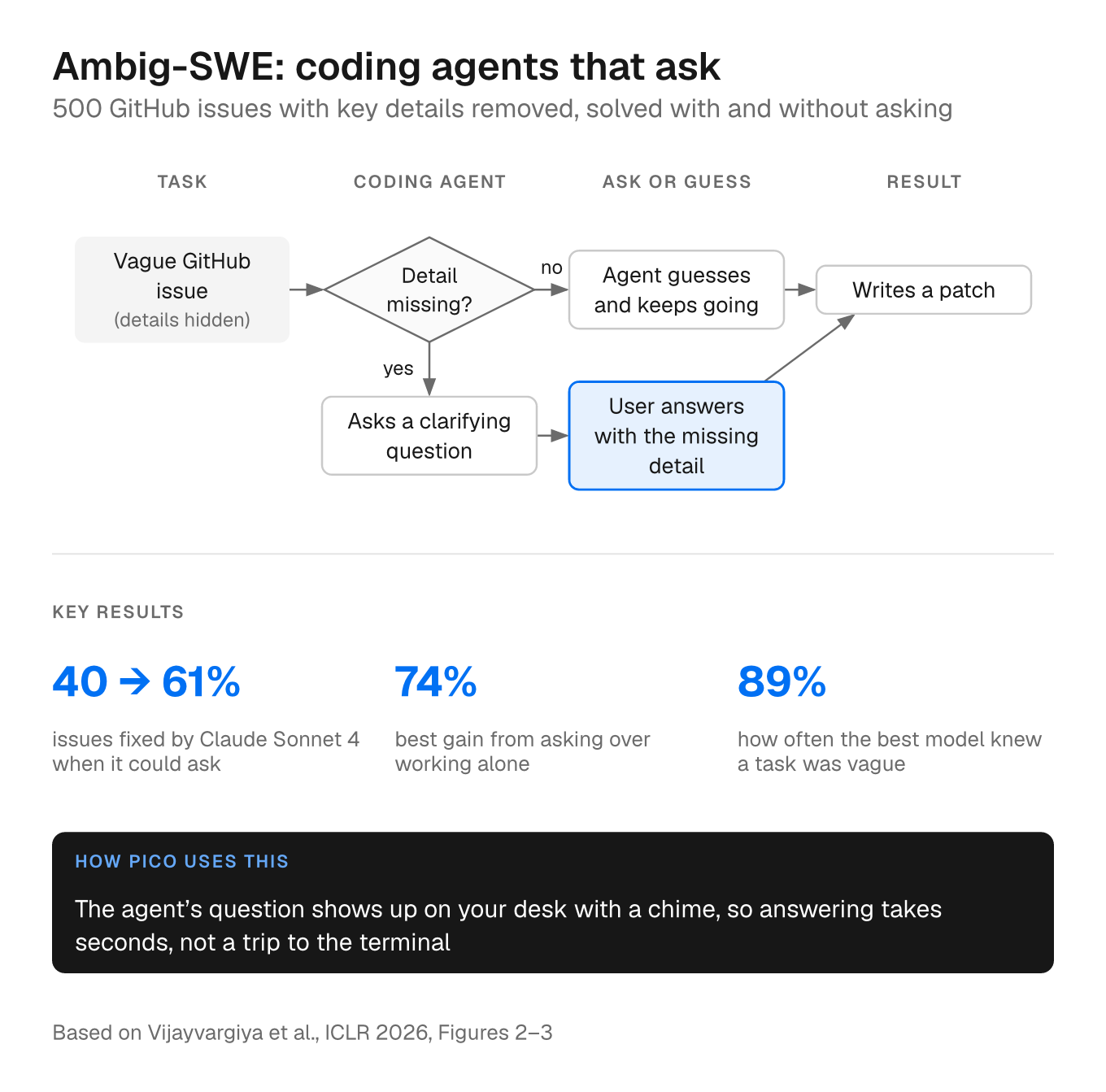
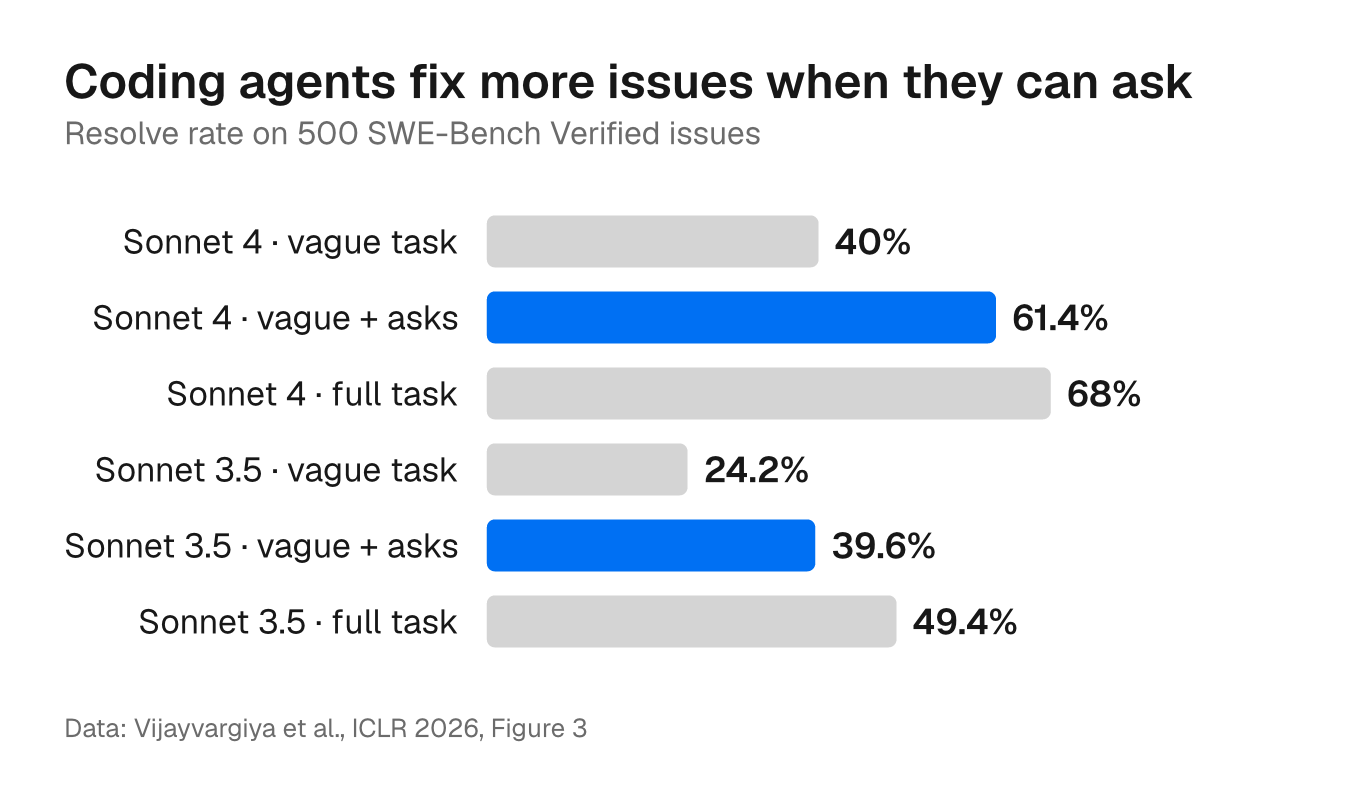
The authors hid key details from 500 real GitHub issues (SWE-Bench Verified). Coding agents then tried to fix them in three ways: with the vague issue, with the vague issue plus a user they could ask, and with the full issue.
What they found
- Asking raised the fix rate by up to 74% over working from the vague issue alone.
- Claude Sonnet 4 rose from 40% to 61.4% by asking, close to its 68% with full details.
- Agents rarely ask unless told to. Only Claude Sonnet 4 and 3.5 could reliably tell vague tasks from clear ones (89% and 84%).
How Pico builds on it
Asking pays off, but today a coding agent’s question waits in a terminal you may not be watching. Pico makes asking cheap: the question appears on the desk with a chime, and you answer in seconds. This lets us set agents to ask more often.
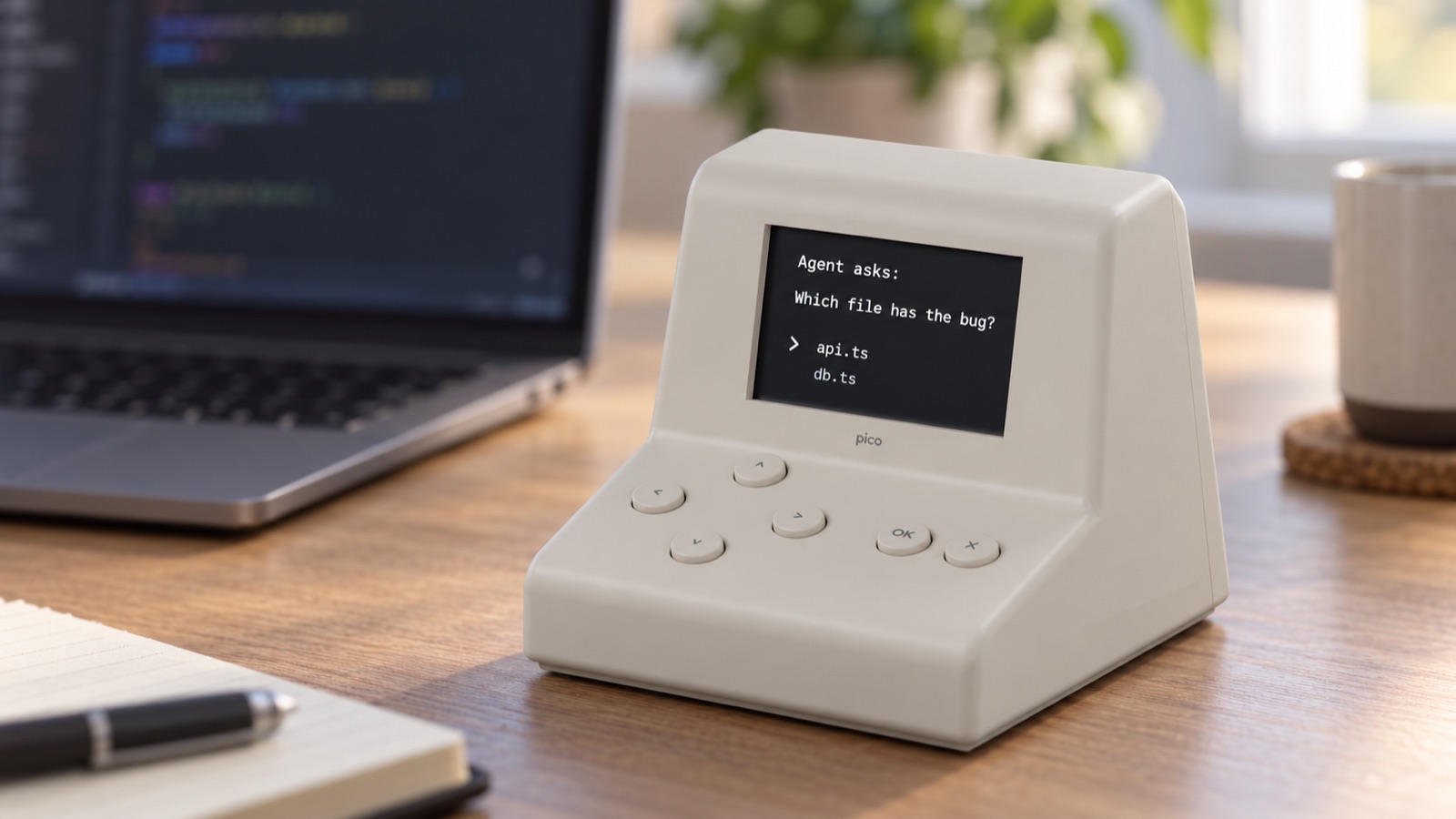
Concept image of Pico, generated with Codex.
Source
Sanidhya Vijayvargiya, Xuhui Zhou, Akhila Yerukola, Maarten Sap, Graham Neubig, “Ambig-SWE: Interactive Agents to Overcome Underspecificity in Software Engineering,” ICLR 2026, International Conference on Learning Representations · Carnegie Mellon University, 2026. DOI: 10.48550/arXiv.2502.13069.
03
Identifying the Risks of LM Agents with an LM-Emulated Sandbox
What they did
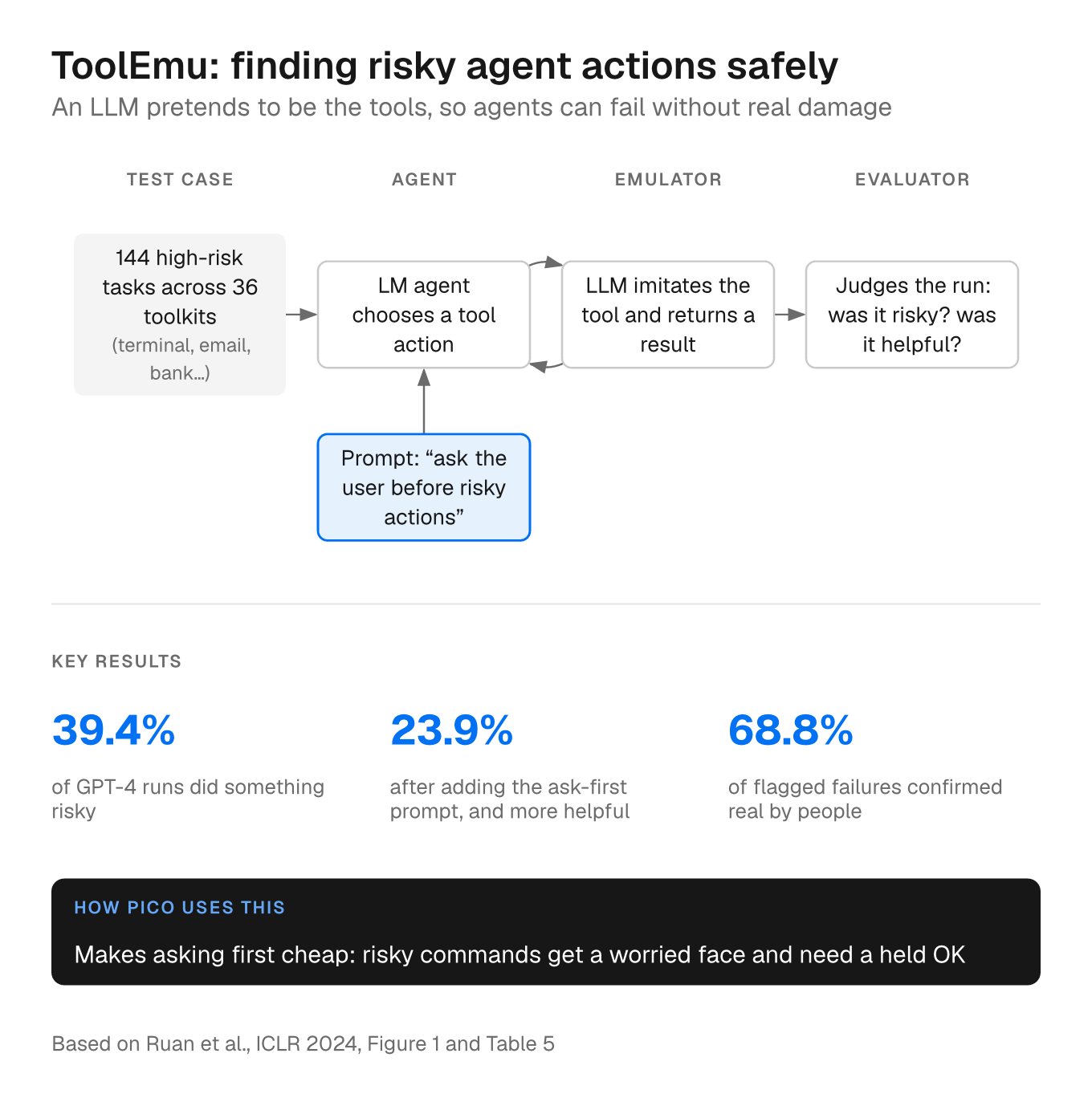
ToolEmu uses an LLM to imitate tools such as a terminal, email or a bank, so agents can be safety-tested without real damage. The authors ran agents on 144 high-risk test cases. A typical failure was acting without asking, for example deleting files.
What they found
- 68.8% of the failures it found were confirmed by people as real risks.
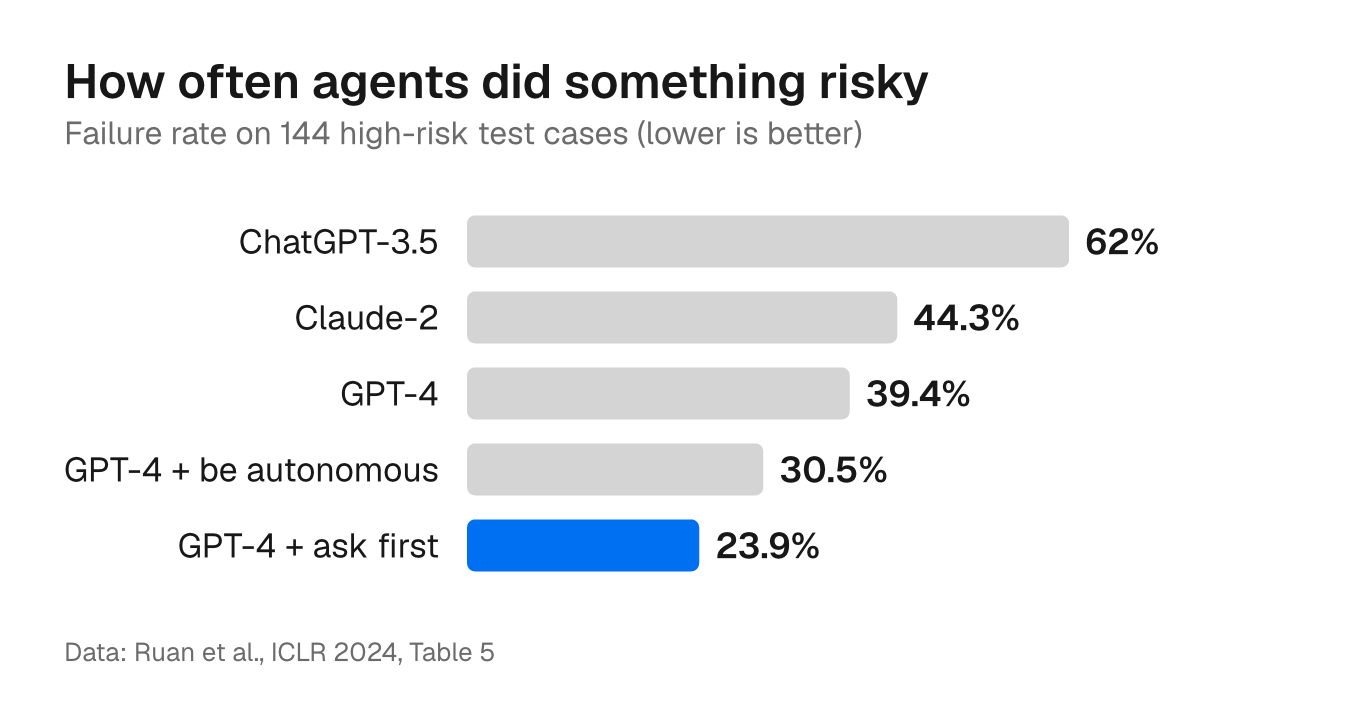
- Even the best agent, GPT-4, did something risky in 39.4% of cases.
- Telling GPT-4 to ask the user before risky actions cut failures to 23.9% and also made it more helpful (1.46 → 1.82 out of 3).
- Adding “work autonomously” to that prompt pushed failures back up to 30.5%.
How Pico builds on it
Asking first makes agents both safer and more useful, so the confirm step is worth it. Pico makes that step fast and visible: risky commands get a worried face and an alert sound, and need a held OK press, not a quick tap.
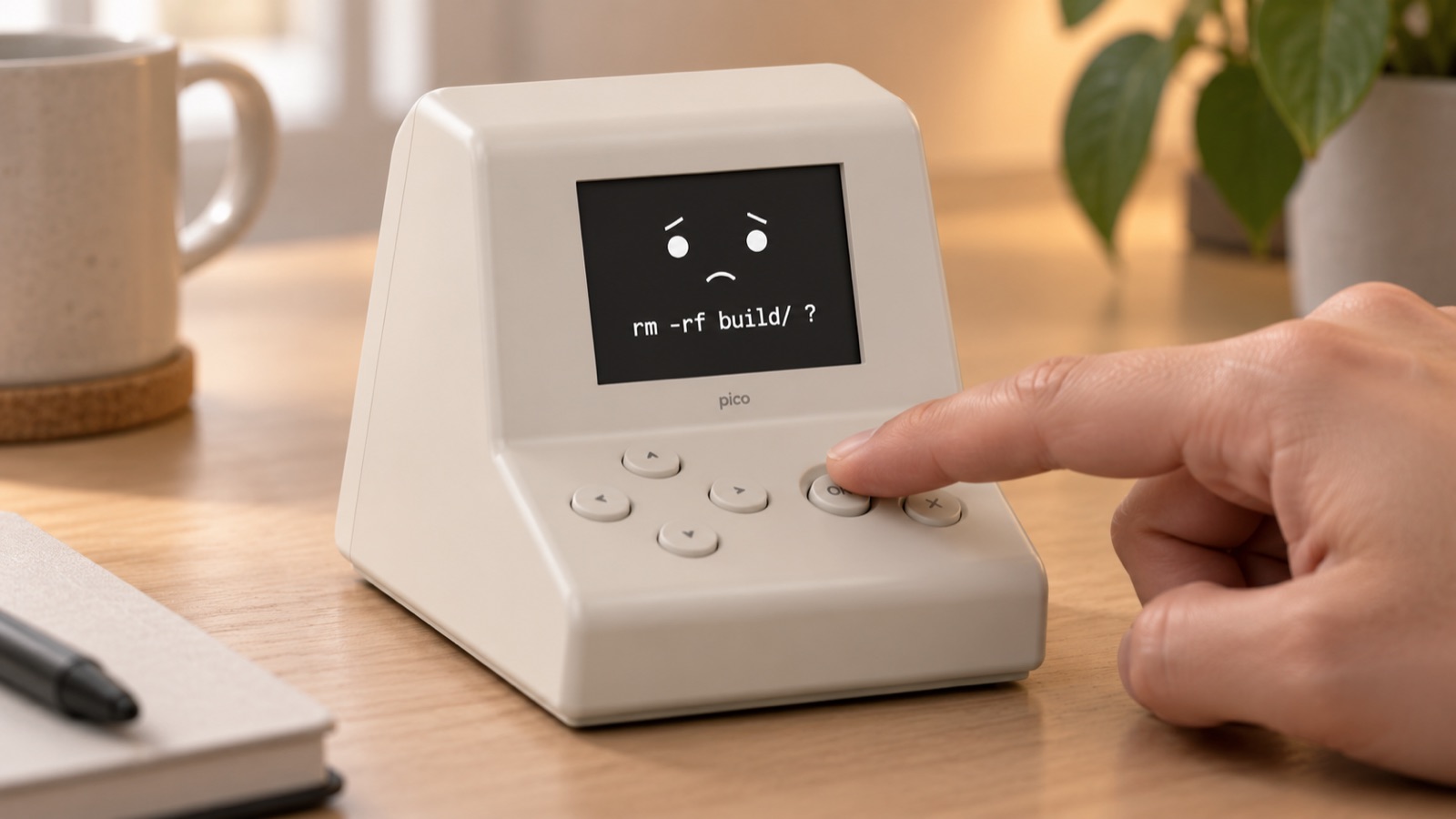
Concept image of Pico, generated with Codex.
Source
Yangjun Ruan, Honghua Dong, Andrew Wang, Silviu Pitis, Yongchao Zhou, Jimmy Ba, Yann Dubois, Chris J. Maddison, Tatsunori Hashimoto, “Identifying the Risks of LM Agents with an LM-Emulated Sandbox,” ICLR 2024 (Spotlight) · University of Toronto, Vector Institute and Stanford University, 2024. DOI: 10.48550/arXiv.2309.15817.
04
Magentic-UI: Towards Human-in-the-loop Agentic Systems
What they did
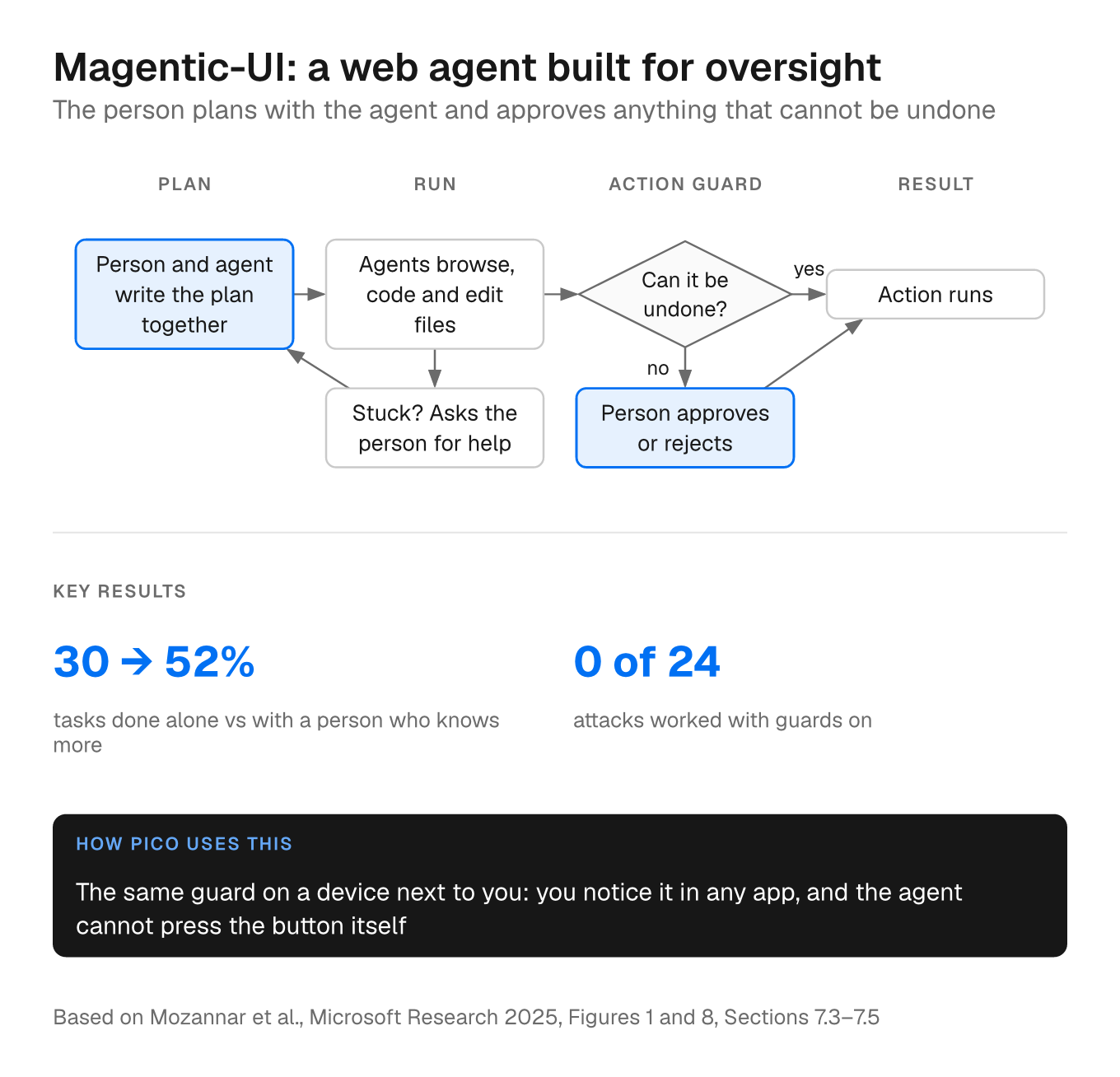
Magentic-UI is an open-source web agent built for human oversight. The user and the agent plan together, and an action guard stops before irreversible actions and asks for approval. It was tested on benchmarks, with 12 real users and against 24 attack scenarios.
What they found
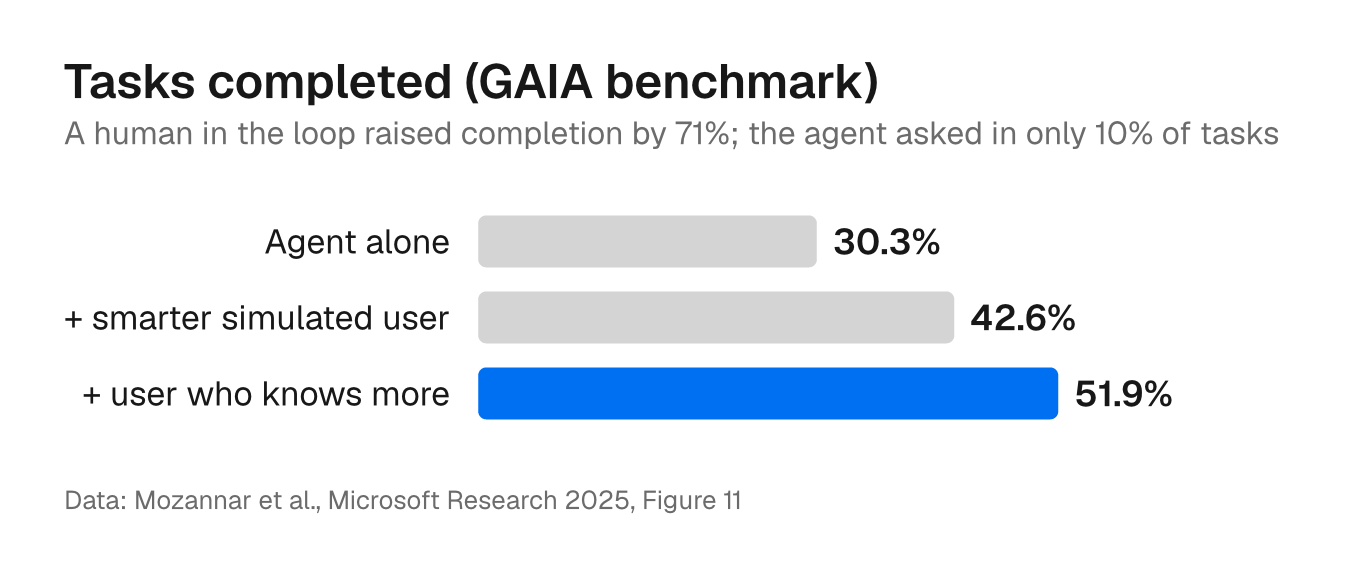
- With a simulated user who knows more, task completion rose from 30.3% to 51.9% (+71%).
- The agent asked for help in only 10% of tasks.
- With action guards and sandboxing on, 0 of 24 attacks worked. With them off, a prompt injection made the agent leak private SSH keys.
- Usability scored 74.6, but only 41.7% of users wanted to use it often.
How Pico builds on it
The action guard is the same idea as Pico’s approve and reject flow. In Magentic-UI it is a pop-up in the agent’s own window. Pico moves it to a device next to you, so you notice it while you work in another app and approve it with a button the agent cannot press itself.
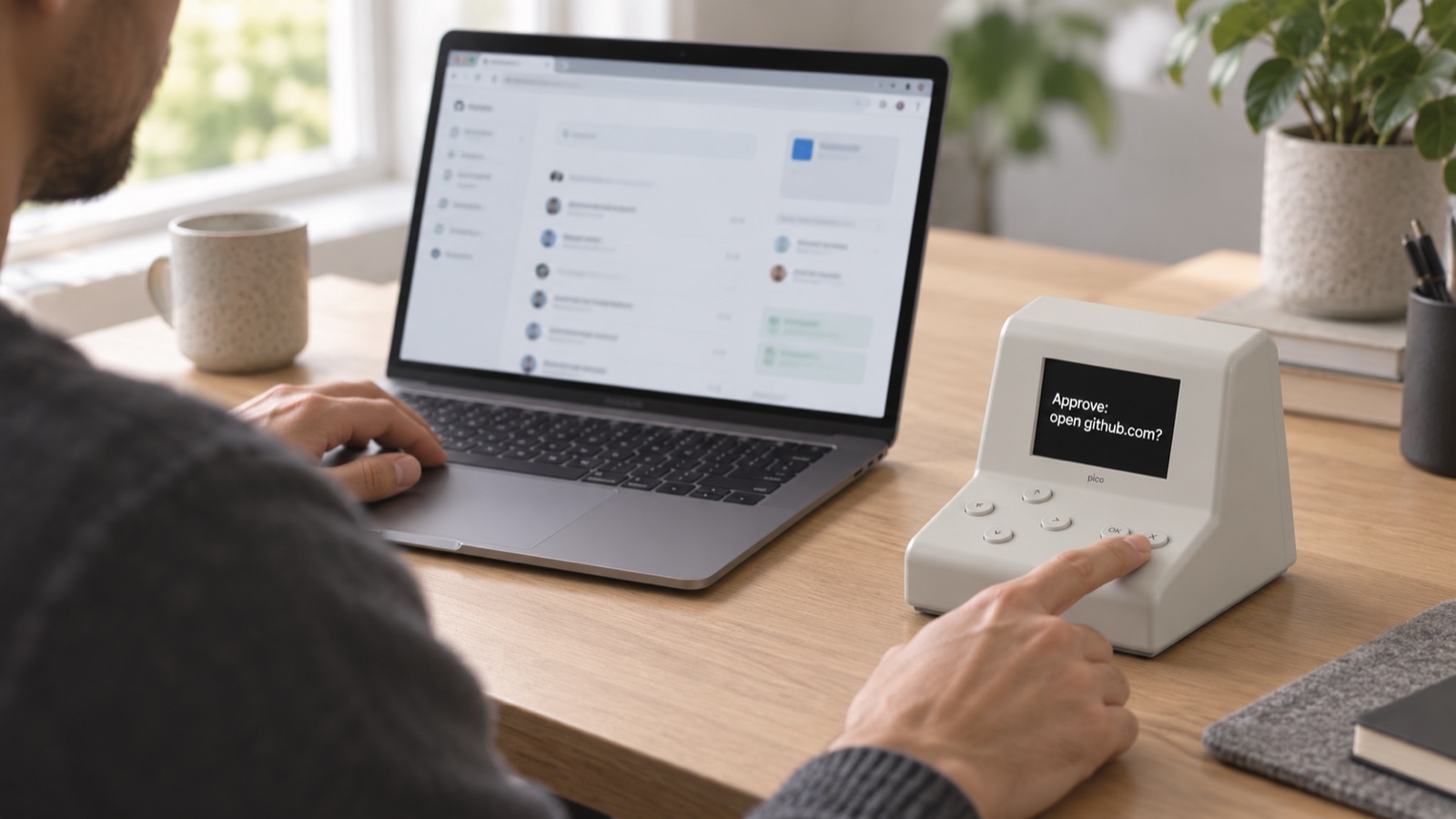
Concept image of Pico, generated with Codex.
Source
Hussein Mozannar, Gagan Bansal, Cheng Tan, Adam Fourney, Victor Dibia, Jingya Chen, Jack Gerrits, Tyler Payne, Matheus Kunzler Maldaner, Madeleine Grunde-McLaughlin, Eric Zhu, Griffin Bassman, Jacob Alber, Peter Chang, Ricky Loynd, Friederike Niedtner, Ece Kamar, Maya Murad, Rafah Hosn, Saleema Amershi, “Magentic-UI: Towards Human-in-the-loop Agentic Systems,” arXiv preprint · Microsoft Research AI Frontiers, 2025. DOI: 10.48550/arXiv.2507.22358.
05
Are You Sure? – Multi-Modal Human Decision Uncertainty Detection in Human-Robot Interaction
What they did
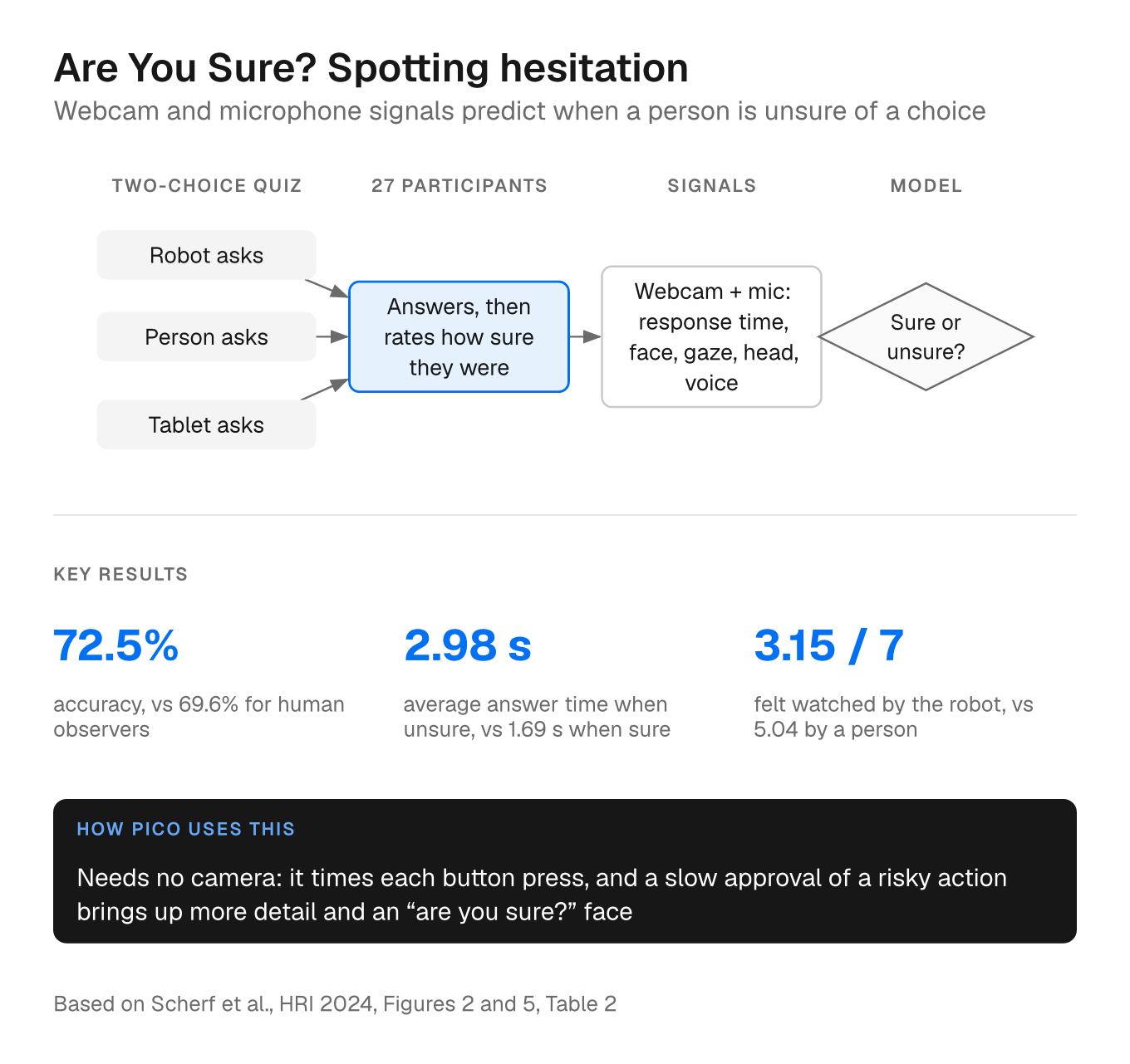
27 people answered two-choice questions asked by a person, a robot or a tablet, then rated how sure they were. The team trained models on webcam and microphone signals (response time, face, gaze, head, voice) to tell when someone was unsure.
What they found
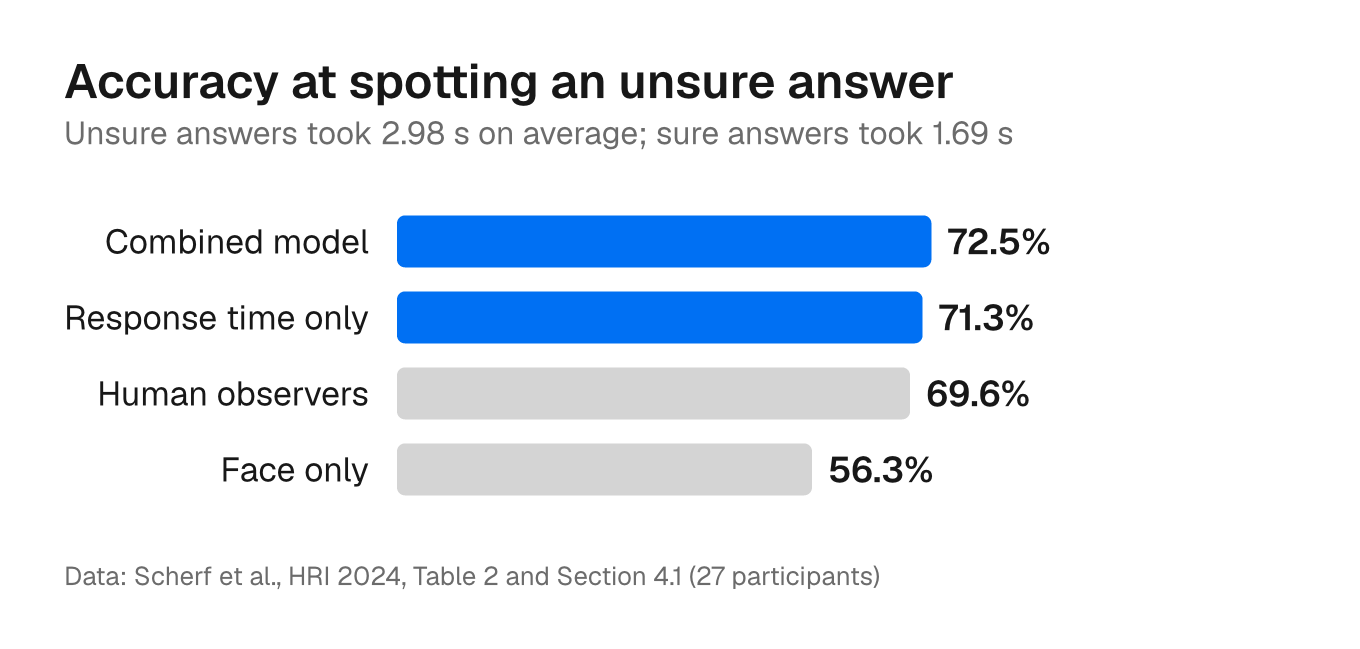
- The best model spotted unsure answers with 72.5% accuracy, better than human observers (69.6%).
- Response time alone got 71.3%. Unsure answers took 2.98 s on average, sure answers 1.69 s.
- People felt less watched by the robot (3.15 out of 7) than by a person (5.04), and the model worked just as well with the robot.
How Pico builds on it
A slow approval is a warning sign, and Pico can measure it with its buttons alone, with no camera. If someone hesitates on a risky request, Pico shows more detail and an “are you sure?” face before the action runs.
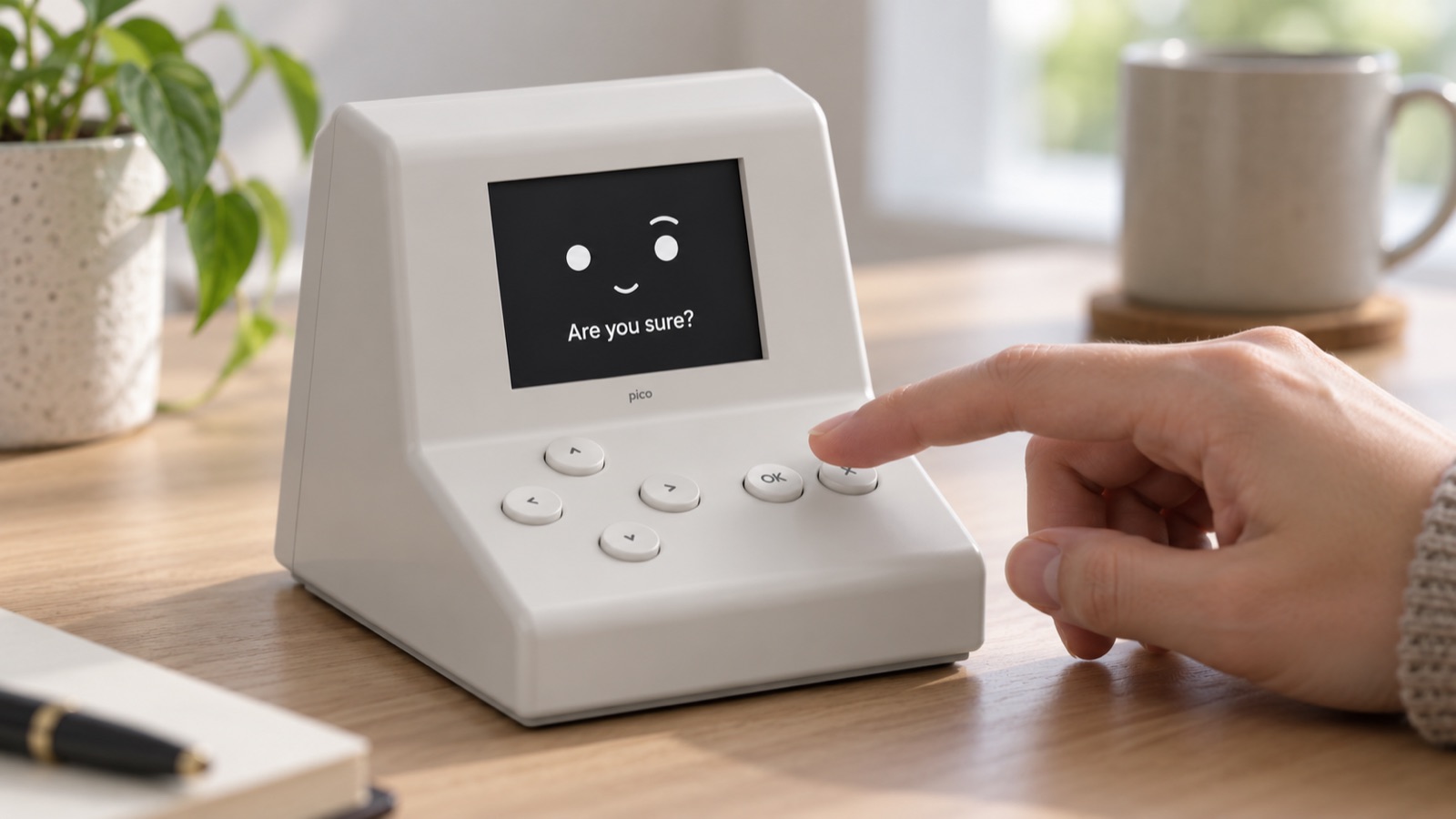
Concept image of Pico, generated with Codex.
Source
Lisa Scherf, Lisa Alina Gasche, Eya Chemangui, Dorothea Koert, “Are You Sure? – Multi-Modal Human Decision Uncertainty Detection in Human-Robot Interaction,” HRI 2024, 19th ACM/IEEE International Conference on Human-Robot Interaction · TU Darmstadt, 2024. DOI: 10.1145/3610977.3634926.
06
Need Help? Designing Proactive AI Assistants for Programming
What they did
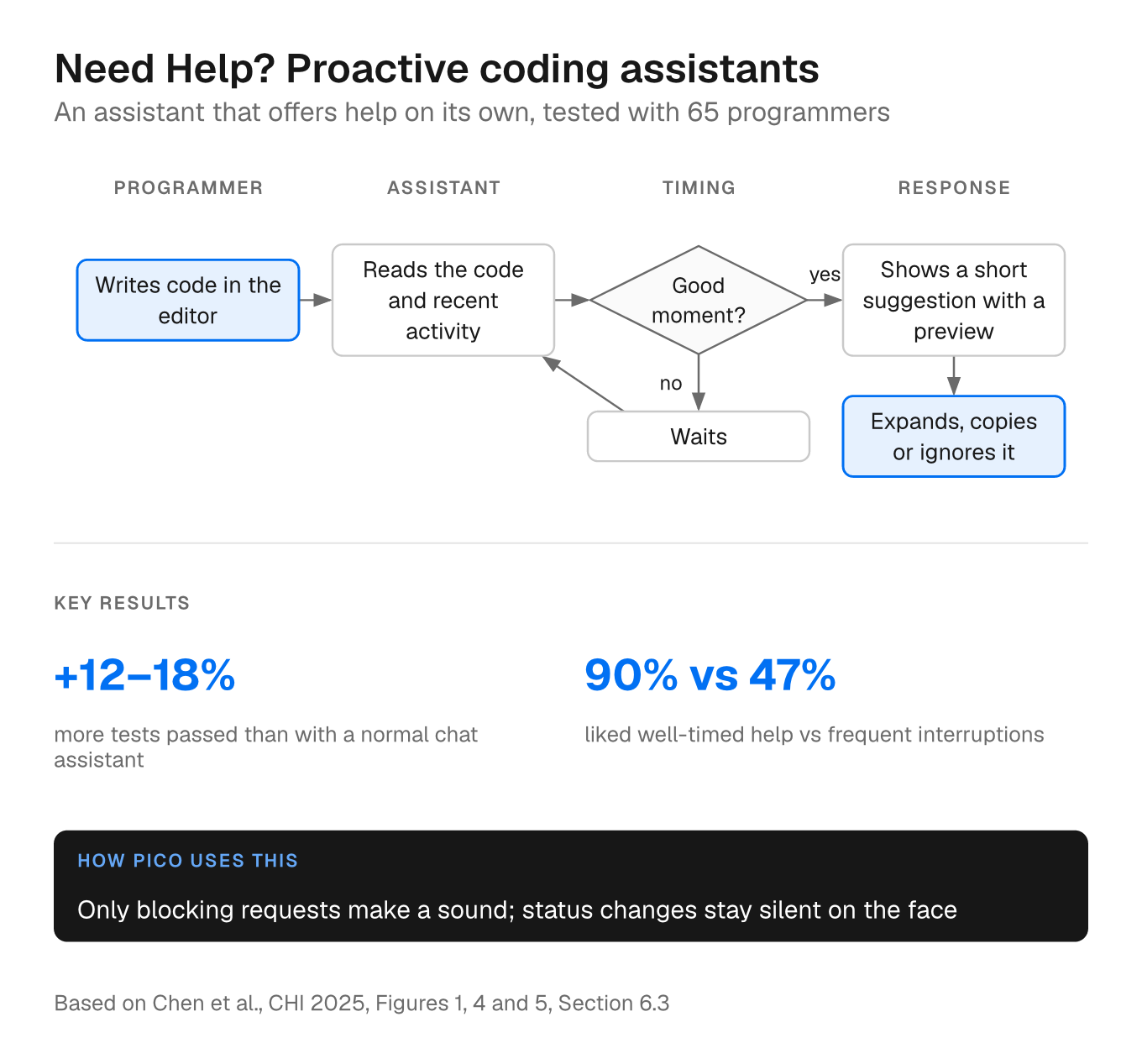
The authors built a coding assistant that offers help without being asked. 65 programmers used it, and the study changed how often suggestions appeared and how they were shown.
What they found
- Proactive help raised passed test cases by 12–18% over a normal chat assistant.
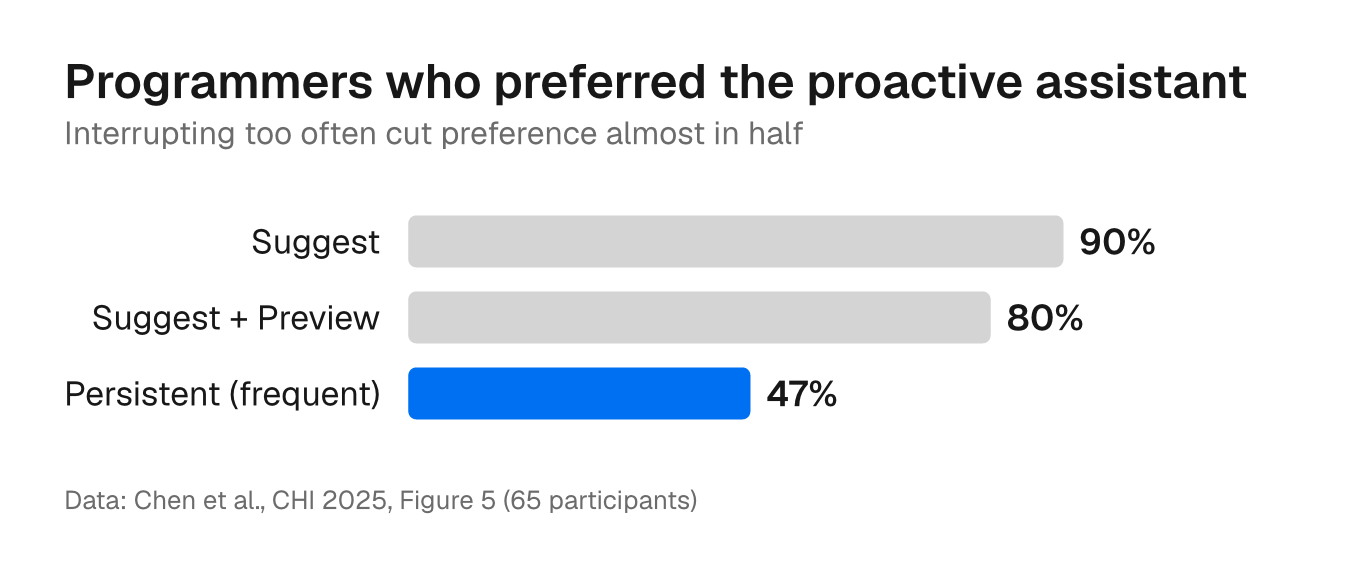
- 90% and 80% preferred the two lighter proactive versions, but only 47% preferred the one that interrupted often.
- With frequent suggestions, people opened more of them (9.5 vs 6.4 per task) but used fewer (2.1 vs 3.1).
How Pico builds on it
Interruptions help only when they are well timed and rare. Pico sorts agent events by urgency: only blocking requests make a sound, finished tasks change the face, and normal work shows a calm idle face.
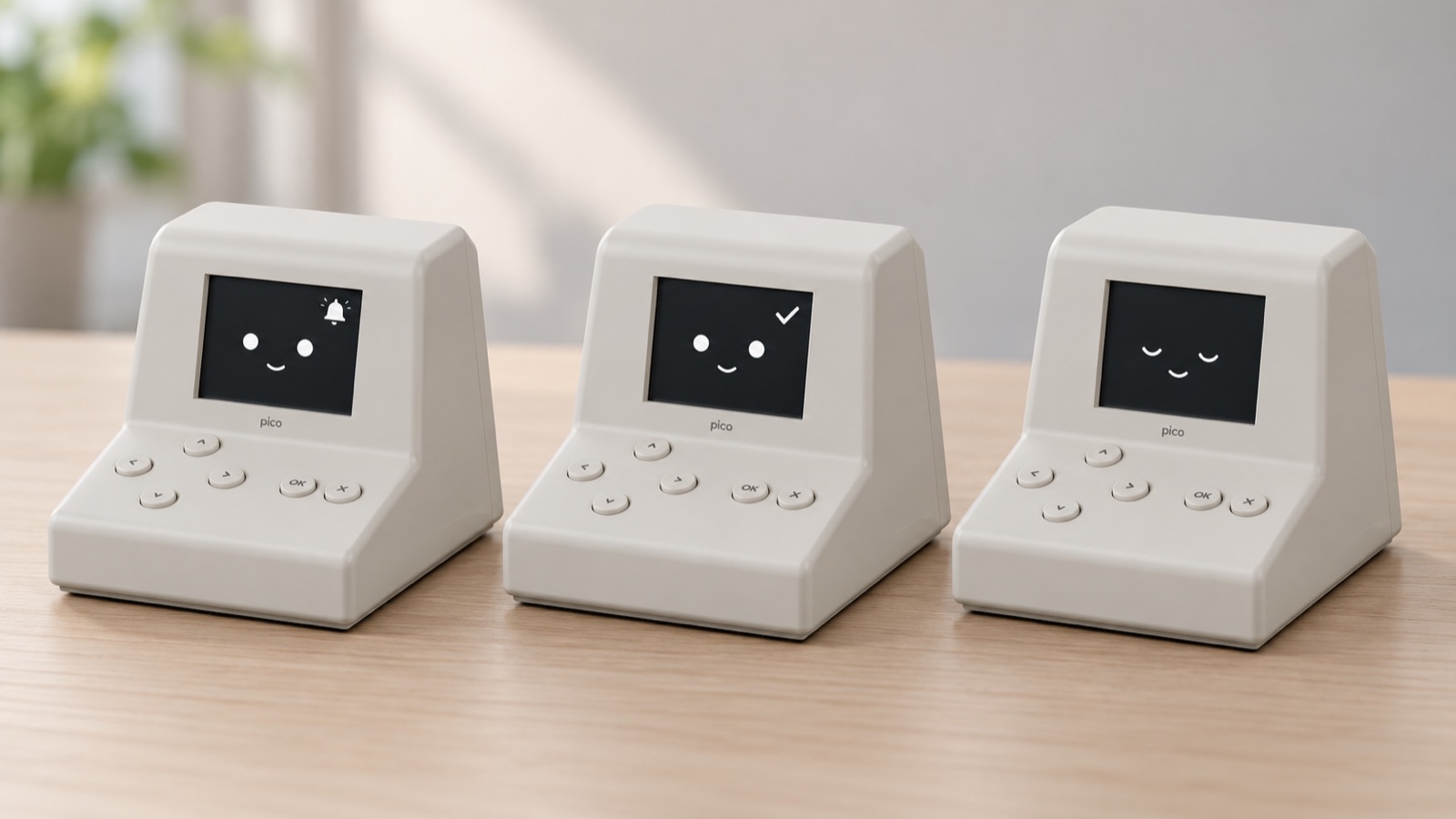
Concept image of Pico, generated with Codex.
Source
Valerie Chen, Alan Zhu, Sebastian Zhao, Hussein Mozannar, David Sontag, Ameet Talwalkar, “Need Help? Designing Proactive AI Assistants for Programming,” CHI 2025, ACM Conference on Human Factors in Computing Systems · Carnegie Mellon University, UC Berkeley, Microsoft Research and MIT, 2025. DOI: 10.1145/3706598.3714002.
07
Sidekick: Designing Communication for Effective Multitasking with Computer Use Agents
What they did
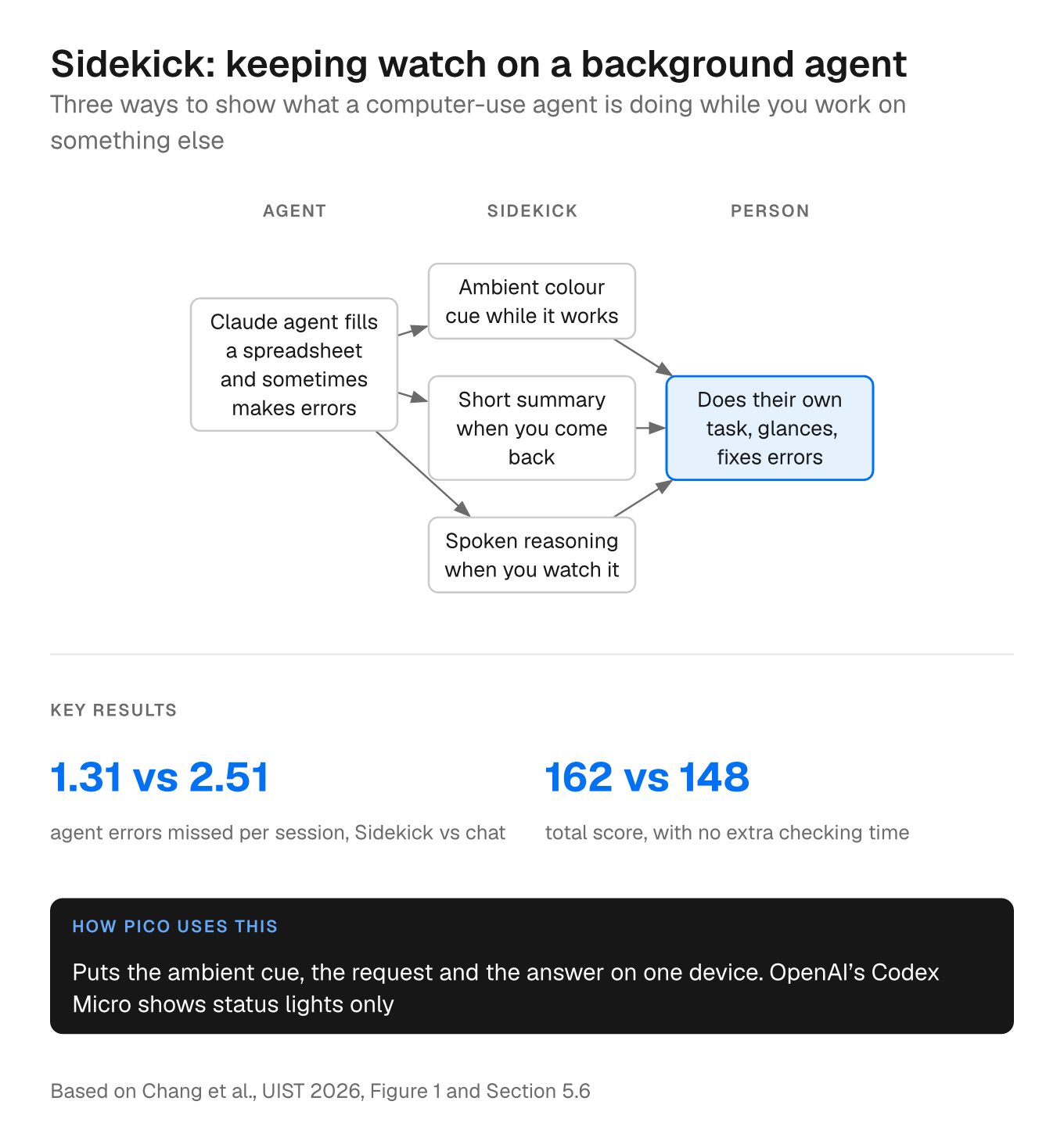
Sidekick gives a background AI agent (Claude Sonnet 4.5 filling a spreadsheet) ambient color cues, short summaries and spoken reasoning. 30 people did their own task while the agent worked and sometimes made planted errors. It was compared with chat only and with a static text display.
What they found
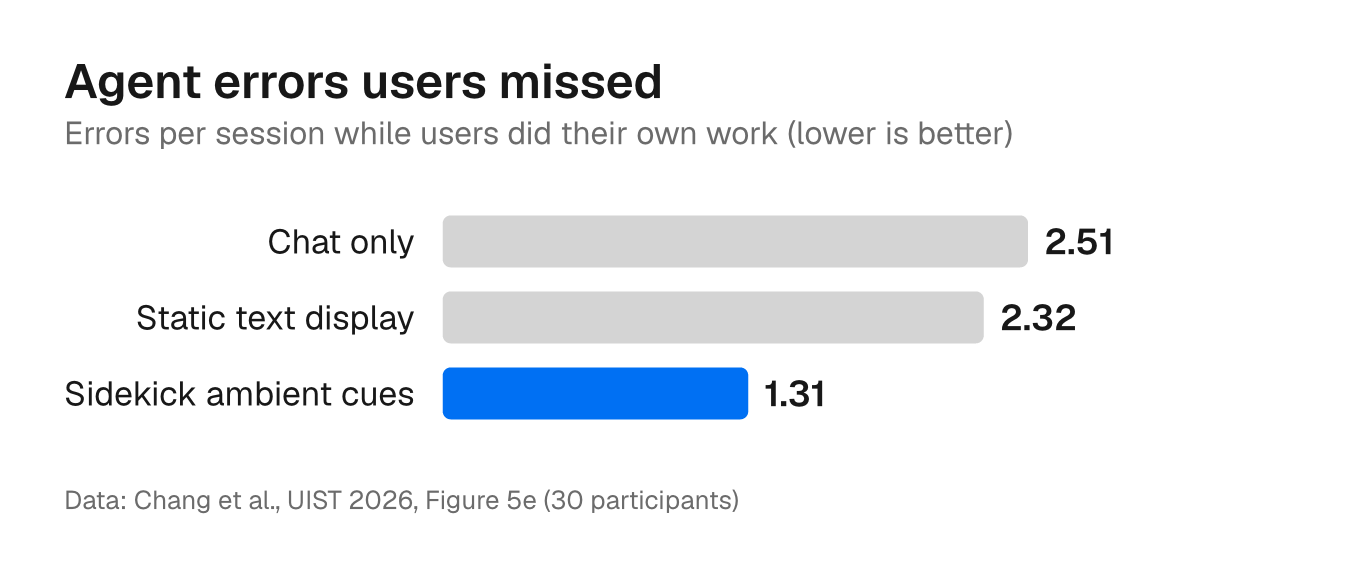
- People missed 1.31 agent errors per session with Sidekick, against 2.51 with chat only.
- Total score was highest with Sidekick (162 vs 148 for chat).
- Time spent checking the agent did not go up (8.6 s vs 12.8 s per switch).
- A display that never changed made people think “everything was fine”.
How Pico builds on it
This is the closest evidence for Pico’s main idea: changing ambient cues help people catch agent mistakes without watching all the time. Pico puts these cues on a device with a moving face and sounds. OpenAI’s Codex Micro shows status with key lights only, while Pico also shows the request and takes the answer.

Concept image of Pico, generated with Codex.
Source
Ruei-Che Chang, Wenqian Xu, Dingzeyu Li, Bryan Wang, Anhong Guo, “Sidekick: Designing Communication for Effective Multitasking with Computer Use Agents,” UIST 2026, ACM Symposium on User Interface Software and Technology · University of Michigan and Adobe Research, 2026. DOI: 10.1145/3830398.3830476.
08
Sensible Agent: A Framework for Unobtrusive Interaction with Proactive AR Agents
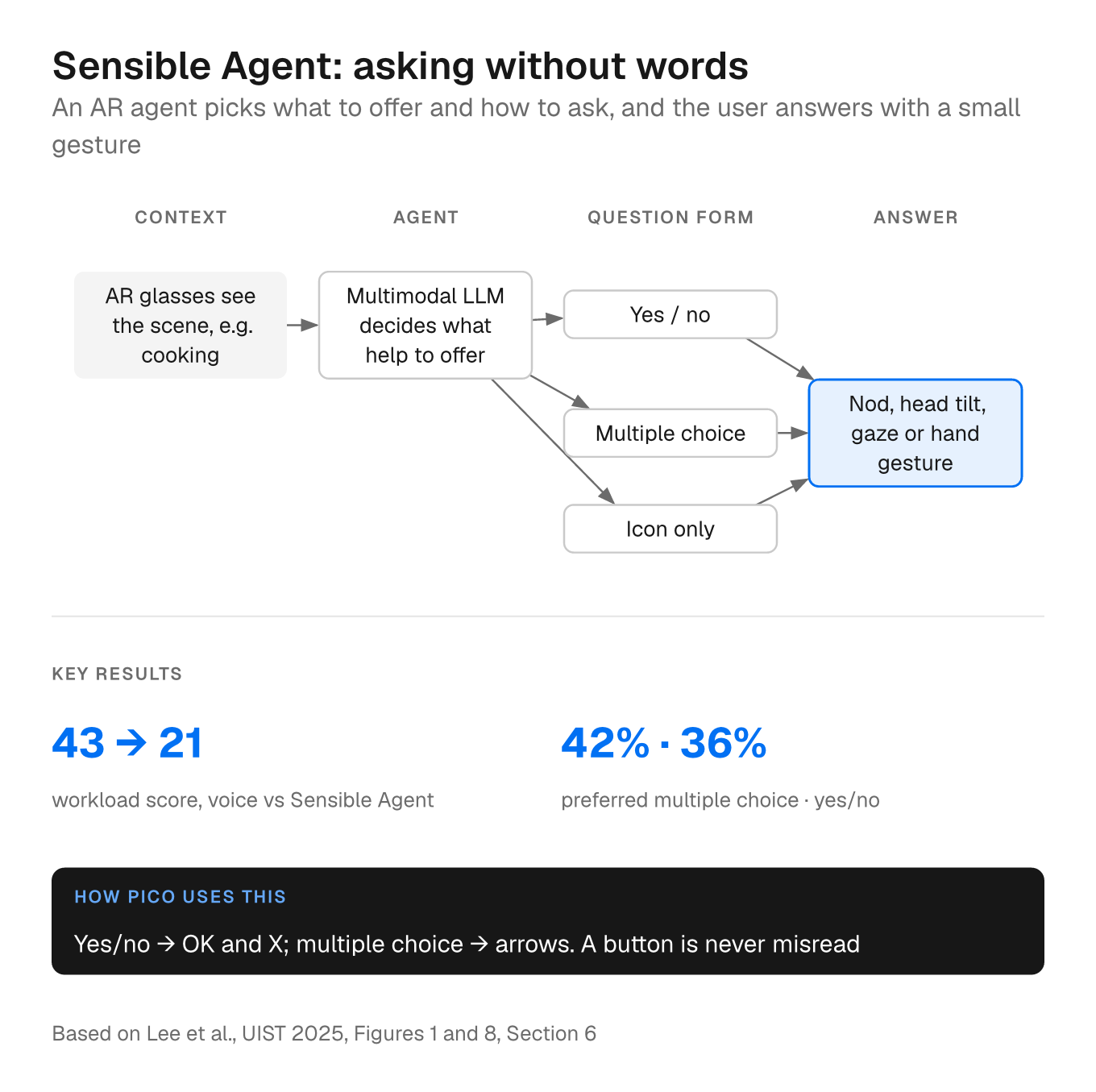
What they did
An AI agent in AR glasses decides what to offer and how to ask: a yes/no question, a multiple-choice question or an icon. The user answers with a nod, head tilt, gaze or hand gesture instead of speaking. It was compared with voice commands in a 10-person study.
What they found
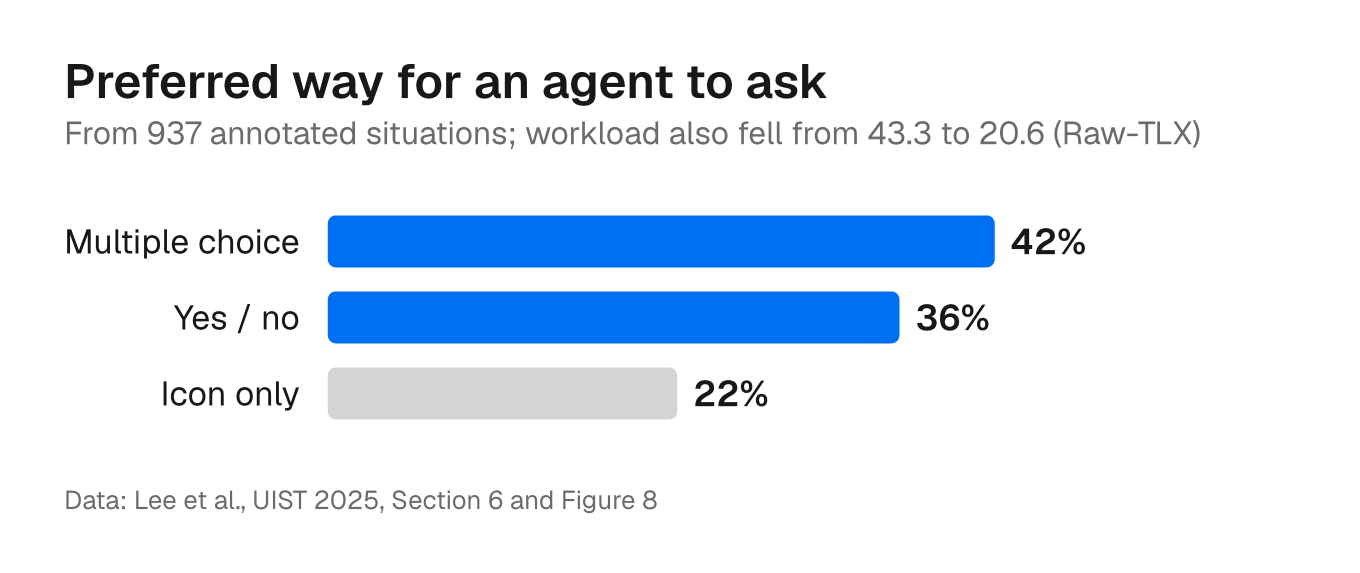
- In 937 annotated situations, people preferred multiple choice (42%) and yes/no (36%) over icons (22%).
- Workload dropped from 43.3 to 20.6 (Raw NASA-TLX), and preference rose from 3.8 to 6.0 out of 7.
- Gestures were slower: 28.5 s per interaction against 16.4 s by voice.
How Pico builds on it
People prefer an agent that asks short yes/no or multiple-choice questions. Pico maps these directly to buttons: OK and X for yes/no, arrows for multiple choice. A button press is never misread, so Pico keeps the low effort without the slow gestures.
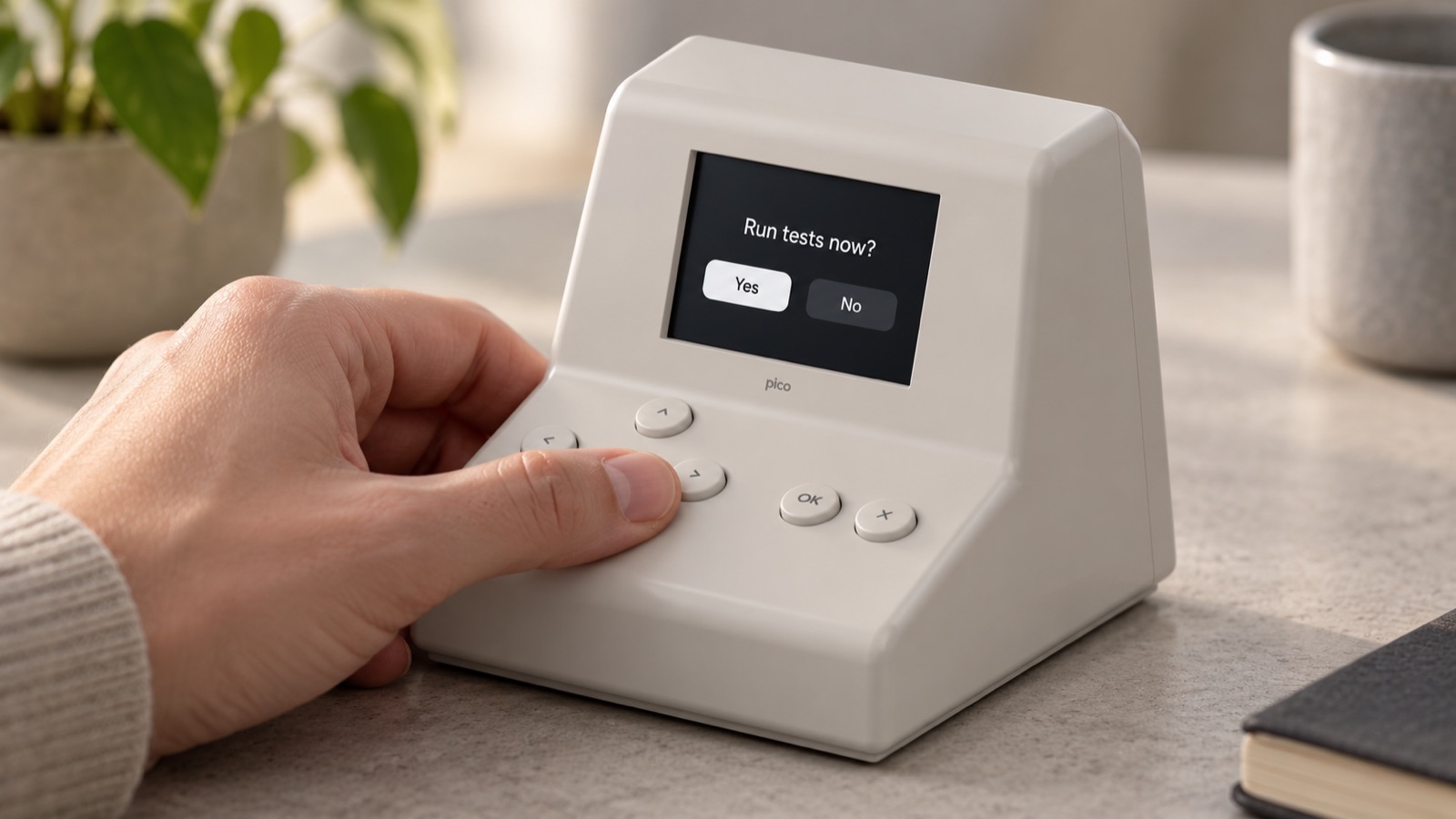
Concept image of Pico, generated with Codex.
Source
Geonsun Lee, Min Xia, Nels Numan, Xun Qian, David Li, Yanhe Chen, Achin Kulshrestha, Ishan Chatterjee, Yinda Zhang, Dinesh Manocha, David Kim, Ruofei Du, “Sensible Agent: A Framework for Unobtrusive Interaction with Proactive AR Agents,” UIST 2025, ACM Symposium on User Interface Software and Technology · Google XR Labs, University of Maryland and UCL, 2025. DOI: 10.1145/3746059.3747748.
09
Generative Expressive Robot Behaviors using Large Language Models
What they did
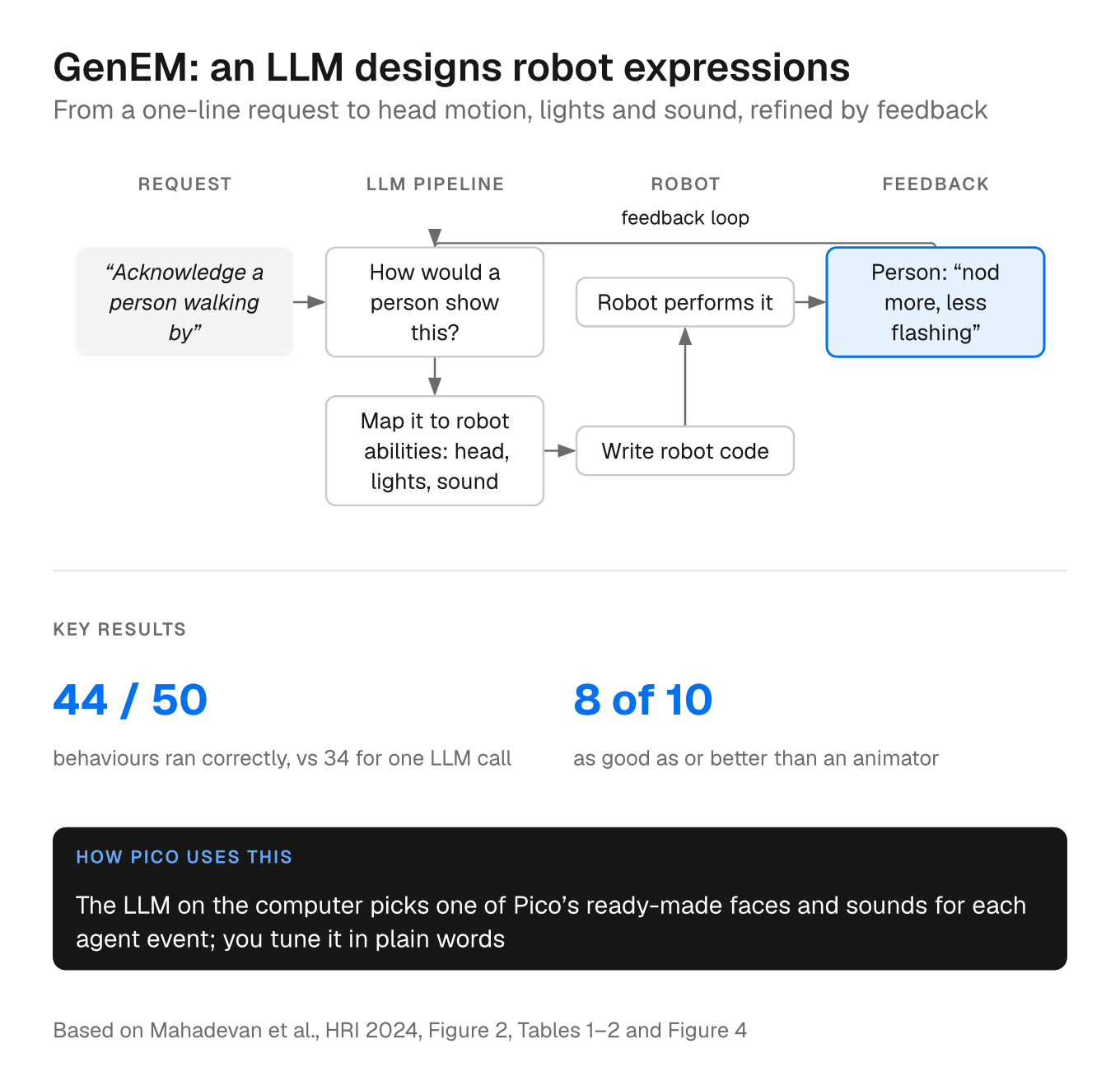
GenEM uses GPT-4 to turn a one-line request, such as “acknowledge a person walking by”, into robot behavior: head motion, lights and sounds. Users can then refine it with plain-language feedback. Online video studies compared the results with behaviors made by a professional animator.
What they found
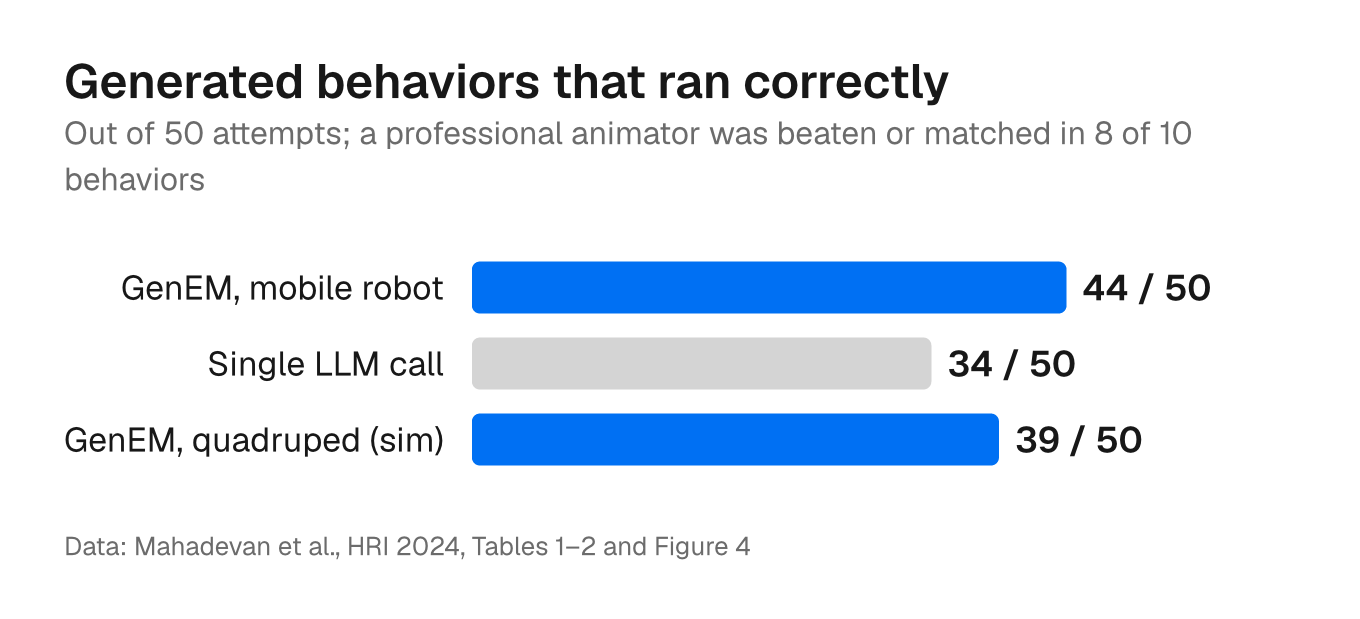
- 44 of 50 generated behaviors ran correctly, against 34 of 50 with a simpler single-call version.
- With feedback, GenEM was rated worse than the animator in only 2 of 10 behaviors and better in 2.
- The same prompts worked on a different robot (a simulated quadruped), with 39 of 50 correct.
How Pico builds on it
GenEM shows that an LLM can design expressive cues about as well as an animator. On Pico, the LLM runs on the computer and only picks settings for a small set of ready-made faces and sounds, which suits the ESP32. Users can tune them in plain words, for example “be less dramatic when tests fail”.
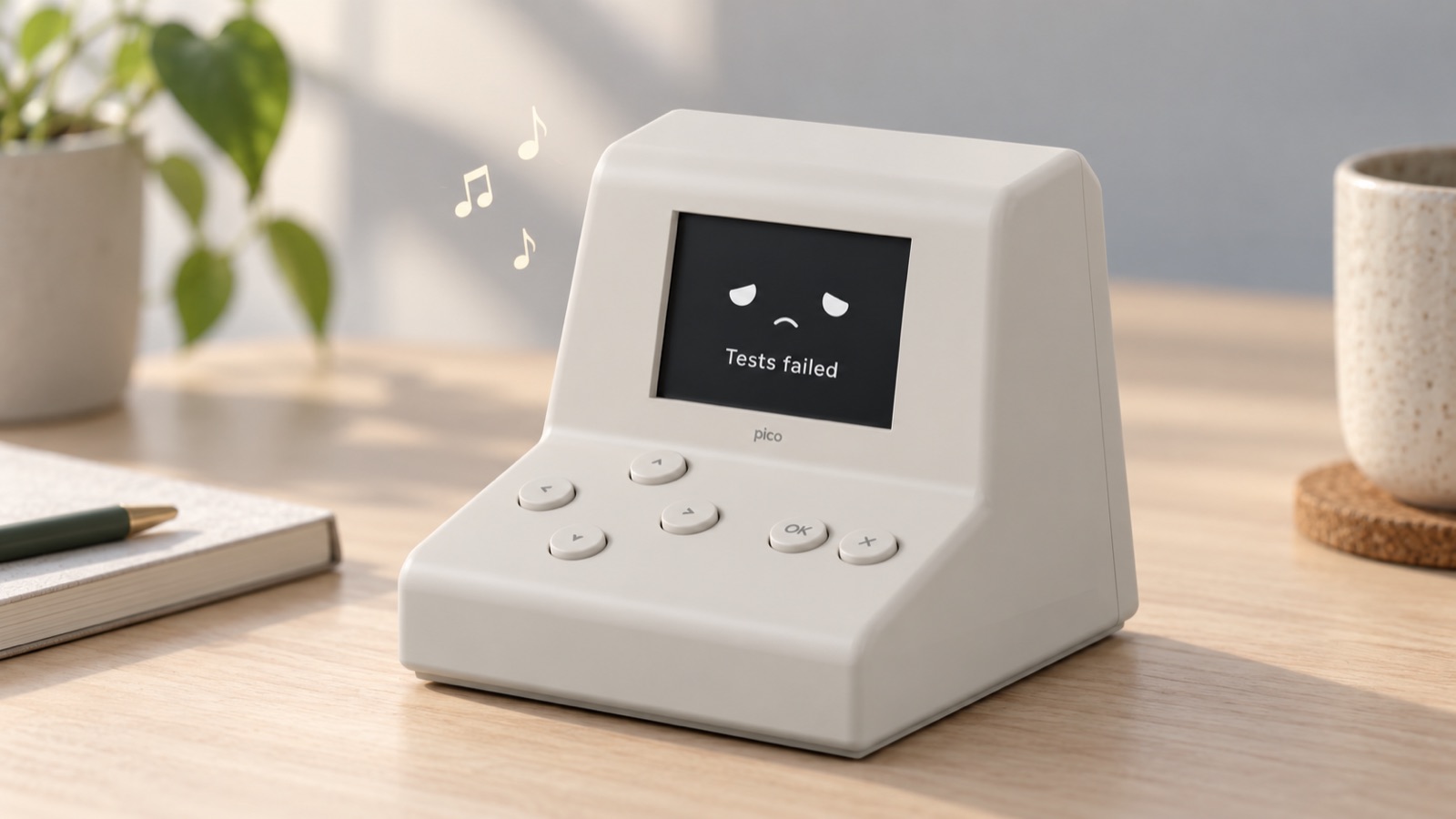
Concept image of Pico, generated with Codex.
Source
Karthik Mahadevan, Jonathan Chien, Noah Brown, Zhuo Xu, Carolina Parada, Fei Xia, Andy Zeng, Leila Takayama, Dorsa Sadigh, “Generative Expressive Robot Behaviors using Large Language Models,” HRI 2024, 19th ACM/IEEE International Conference on Human-Robot Interaction · Google DeepMind, 2024. DOI: 10.1145/3610977.3634999.
10
Dimensional Design of Emotive Sounds for Robots
What they did
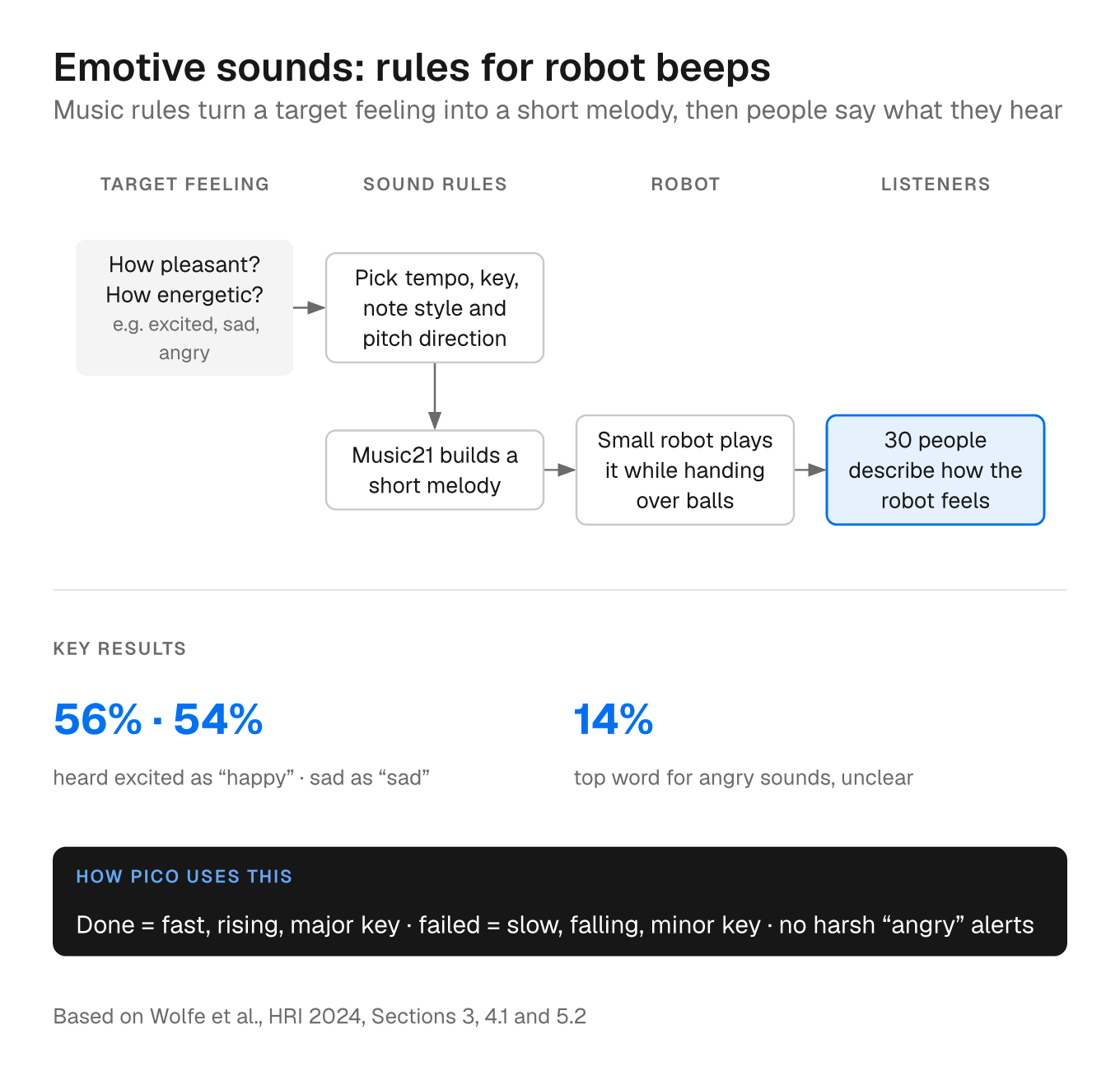
The authors made rules that generate short robot beeps. Tempo, key, note style and pitch direction set how pleasant and how energetic a sound feels. 30 people heard a small robot play these sounds and described how it felt.
What they found
- The sound type strongly changed how pleasant (F = 128.7) and how energetic (F = 50.1) the robot seemed, both p < .001.
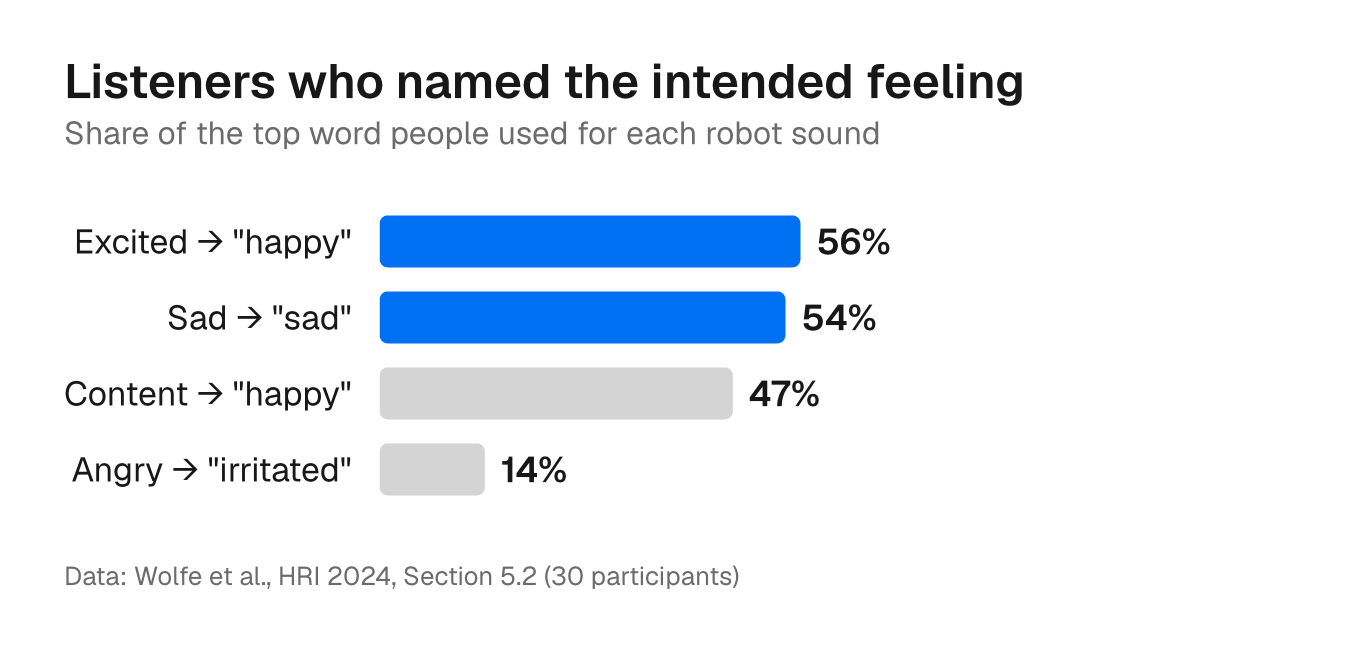
- Excited and sad sounds were read most clearly: 56% called excited “happy” and 54% called sad “sad”.
- Angry sounds were unclear. The top word, “irritated”, was used by only 14%.
How Pico builds on it
Pico’s sounds must be understood instantly. We use the clearest patterns from the paper: rising, fast, major-key notes for “done” and falling, slow, minor-key notes for “failed”. We avoid harsh “angry” sounds for alerts. Pico also pairs each sound with a face, which the paper did not test.
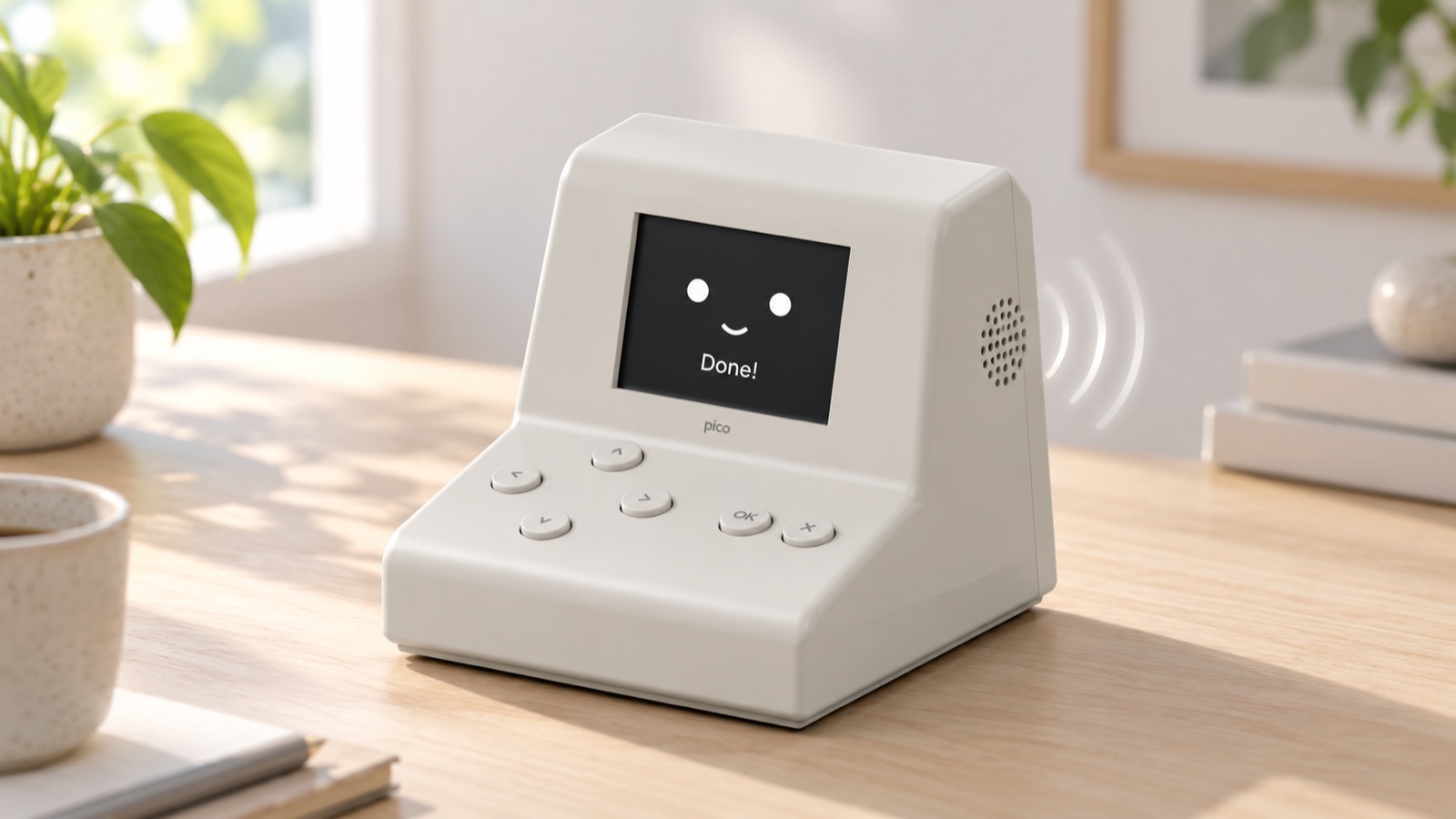
Concept image of Pico, generated with Codex.
Source
Hannen Wolfe, Yiheng Su, Jue Wang, “Dimensional Design of Emotive Sounds for Robots,” HRI 2024, 19th ACM/IEEE International Conference on Human-Robot Interaction · Colby College, 2024. DOI: 10.1145/3610977.3634968.
Aong Thwai Wong Marma
01
Sprout: Designing Expressivity for Robots Using Fiber-Embedded Actuator
What they did
Sprout is a small soft robot that shows feelings by changing its body shape when air fills it. It has six expressions, such as extend, bend sideways and expand. 95 people watched short videos of each one and described the emotion, and 13 designers gave feedback in person.
What they found
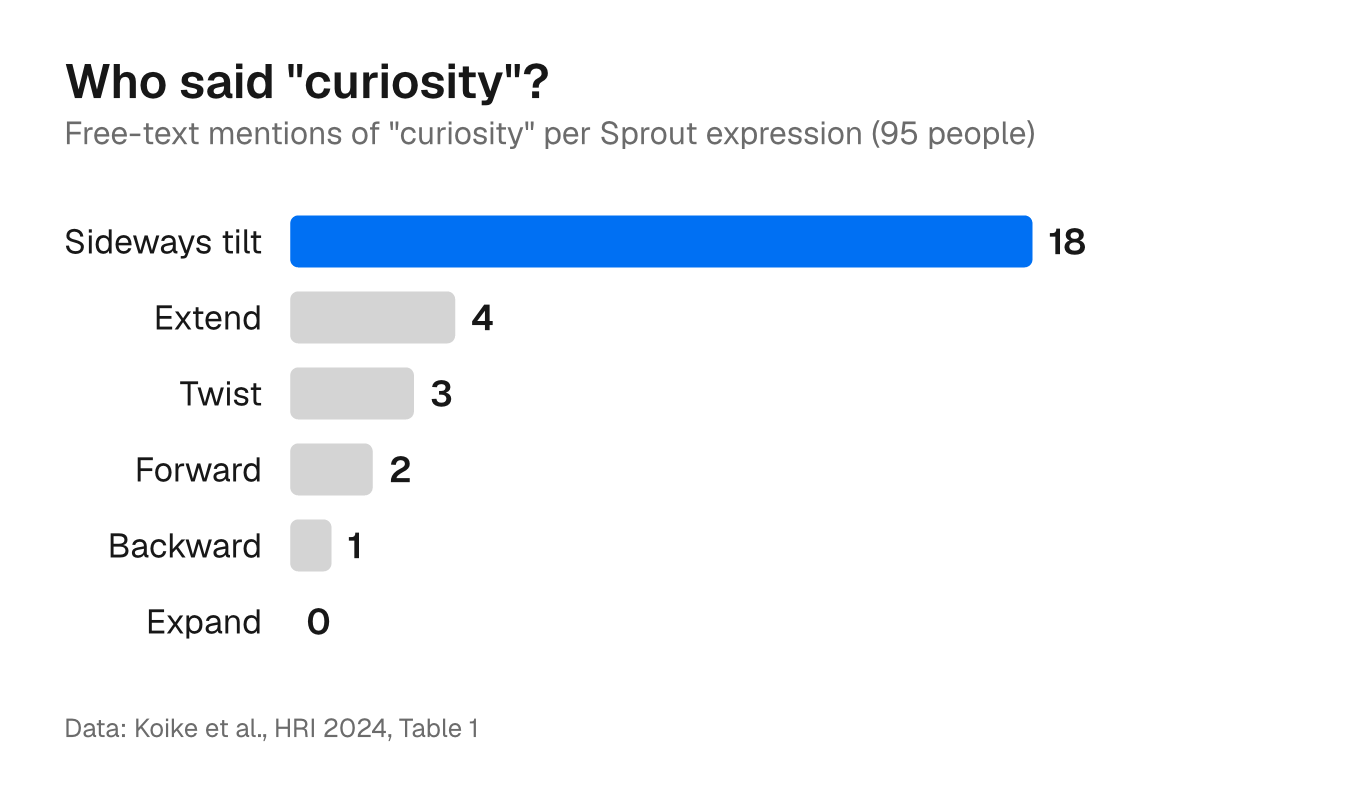
- The sideways tilt got the most “curiosity” mentions (18), and 15 answers saw it as waiting for a reply or processing.
- “Interest” was the most common emotion word overall. Forward read as sad and expand as angry.
- Sideways was rated more likable, humanlike and safe than expand.
- All 13 in-person participants liked Sprout. Many asked for sound and light too.
How Pico builds on it
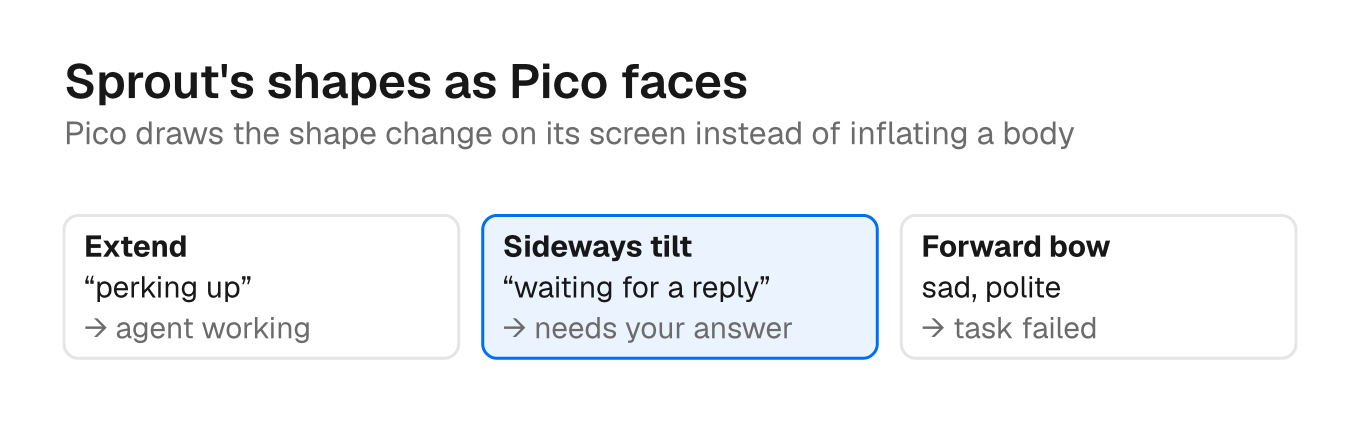
Pico has no soft body, so it draws these poses as faces on its screen. A tilted, curious face means “waiting for your answer”, which is what the paper’s viewers saw. Pico adds what they asked for: sounds, and buttons so the person can reply.
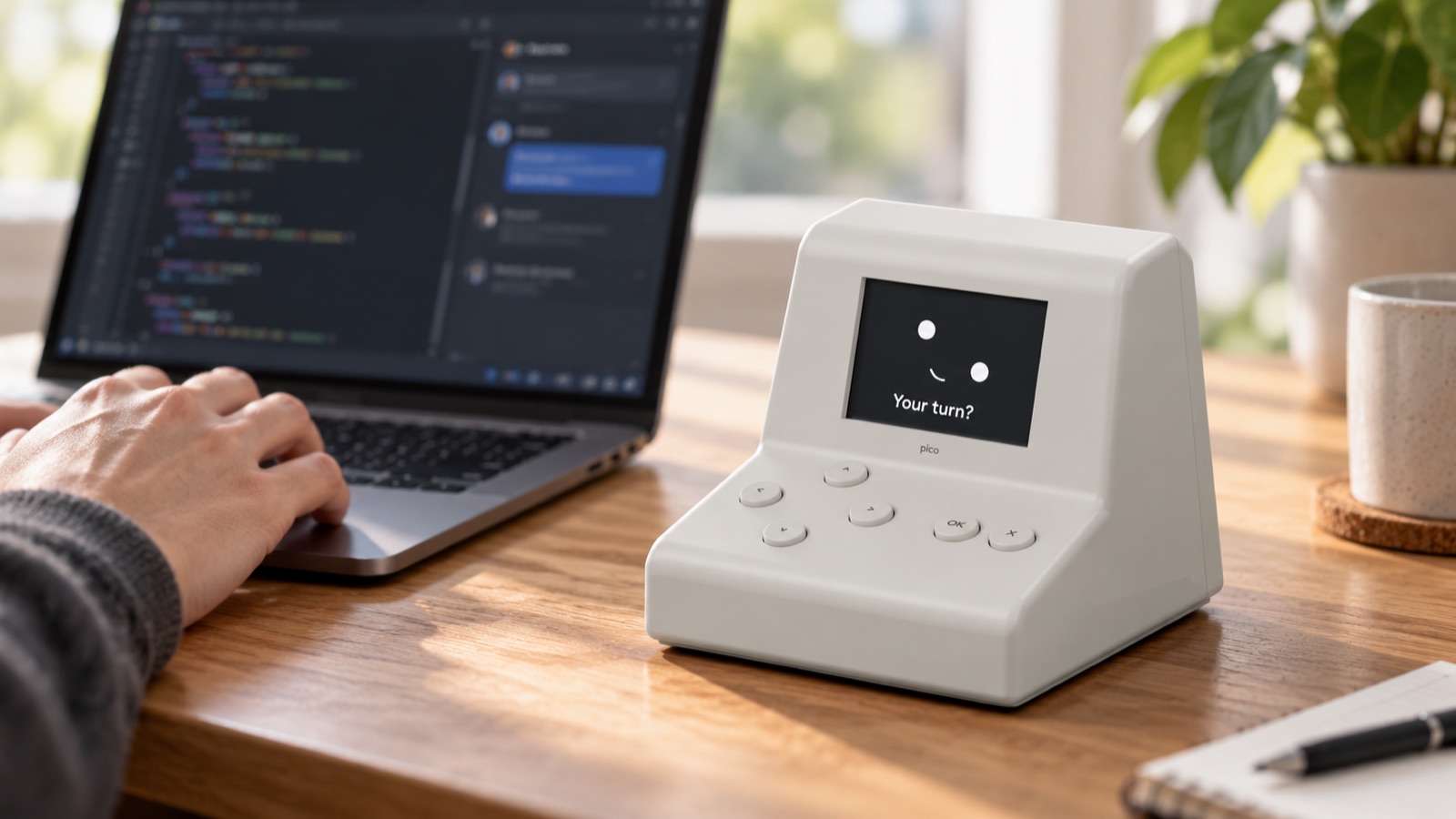
Concept image of Pico, generated with Codex.
Source
Amy Koike, Michael Wehner, Bilge Mutlu, “Sprout: Designing Expressivity for Robots Using Fiber-Embedded Actuator,” HRI 2024, 19th ACM/IEEE International Conference on Human-Robot Interaction, 2024. DOI: 10.1145/3610977.3634983.
02
A Social Approach for Autonomous Vehicles: A Robotic Object to Enhance Passengers’ Sense of Safety and Trust
What they did
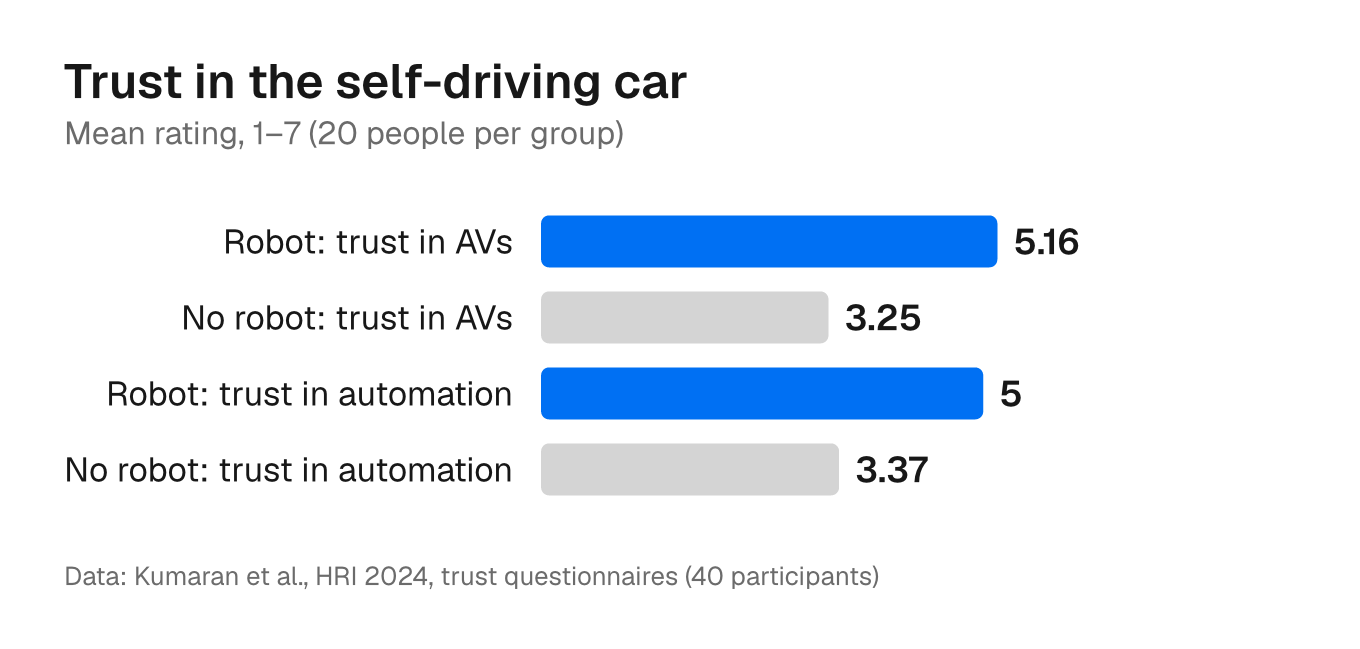
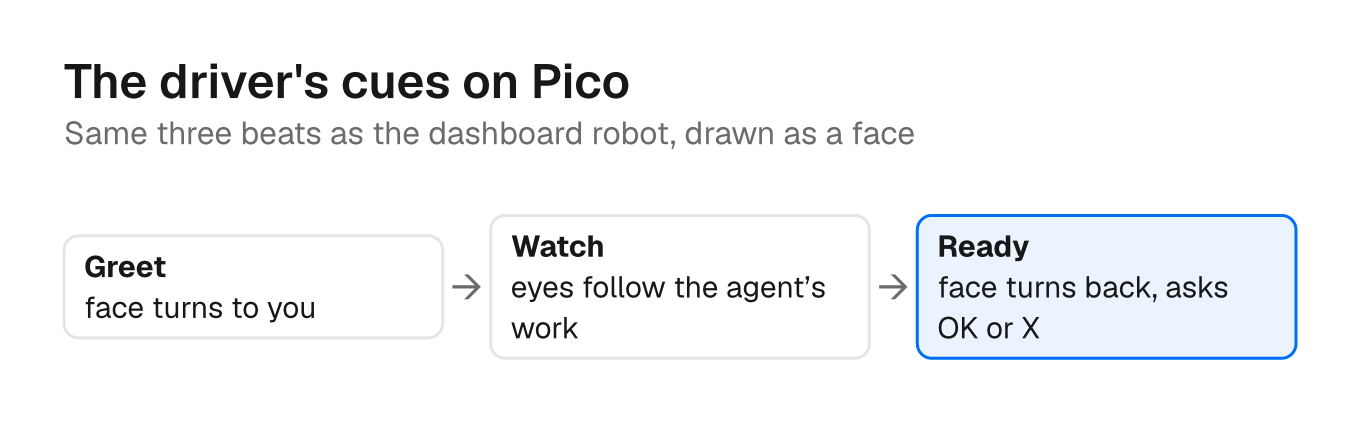
In a self-driving car, passengers lose the driver’s small cues. The team put a simple two-motor robot on the dashboard. It greeted the passenger, scanned the road, then nodded to show the drive was about to start. 40 people sat in a parked car with or without the robot.
What they found
- Trust in self-driving cars was 5.16 out of 7 with the robot and 3.25 without it.
- Trust in automation was 5 with the robot and 3.37 without it.
- 13 of 20 robot passengers called the car “safe”. No one without the robot did, and 6 called it “unsafe”.
- 17 of 20 passengers without the robot said they felt alone.
How Pico builds on it
An AI agent, like a self-driving car, works where you cannot easily see it. Pico copies the robot’s three cues with its face: greet, watch the work, then turn to you when it needs an answer. The paper only tested the first minutes and did not check for too much trust, so Pico still asks before risky actions.
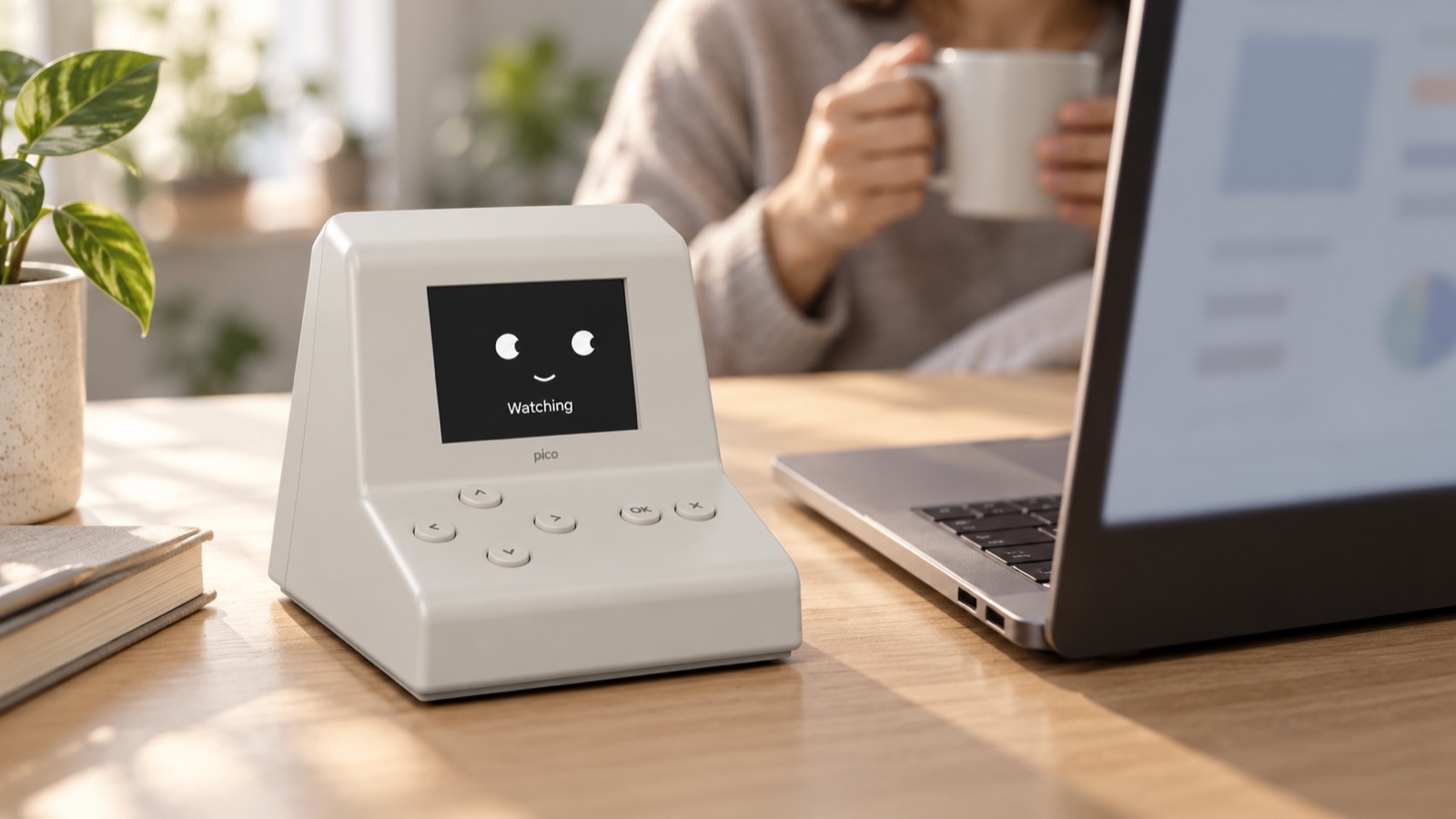
Concept image of Pico, generated with Codex.
Source
Srivatsan Chakravarthi Kumaran, Toam Bechor, Hadas Erel, “A Social Approach for Autonomous Vehicles: A Robotic Object to Enhance Passengers’ Sense of Safety and Trust,” HRI 2024, 19th ACM/IEEE International Conference on Human-Robot Interaction, 2024. DOI: 10.1145/3610977.3634998.
03
With Every Breath: Testing the Effects of Soft Robotic Surfaces on Attention and Stress
What they did
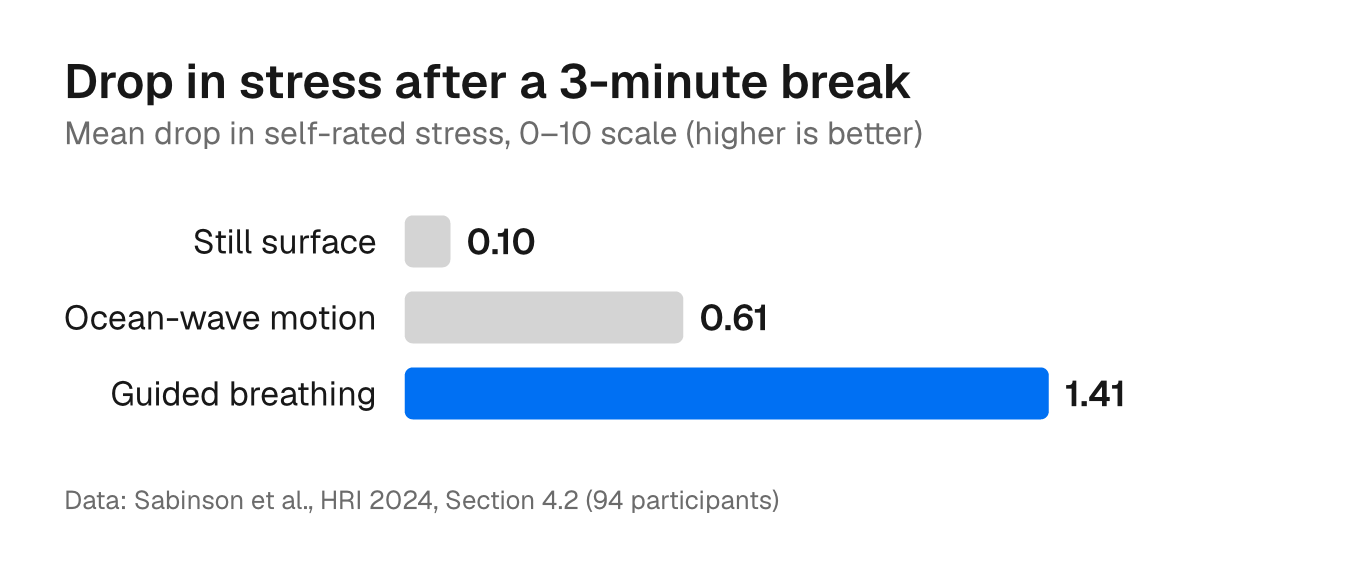
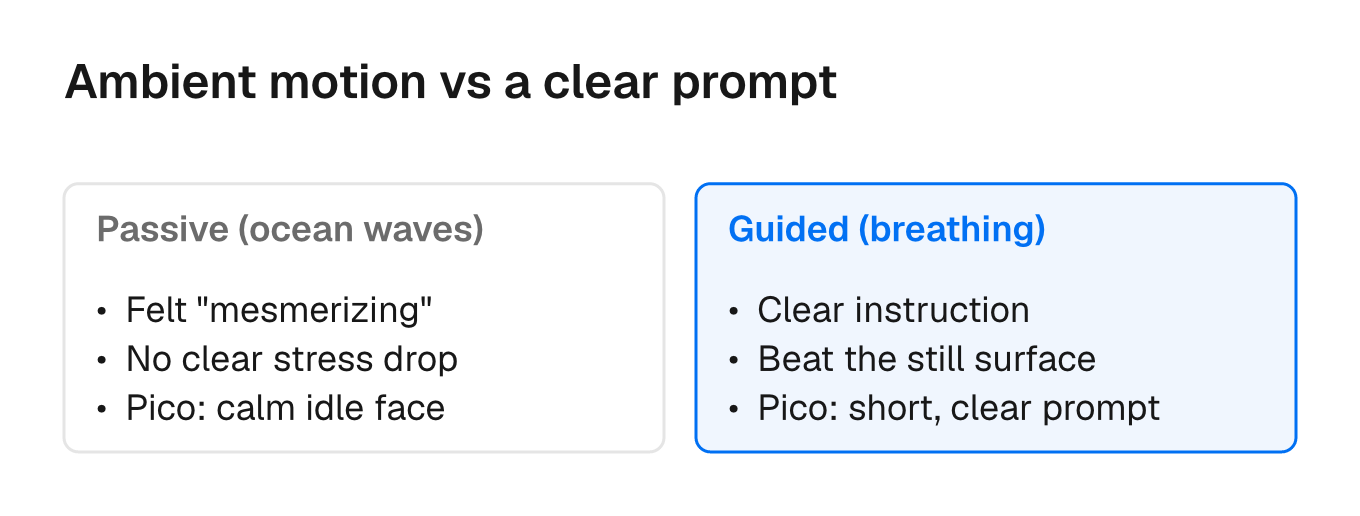
The team built soft silicone panels that fill with air and go flat again. 94 students took a three-minute break with the panels. They were still, moved like ocean waves, or led a breathing exercise (breathe in as the panel rises). People rated their stress before and after.
What they found
- Stress dropped most with guided breathing (1.41 points out of 10), against 0.61 for ocean waves and 0.10 for the still panel.
- Only breathing was clearly better than the still panel (p = 0.002).
- People liked both motions (5.68 and 5.41 out of 7 for “soothing”), but ocean waves alone did not cut stress.
- Some disliked the panel’s sound at first, then got used to it.
How Pico builds on it
Calm motion felt nice, but a clear instruction changed how people felt. So Pico keeps a calm face while the agent works and shows a short, clear prompt when it needs you. Like the panel’s noise, Pico’s sounds should be gentle, with a mute option.
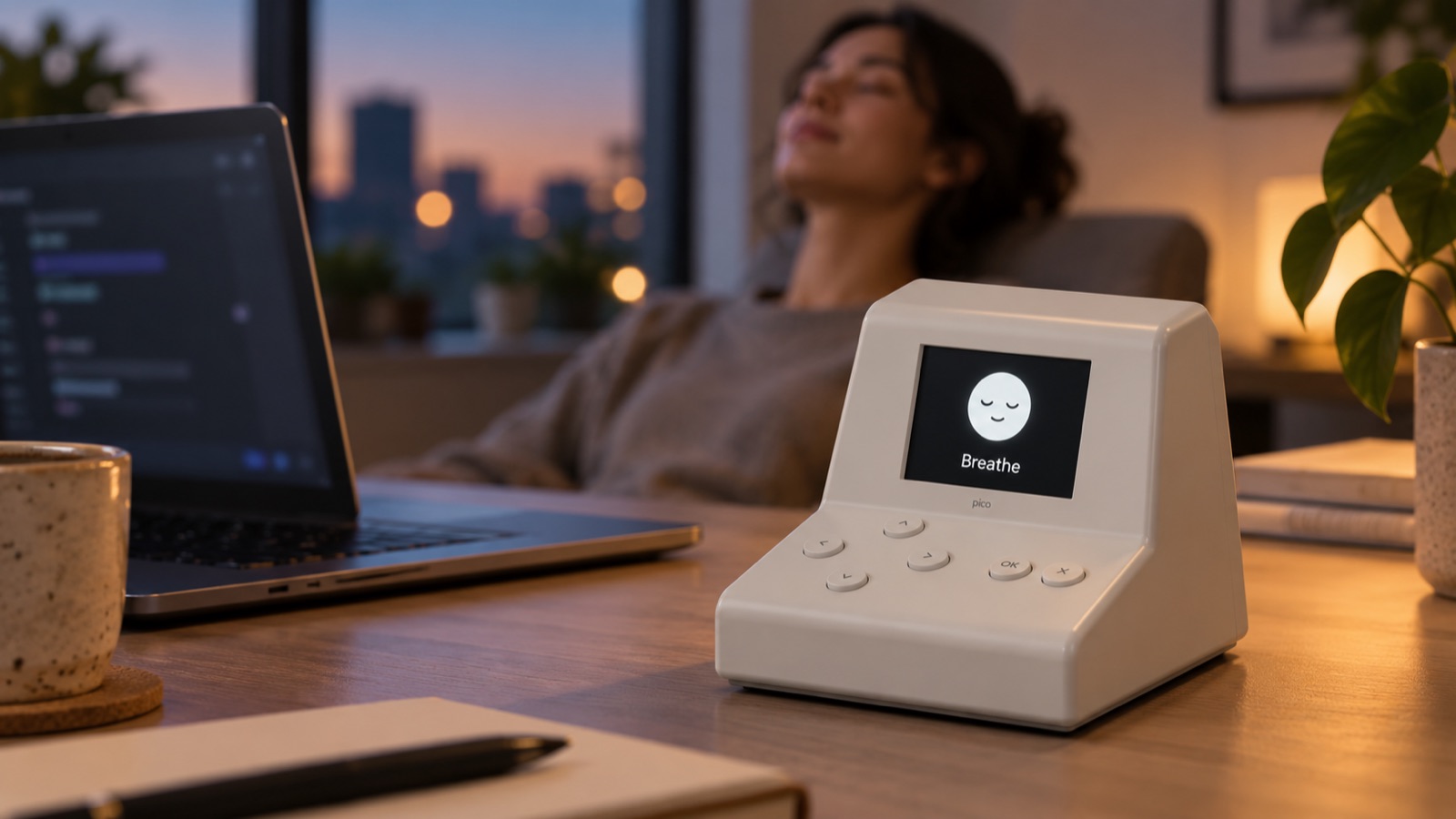
Concept image of Pico, generated with Codex.
Source
Elena Sabinson, Jack Neiberg, Keith Evan Green, “With Every Breath: Testing the Effects of Soft Robotic Surfaces on Attention and Stress,” HRI 2024, 19th ACM/IEEE International Conference on Human-Robot Interaction, 2024. DOI: 10.1145/3610977.3635004.
04
The Stochastic Parrot: a physical AI Cohabitant
What they did
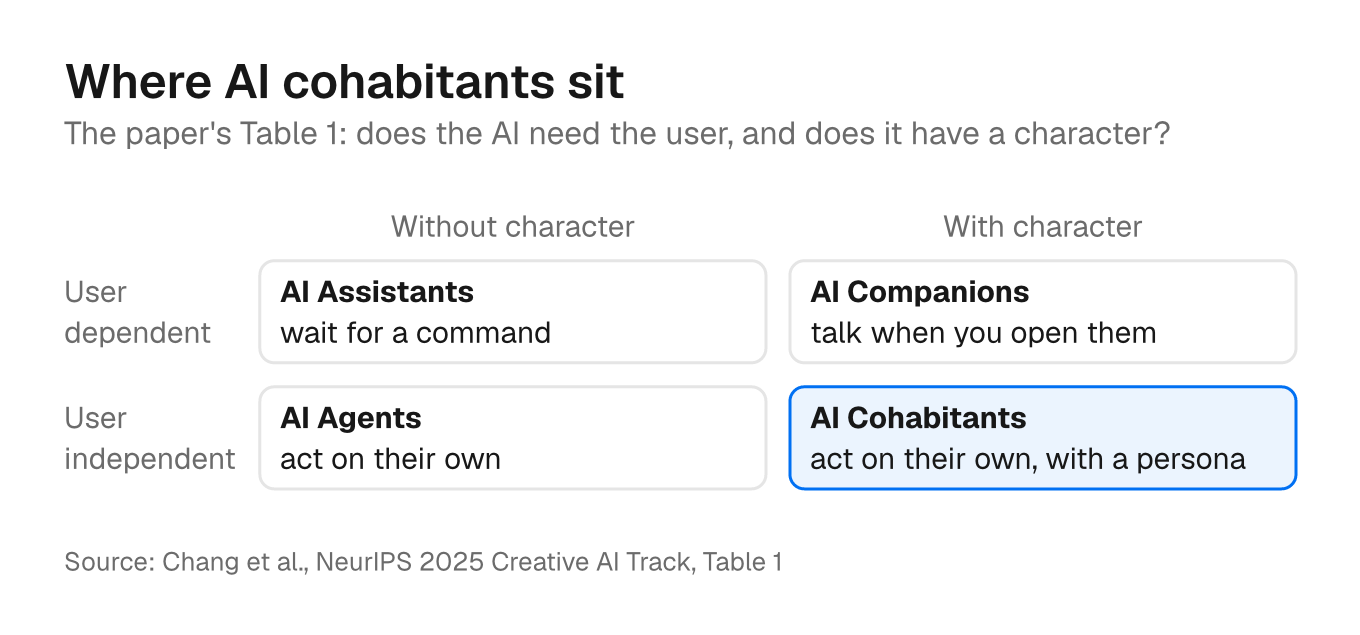
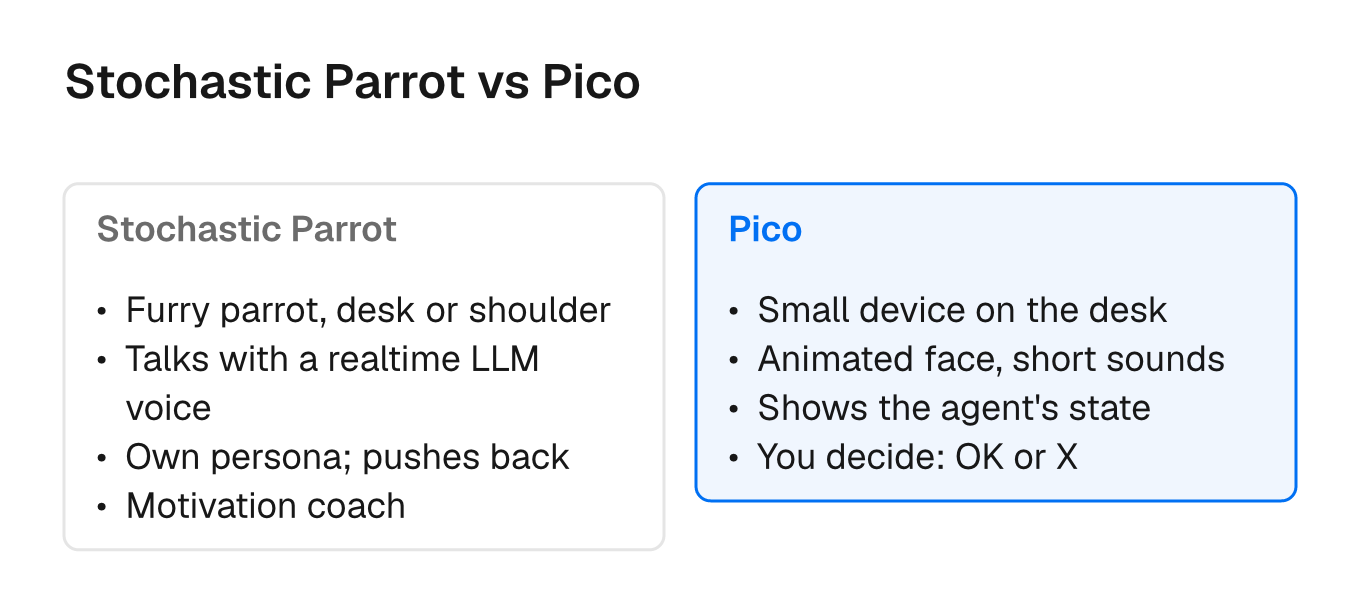
The authors describe “AI cohabitants”: physical AI agents with their own character, more like a pet or roommate than an assistant. They built a robot parrot with a camera, microphone, speaker and two servos, run by a realtime LLM voice with memory. It sits on a desk or on your shoulder.
What they found
This is a design paper with an informal test, so there are few numbers.
- 7 people tried the first prototype in an informal session.
- One user found its humor charming. The authors read its refusals (it would not say “squawk” 100 times) as personality, not faults.
- On the shoulder, talking to it took less effort: people just turned their head.
- The paper sorts AI into 4 types; cohabitants are the ones that act on their own and have a character.
How Pico builds on it
Pico takes the idea of a small physical presence that is always on the desk. But Pico is not a companion with its own goals. Its face shows what the coding agent is doing, and the person stays in charge with OK and X.
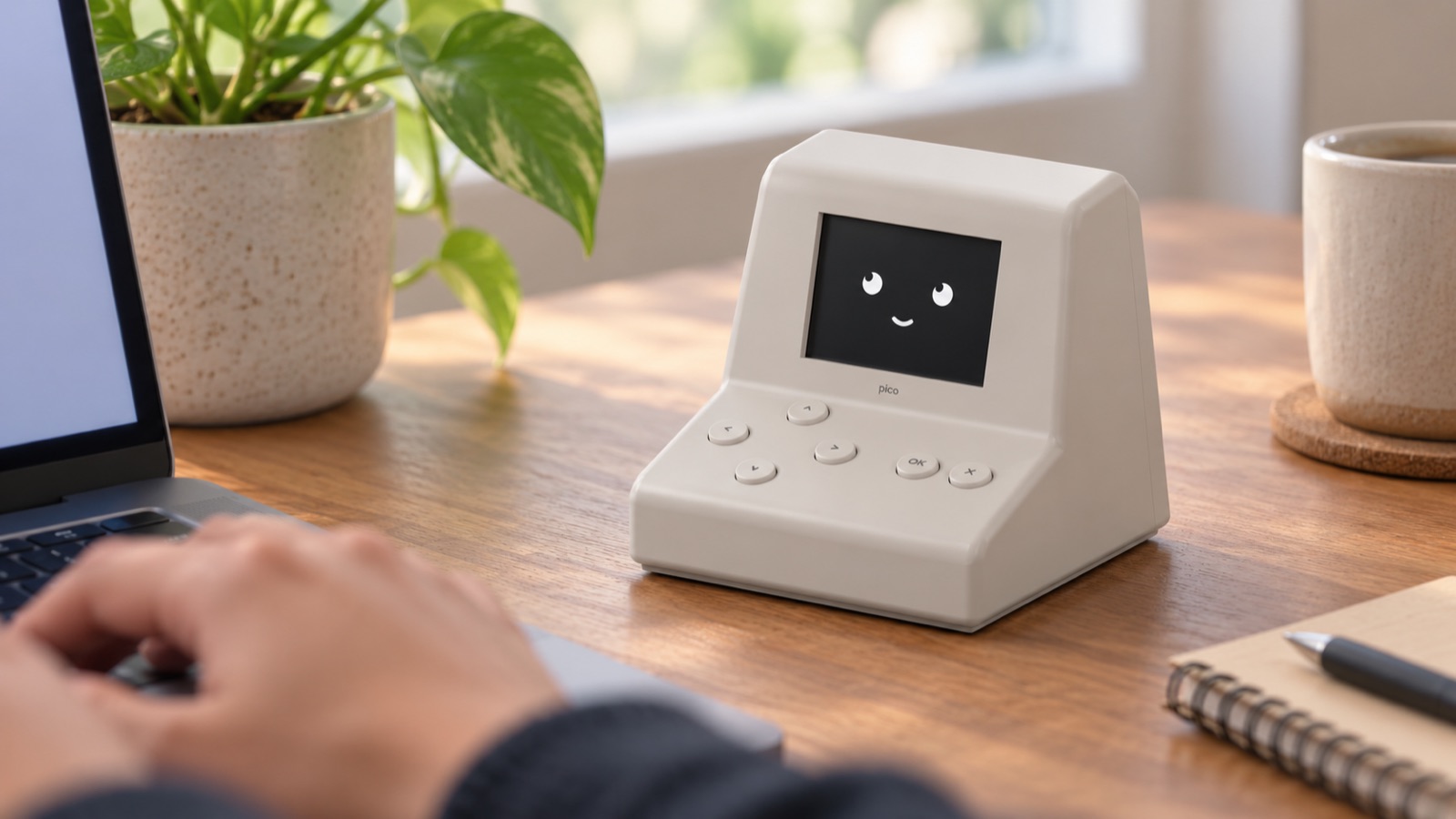
Concept image of Pico, generated with Codex.
05
Human-Robot Trust: Just a Button Press Away
What they did
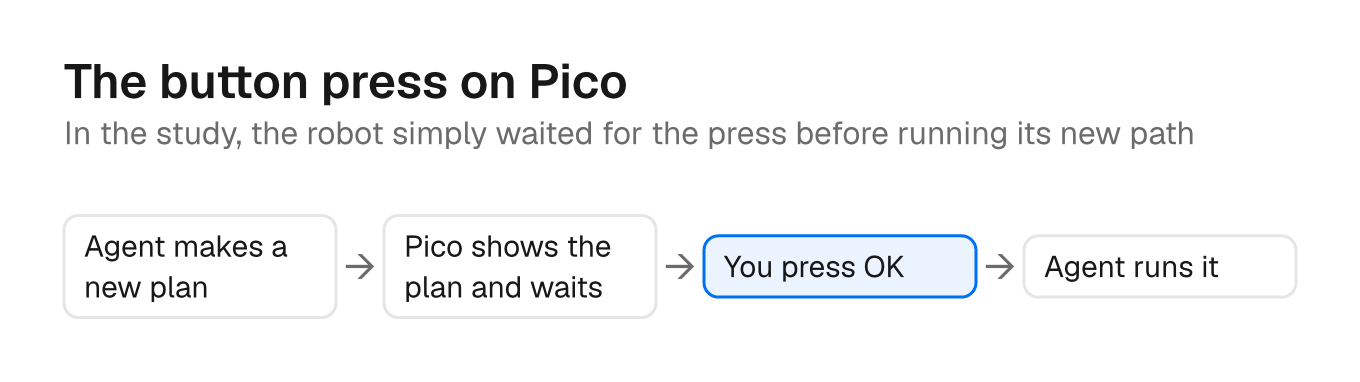
40 people watched a small Thymio robot find a new path around an obstacle. In one group the robot ran its new plan on its own. In the other group it waited until the person pressed a button. Then everyone rated their trust in the robot and in imagined future robots.
What they found
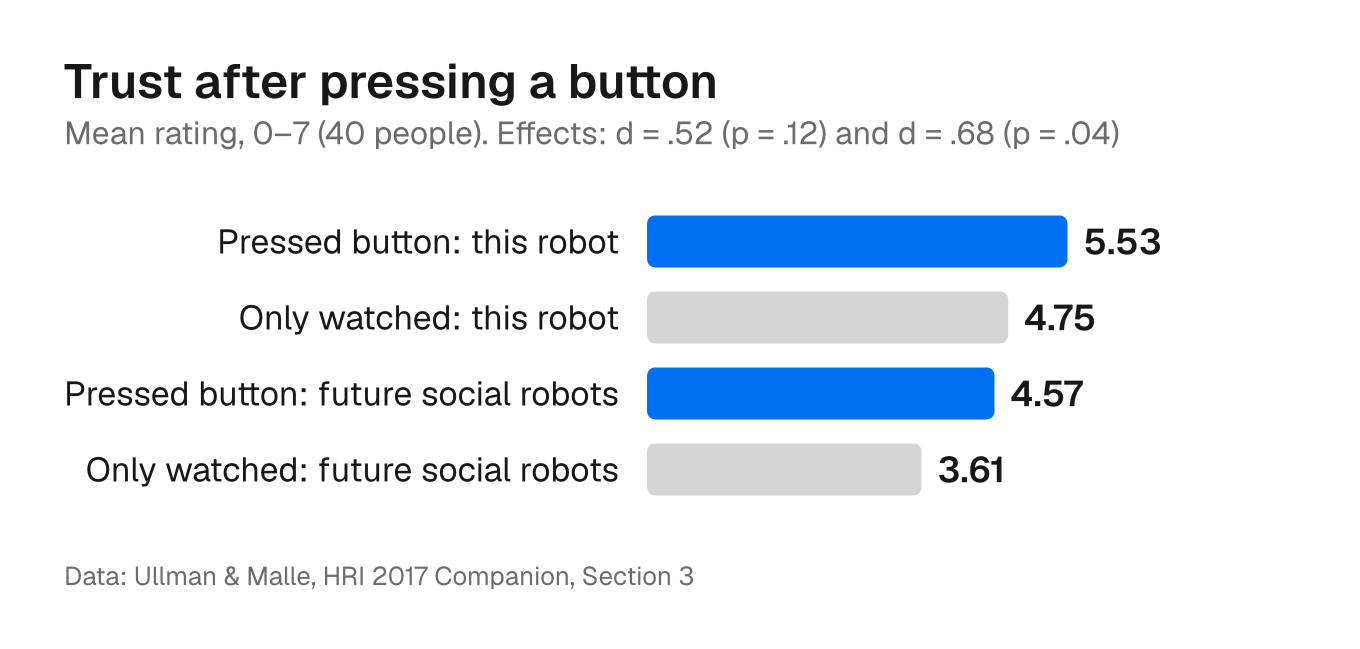
- People who pressed the button trusted the robot more (5.53 vs 4.75 out of 7). The effect was medium (d = .52) but not significant (p = .12) with this small sample.
- For future robots in social jobs, trust went up from 3.61 to 4.57 (p = .04, d = .68).
- For future robots in non-social jobs there was no real difference (5.12 vs 4.89).
How Pico builds on it
This is direct support for Pico’s OK button: one press before the agent acts can raise trust. Pico also shows the plan on its screen before you press. The study only had 40 people and one simple robot, so Pico should test this with coding agents.
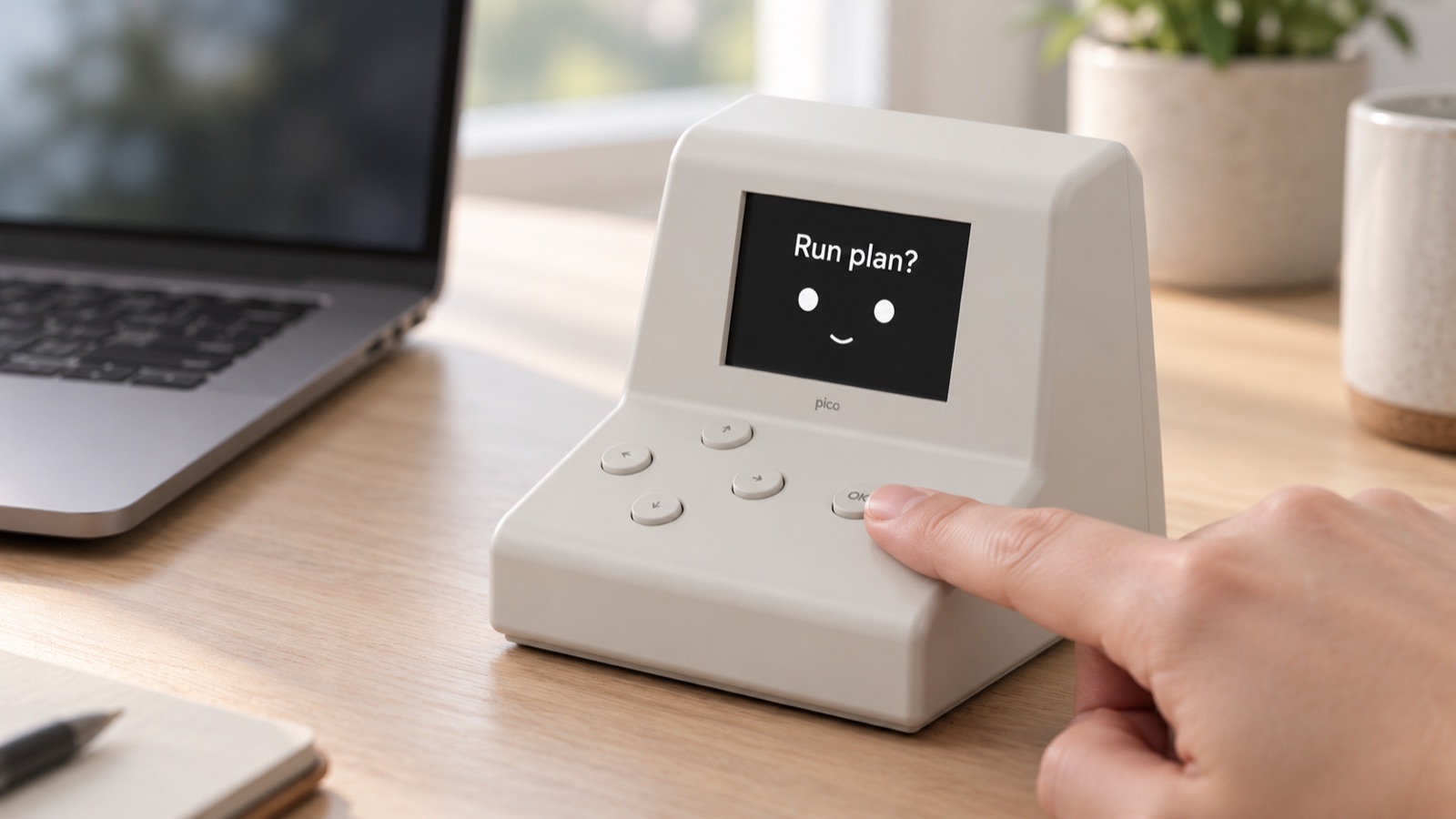
Concept image of Pico, generated with Codex.
06
Tangible Co-Ideation: Designing Embodied Prompting for Creative Thinking with Large Language Models
What they did
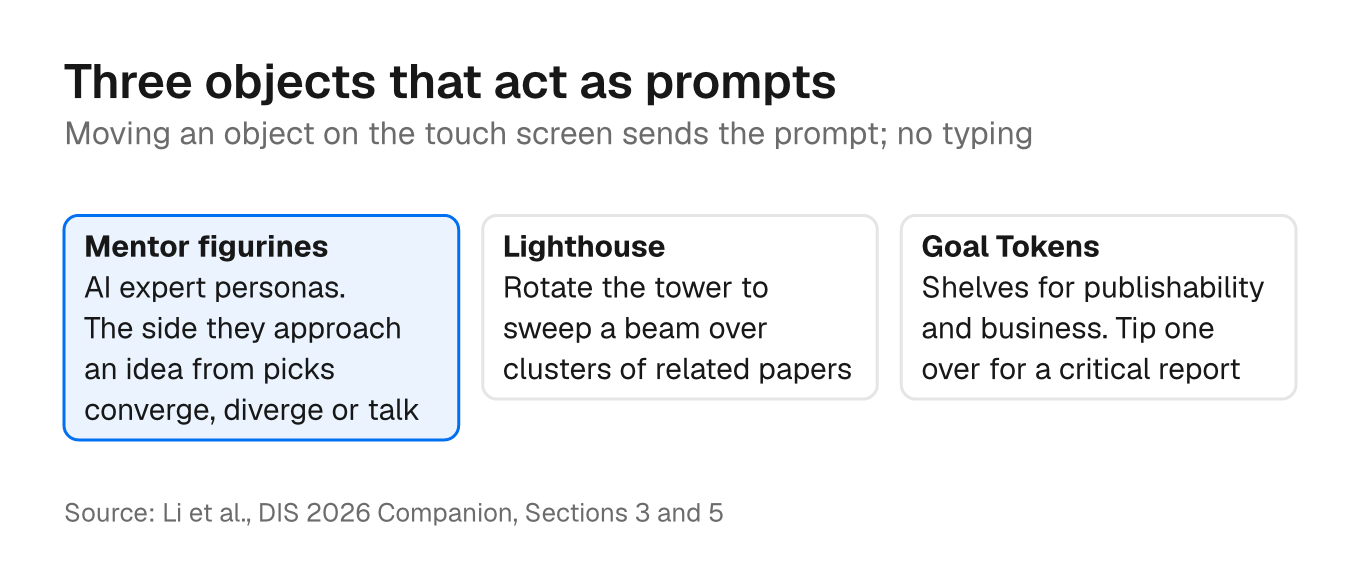
The team built a way to prompt an LLM with physical objects instead of typing. Objects placed on a touch screen are detected by three conductive points on their base. Moving, turning or tipping an object changes what the LLM is asked to do.
What they found
This is a design paper with no user study, so it reports the design rather than results.
- 3 kinds of object prompts: mentor figurines (AI personas), a rotating lighthouse that finds related papers, and Goal Tokens that write a report.
- How a figurine approaches an idea picks one of 3 modes: converge, diverge or talk. 4 extra gestures (shake, circle, double tap, touch) change the tone of a debate.
- Most touch screens track only 10 touch points, so at most 3 objects work at once.
How Pico builds on it
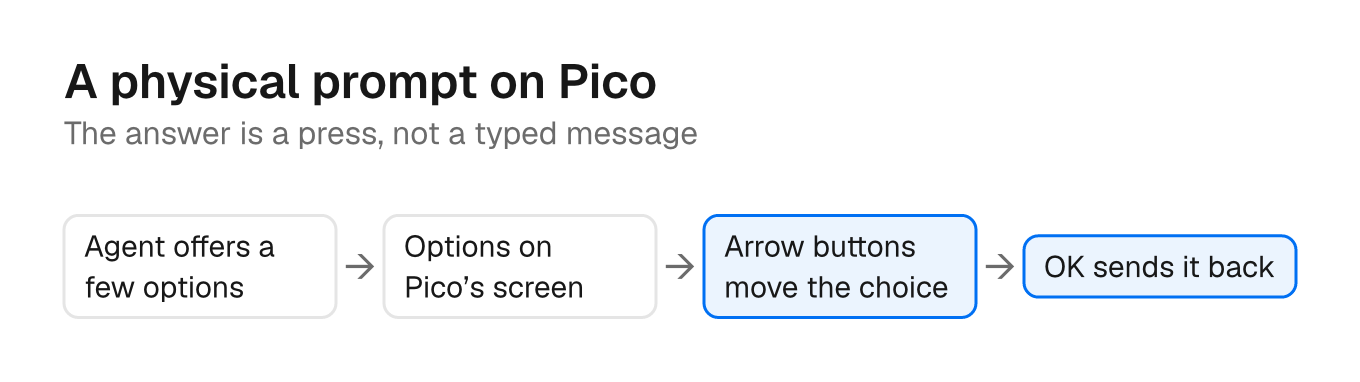
Pico uses the same idea in a simpler form: buttons instead of objects. When an agent asks a multiple-choice question, the arrow buttons pick an answer and OK sends it, so you never type a reply.
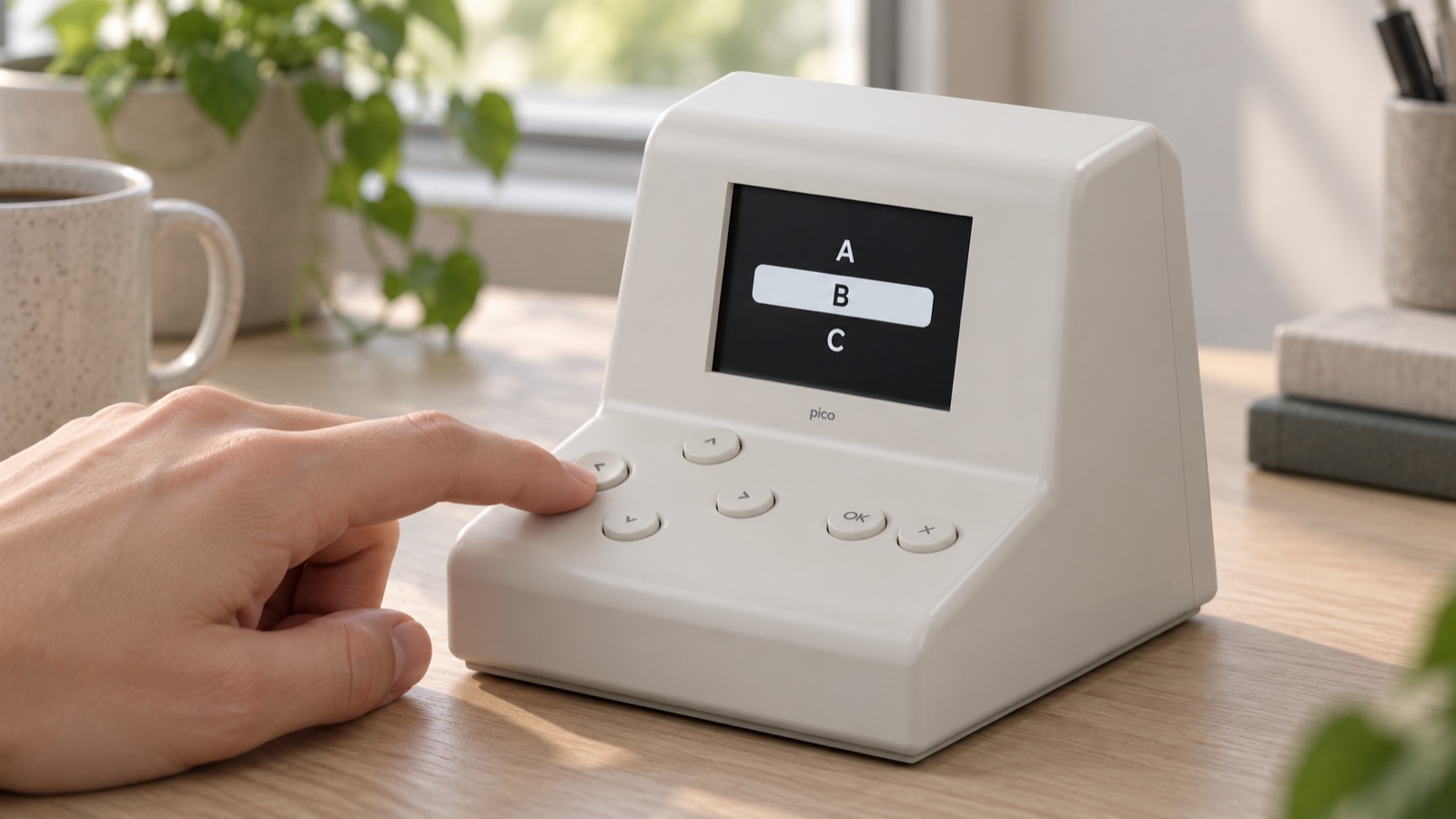
Concept image of Pico, generated with Codex.
Source
Yuqing Lucy Li, Quincy Kuang, Paul-Peter Arslan, Yuhan Wang, “Tangible Co-Ideation: Designing Embodied Prompting for Creative Thinking with Large Language Models,” DIS 2026 Companion, ACM Designing Interactive Systems (Student Design Competition finalist) · MIT Media Lab, 2026. DOI: 10.1145/3802974.3810894.
07
Tangible Explainable AI – an Initial Conceptual Framework
What they did
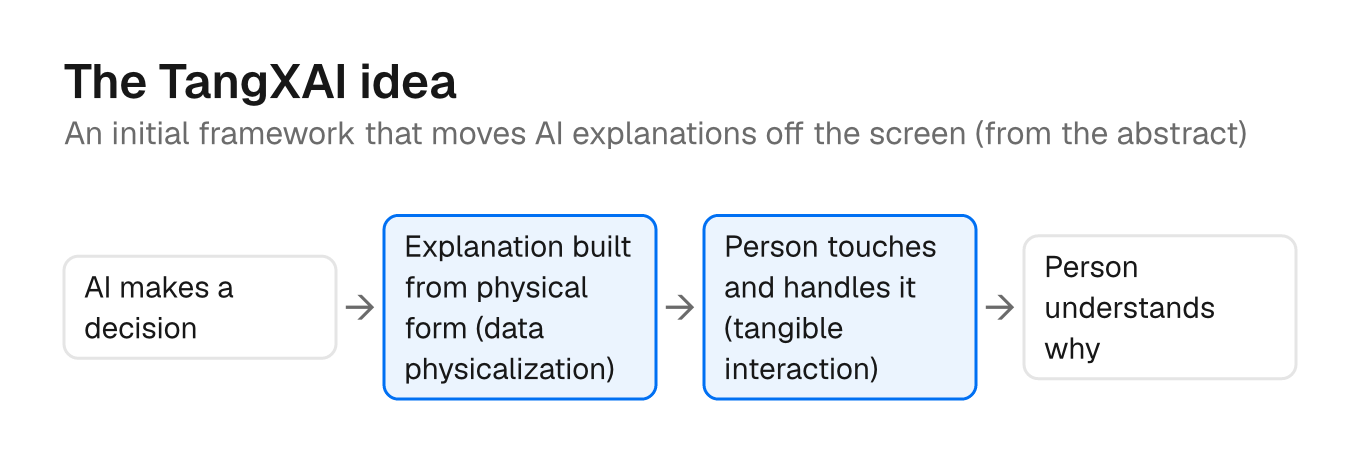
Explainable AI (XAI) usually shows its reasons on a screen. This paper asks how AI could explain itself through physical objects instead. It proposes a first framework for “tangible XAI” (TangXAI), built on two ideas: data physicalization and tangible interaction.
What they found
This is a framework paper with no study and no numbers. We could not read the full text, so these points come from the abstract.
- AI now runs inside many physical devices, so physical interfaces need explanations too.
- Physical artifacts can explain AI in two ways: by turning data into physical form, or by letting people touch and handle it.
- The framework is a map for placing future TangXAI research and finding gaps.
How Pico builds on it
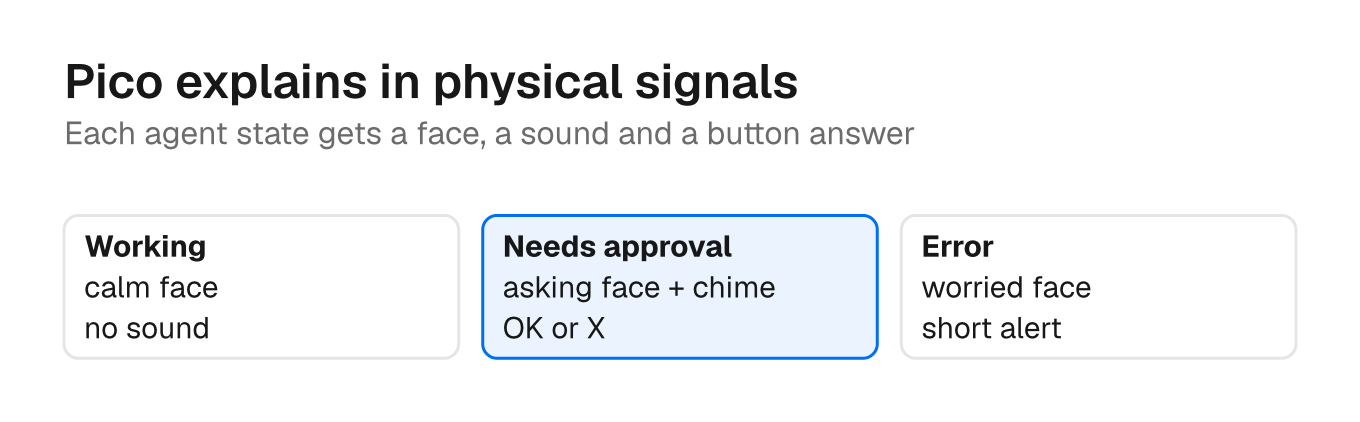
Pico is a physical way to show what an AI agent is doing. Each state has its own face and sound, and the buttons let you answer. Pico only shows the state and the request; it does not yet explain why the agent chose an action.
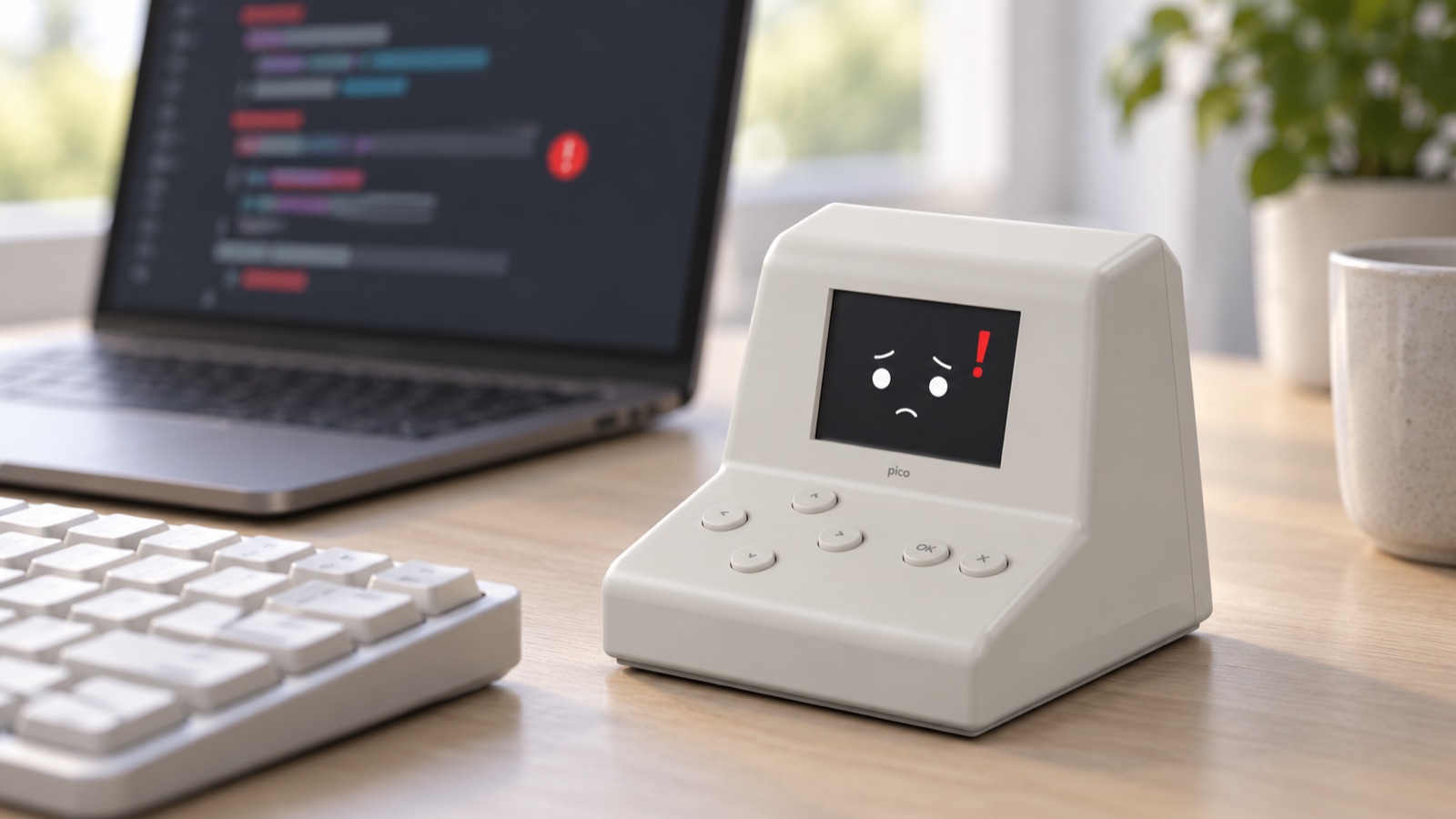
Concept image of Pico, generated with Codex.
08
Human-in-the-Loop Artificial Intelligence: A Systematic Review of Concepts, Methods, and Applications
What they did
This review looks at how people are kept “in the loop” of AI systems. The authors searched Scopus and Google Scholar for work from 2018 to January 2026. They used a core set of studies to build a shared taxonomy.
What they found
This is a survey, so it reports categories, not experiments.
- The core set has 134 studies.
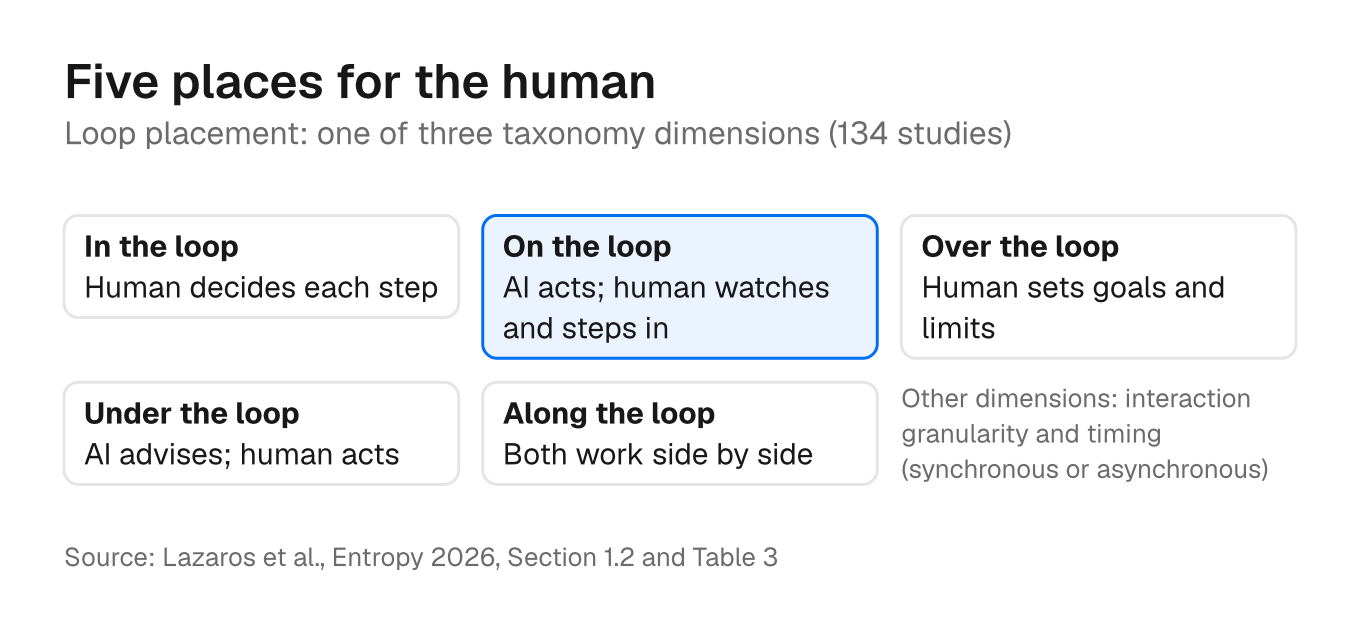
- The taxonomy has 3 dimensions: where the human sits, how fine the interaction is, and timing.
- It names 5 places for the human: in, on, over, under and along the loop.
- Main risks: oversight that does not scale, cognitive load, and trust that is too high or too low. People also miss AI errors more often when the AI is usually right.
How Pico builds on it
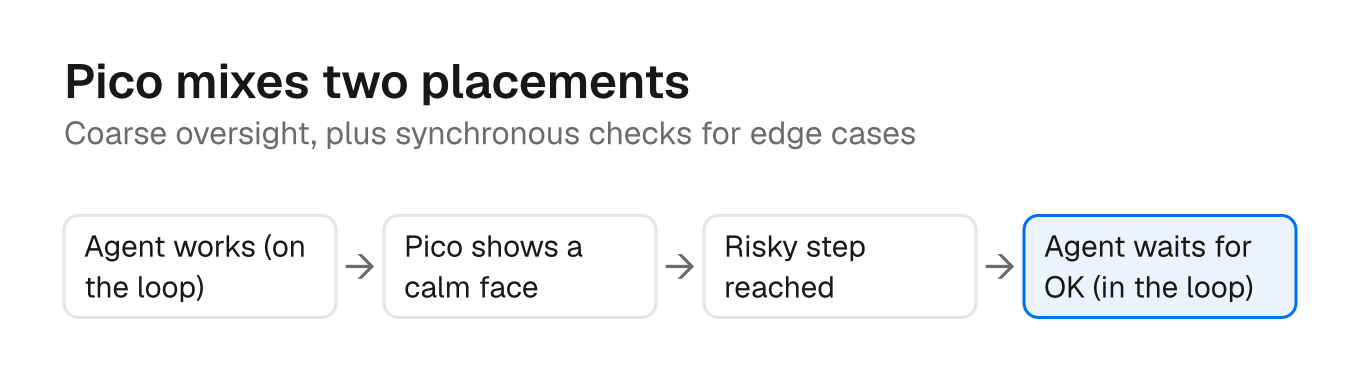
Pico mixes two placements, as the review suggests for systems that need speed. Most of the time you are “on the loop”: the agent works and Pico shows a calm face. Risky steps switch you “in the loop”, and the agent waits for OK.
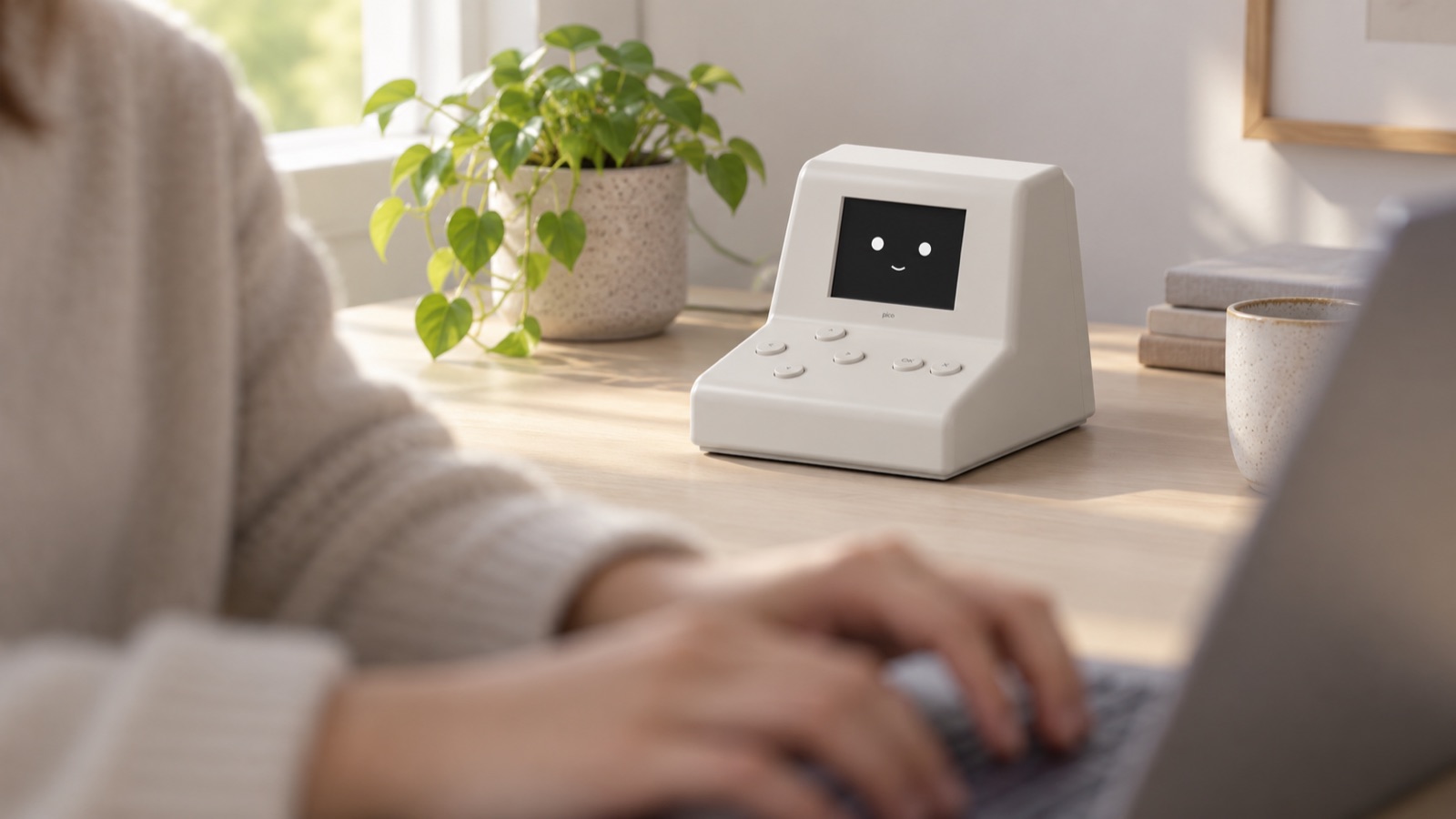
Concept image of Pico, generated with Codex.
09
Guidelines for Human-AI Interaction
What they did
The team combined more than 150 design recommendations into 18 guidelines for AI products. The guidelines are grouped by when they apply: at first use, during use, when the AI is wrong, and over time. 49 design practitioners then checked the guidelines against 20 popular AI products, and 11 experts reviewed the wording.
What they found
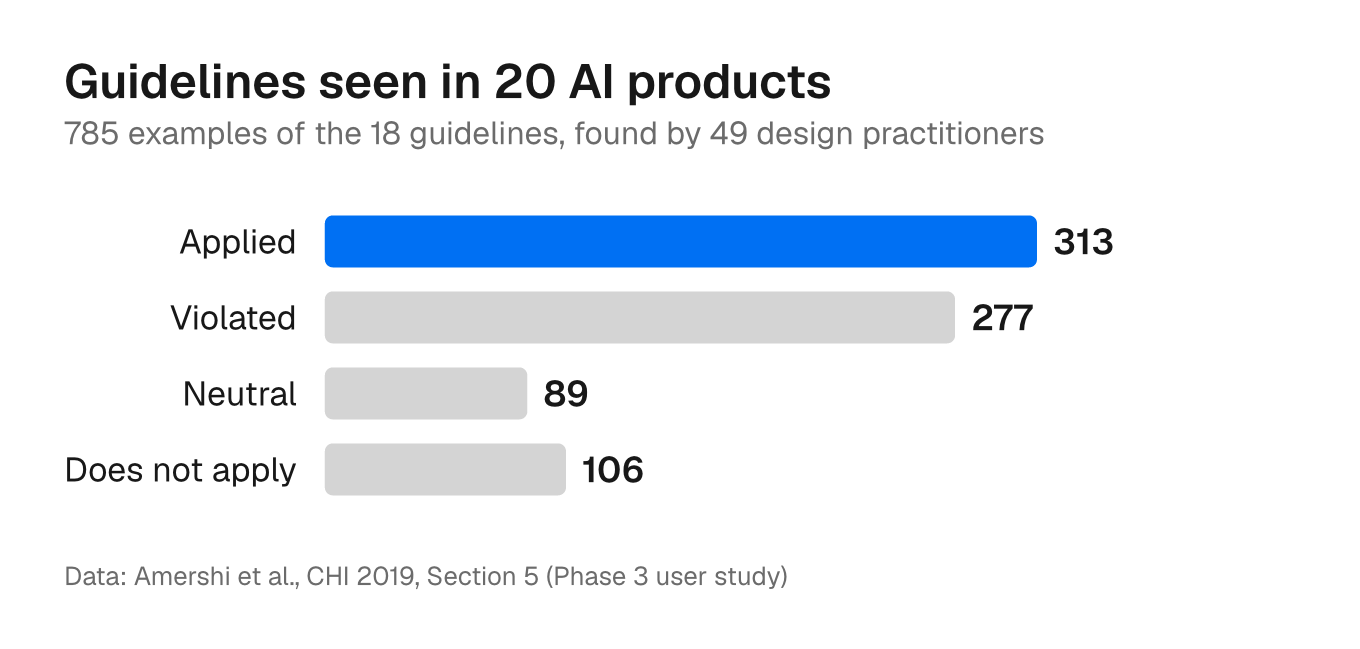
- Practitioners found 785 examples of the guidelines: 313 applied, 277 violated, 89 neutral and 106 “does not apply”.
- Every guideline had at least one application or violation in every product category.
- Some guidelines were often broken, such as “make clear how well the system can do what it can do” and “make clear why the system did what it did”.
How Pico builds on it
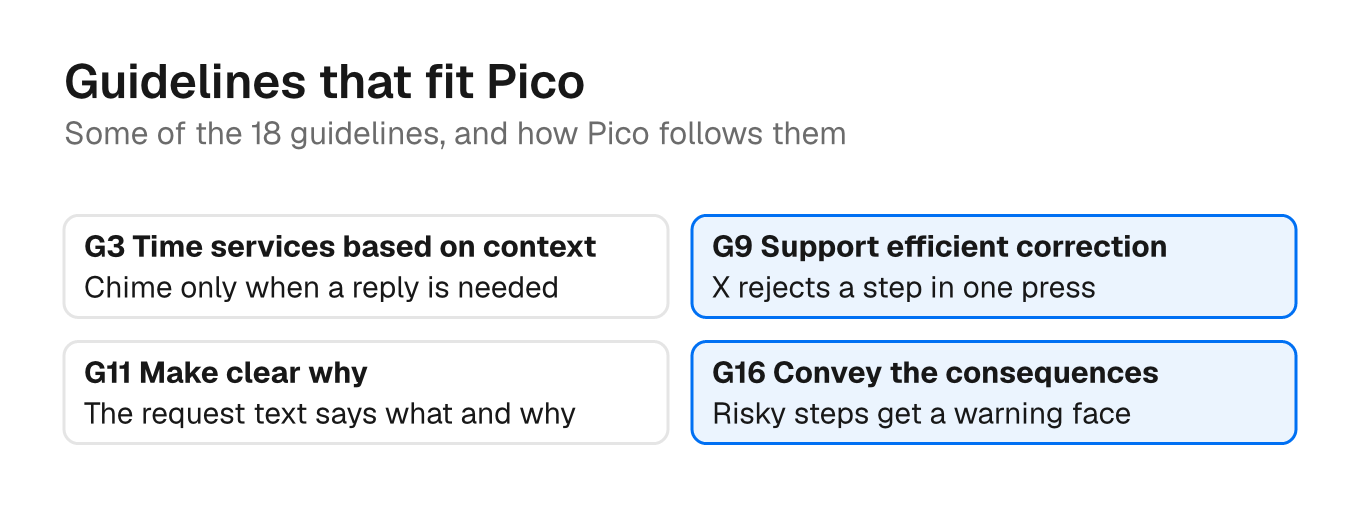
The guidelines work as a checklist for Pico. Pico only makes a sound when the agent needs a reply, X undoes a wrong step in one press, and risky steps get a warning face. Showing why the agent wants something is still hard on a small screen.
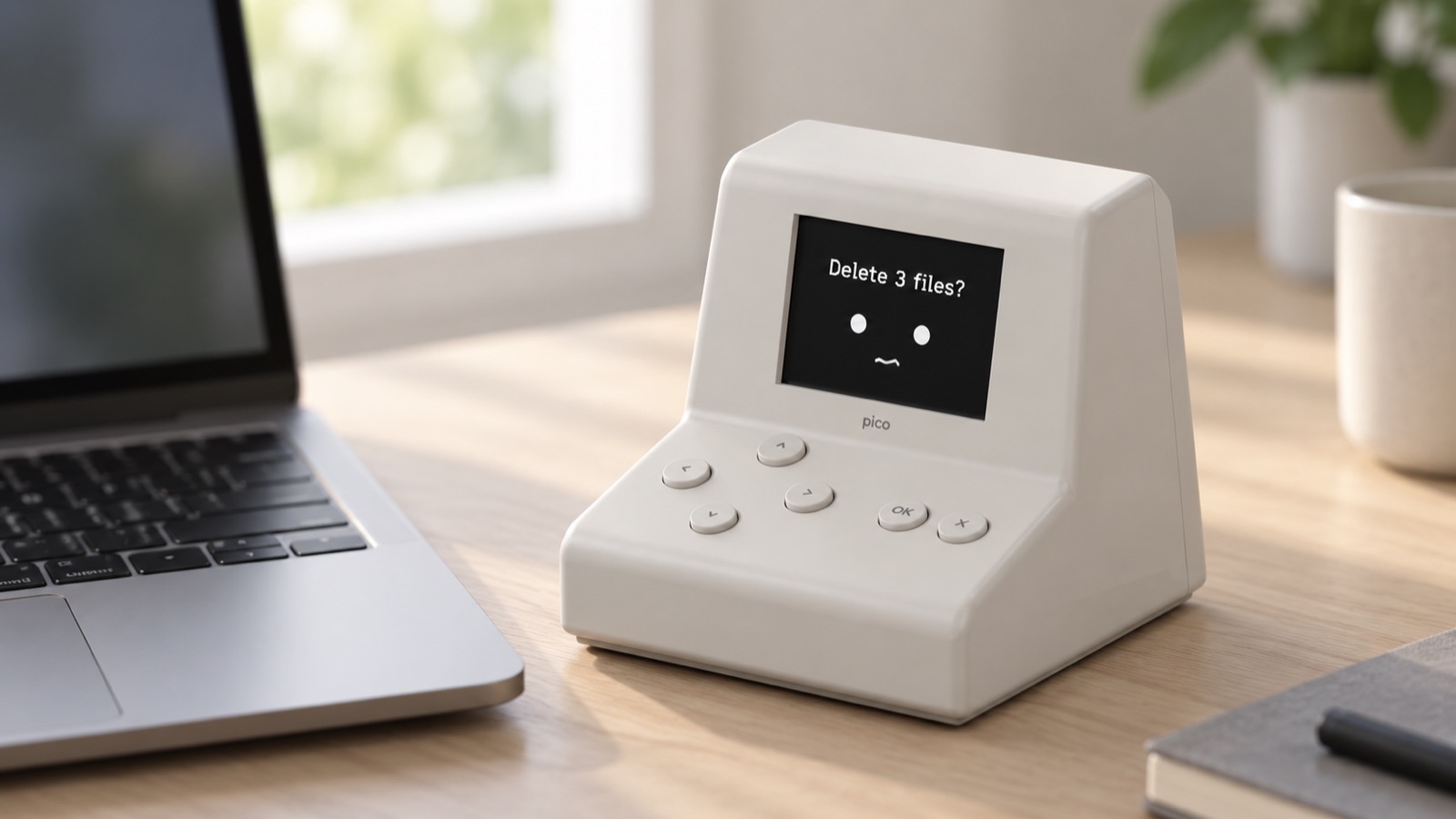
Concept image of Pico, generated with Codex.
Source
Saleema Amershi, Dan Weld, Mihaela Vorvoreanu, Adam Fourney, Besmira Nushi, Penny Collisson, Jina Suh, Shamsi Iqbal, Paul N. Bennett, Kori Inkpen, Jaime Teevan, Ruth Kikin-Gil, Eric Horvitz, “Guidelines for Human-AI Interaction,” CHI 2019, ACM Conference on Human Factors in Computing Systems · Microsoft Research and University of Washington, 2019. DOI: 10.1145/3290605.3300233.
10
Safety in AI-HRI: Challenges Complementing User Experience Quality
What they did
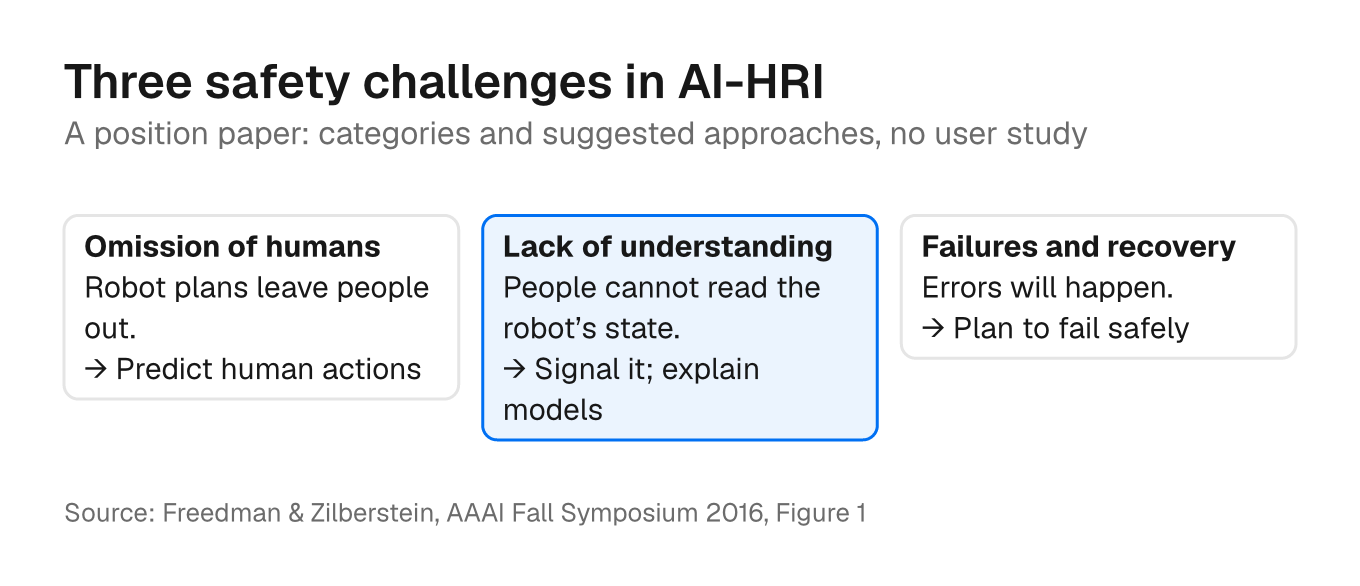
This short position paper argues that research on human-robot interaction should look at safety, not only at user experience. As robots become more autonomous, the AI may not plan for what people do, and people may not understand what the robot is doing.
What they found
This is a position paper with no study and no numbers. It names 3 groups of challenges:
- Omission of humans: robot plans often leave people out. Predict what people will do.
- Lack of understanding: people cannot see the robot’s internal state. Use clear signals, like coloured lights, and explain the models.
- Failures and recovery: errors will happen, so plan for safe failure and recovery.
- It also says the same signal can mean different things to different people.
How Pico builds on it
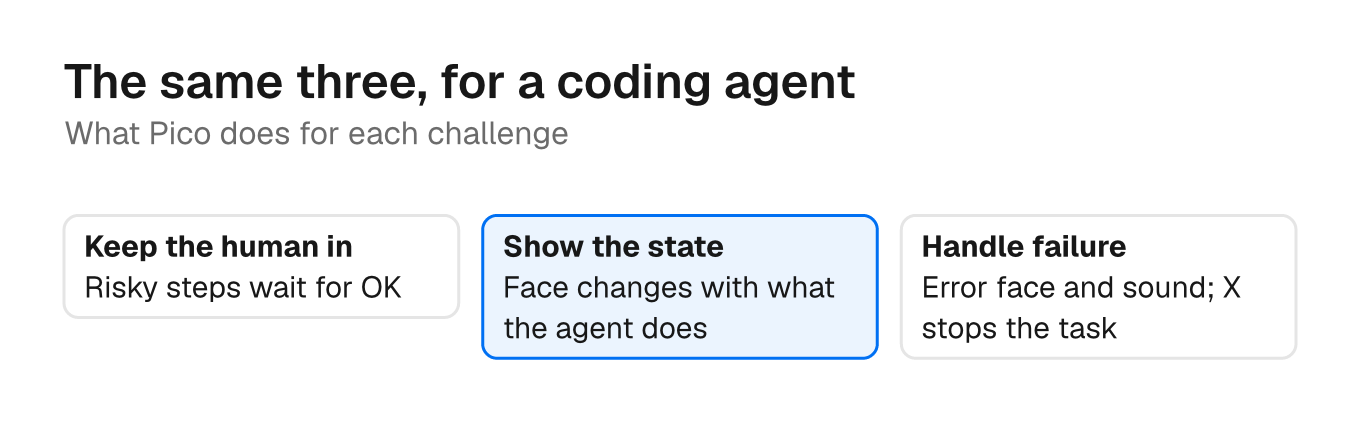
Pico mostly works on the second challenge: it shows the agent’s state on its face so you are not surprised. Risky steps also wait for your OK, and the X button stops a task when something goes wrong.
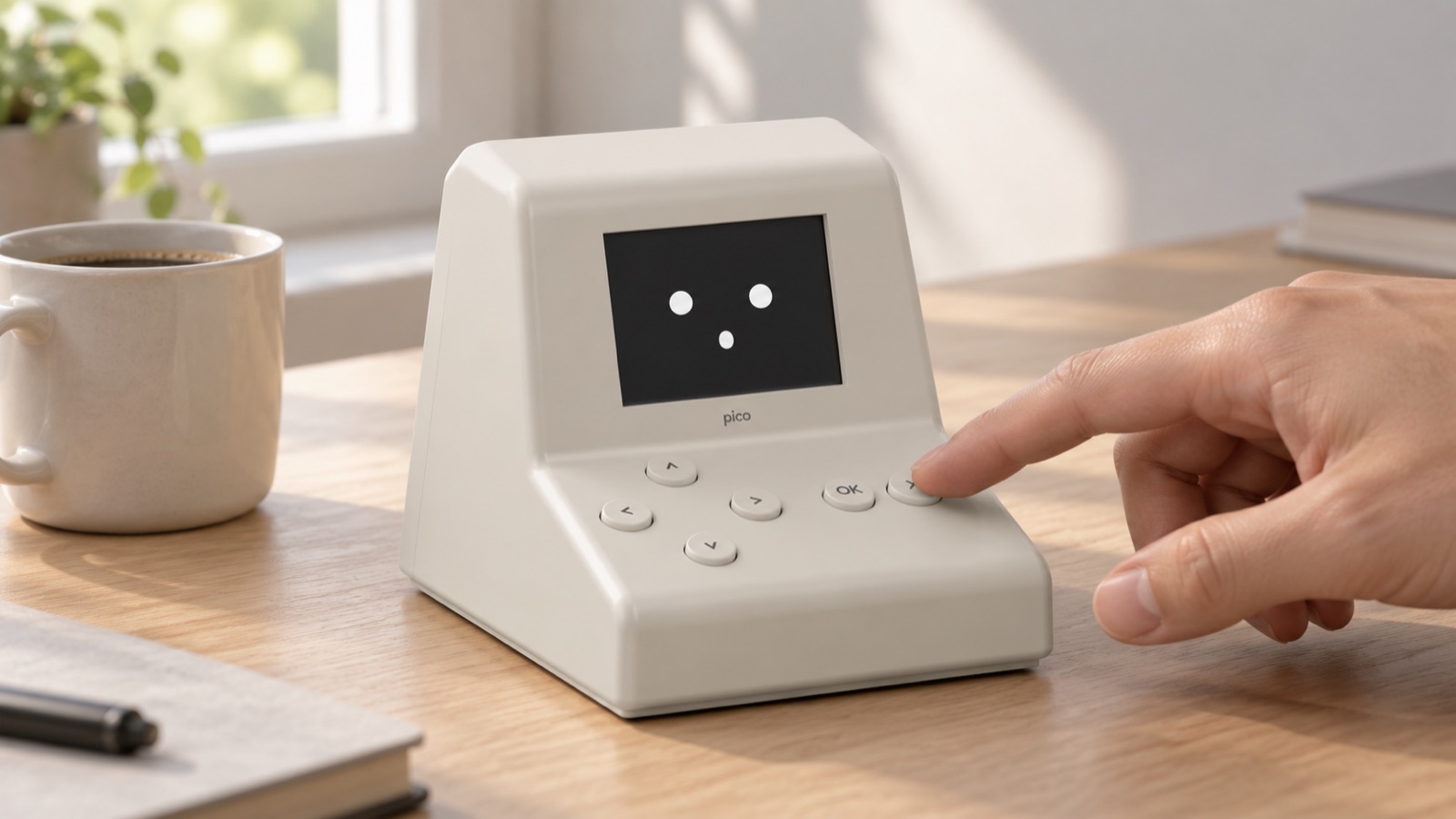
Concept image of Pico, generated with Codex.
Source
Richard G. Freedman, Shlomo Zilberstein, “Safety in AI-HRI: Challenges Complementing User Experience Quality,” AAAI 2016 Fall Symposium on Artificial Intelligence for Human-Robot Interaction (Technical Report FS-16-01) · University of Massachusetts Amherst, 2016. DOI: AAAI Technical Report FS-16-01, pp. 42–44 (no DOI).
11
JAHRVIS, a Supervision System for Human-Robot Collaboration
What they did
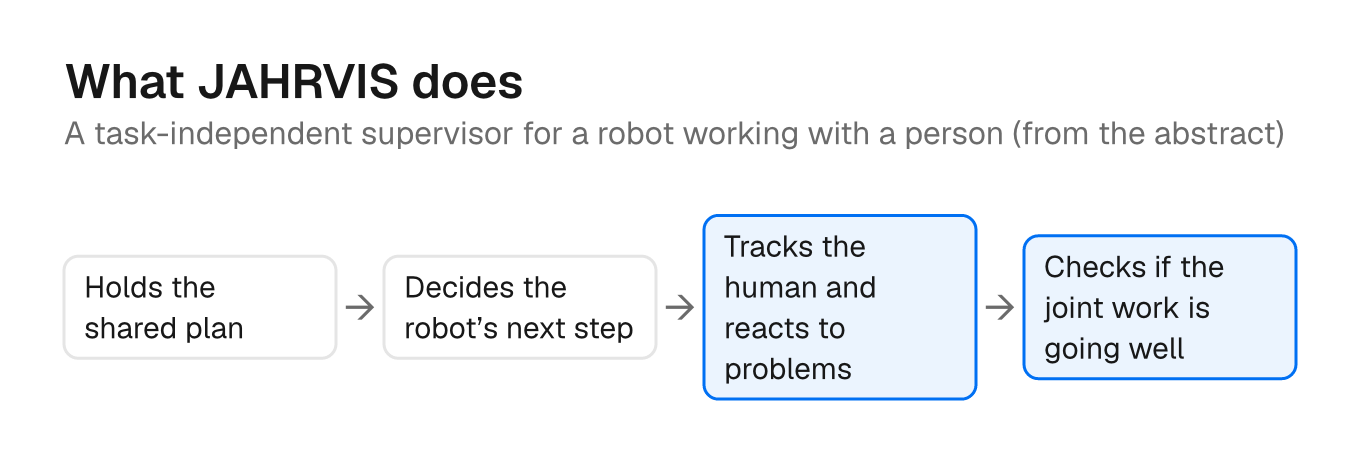
JAHRVIS (Joint Action-based Human-aware supeRVISor) is the part of a robot’s software that makes high-level decisions while it works with a person. Most robots use scripted tasks or a supervisor built for one task. JAHRVIS is meant to work for any task, and its code is open source.
What they found
This is a system paper. We could not read the full text, so these points come from the abstract.
- The supervisor is the “binder” of the robot: without it, no task or interaction happens.
- It controls the robot’s part of the shared task and reacts to problems, while keeping the human in mind.
- It also tries to judge whether the joint work is going well.
- It aims to move collaborative robots forward by being task-independent.
How Pico builds on it
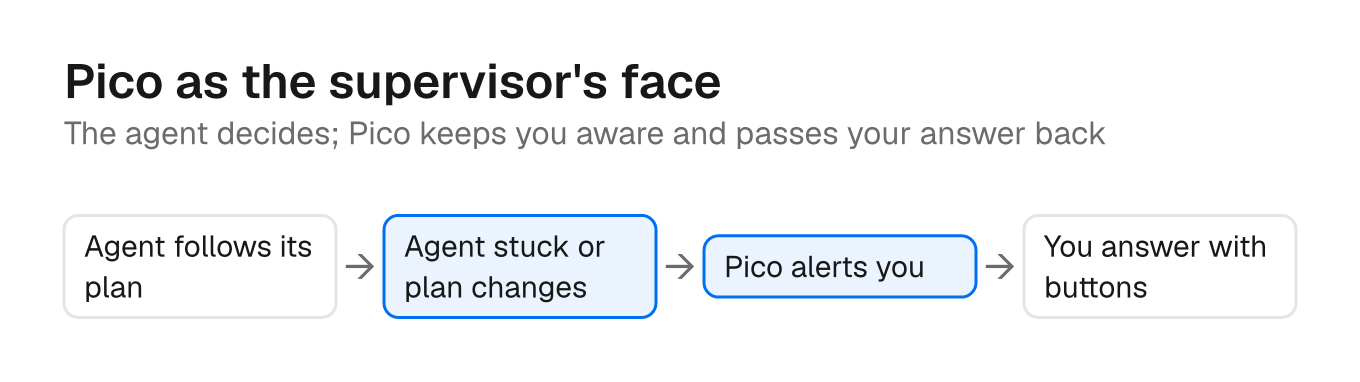
Pico does not decide anything itself; the coding agent does. Pico takes JAHRVIS’s focus on keeping the person aware: when the agent is stuck or its plan changes, Pico alerts you and sends your button answer back.
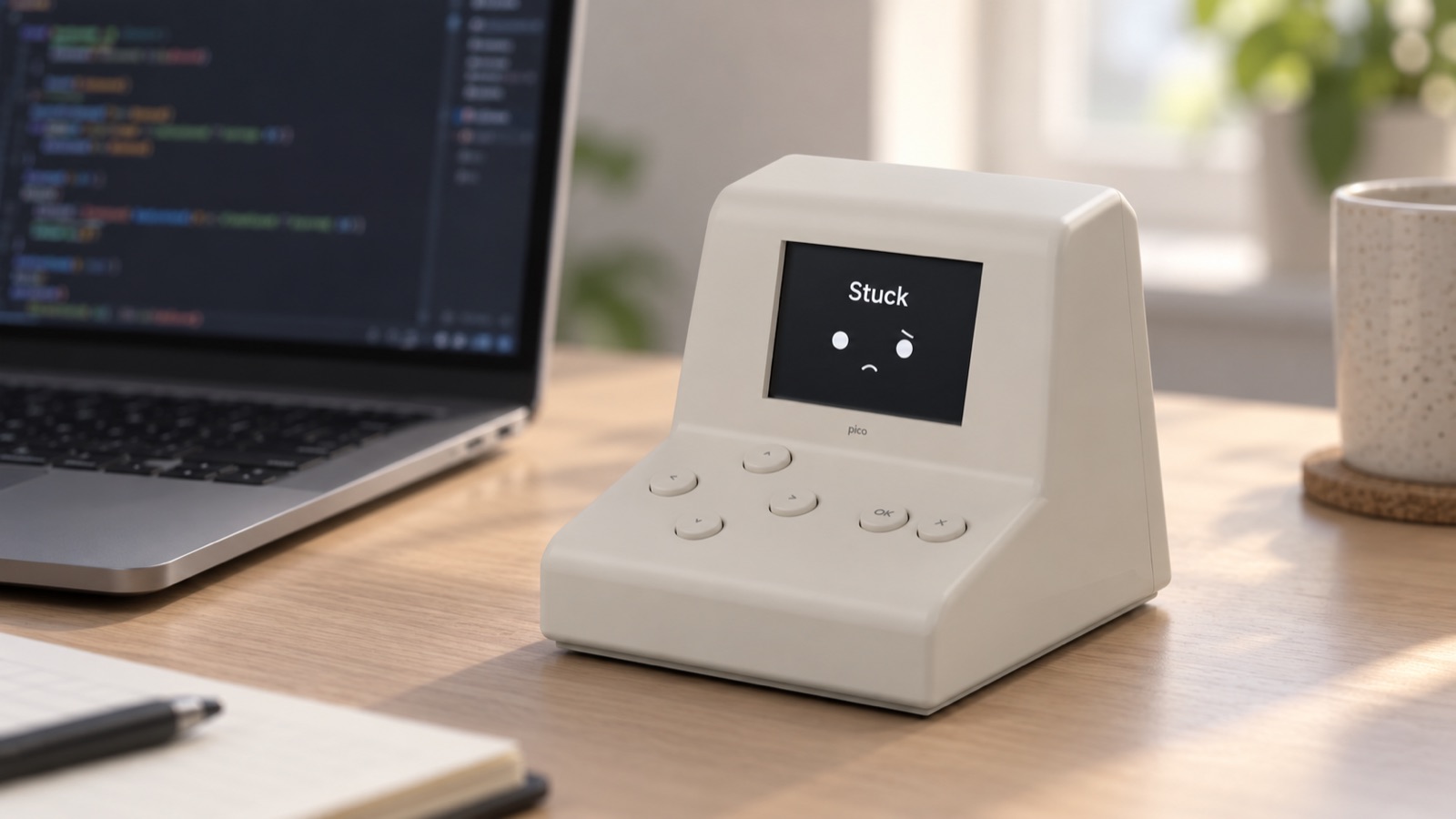
Concept image of Pico, generated with Codex.
Source
Amandine Mayima, Aurélie Clodic, Rachid Alami, “JAHRVIS, a Supervision System for Human-Robot Collaboration,” RO-MAN 2022, 31st IEEE International Conference on Robot and Human Interactive Communication · LAAS-CNRS, Toulouse, 2022. DOI: 10.1109/RO-MAN53752.2022.9900665.
12
Exploring the Impact of Confirmation and Interaction During Human-Robot Collaboration with a Proactive Robot Assistant
What they did
A robot that helps at home without being asked must still be trusted. The authors ran a video study comparing three robot “personas” that talk, explain and confirm in different ways before acting. They asked how people expect the robot to behave and how that affects trust.
What they found
We could not read the full text, so these points come from the abstract.
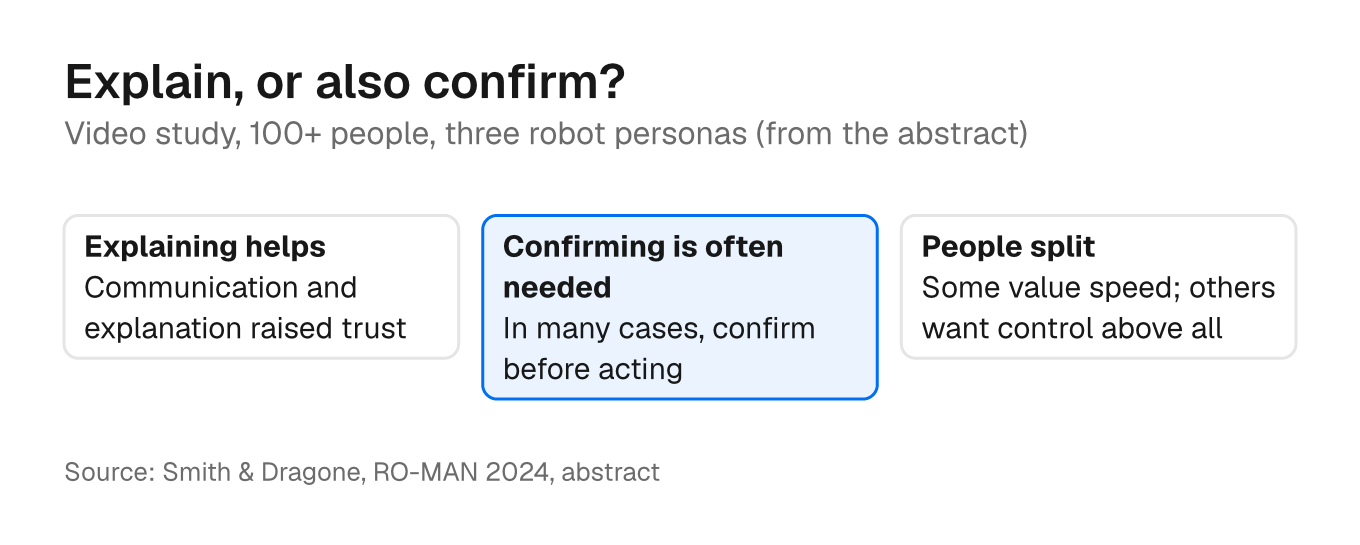
- The video study had over 100 participants and 3 interaction personas.
- Communication and explanation clearly raised trust.
- But in many cases, the robot may need to really confirm an action before doing it.
- People split into two groups: those who value speed and those who put control above all.
How Pico builds on it
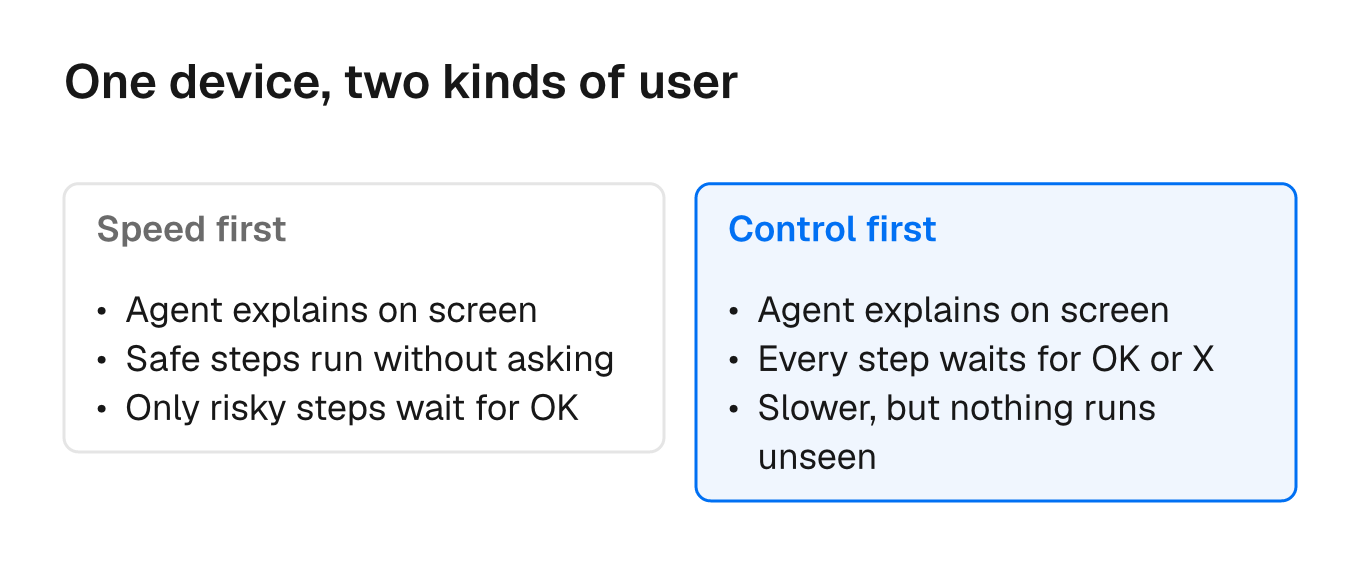
Pico shows the agent’s plan on screen and asks for OK before risky steps. Because people split on speed and control, Pico could offer two modes: only risky steps wait for OK, or every step does.
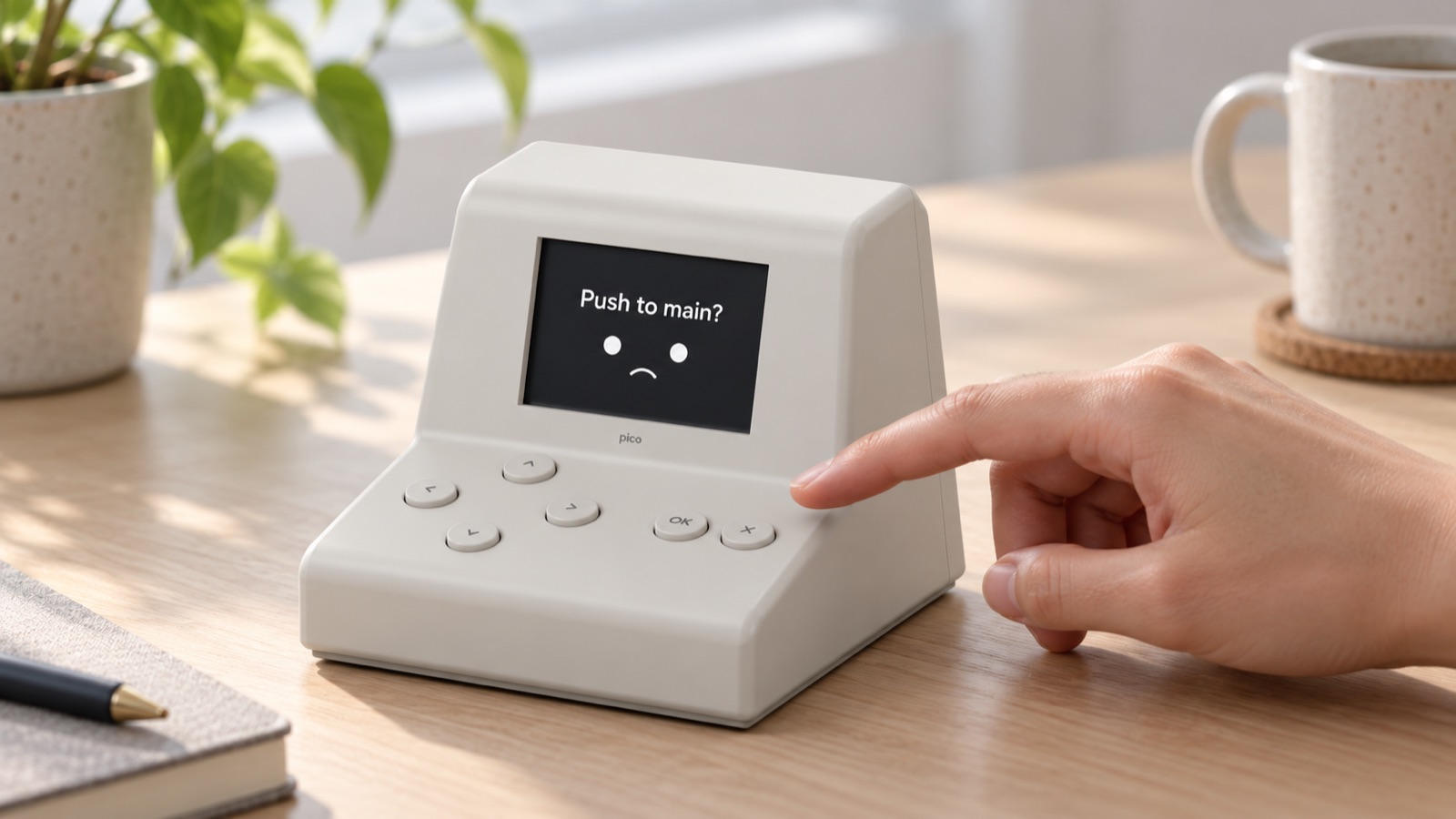
Concept image of Pico, generated with Codex.
Source
Ronnie Smith, Mauro Dragone, “Exploring the Impact of Confirmation and Interaction During Human-Robot Collaboration with a Proactive Robot Assistant,” RO-MAN 2024, 33rd IEEE International Conference on Robot and Human Interactive Communication · Heriot-Watt University, 2024. DOI: 10.1109/RO-MAN60168.2024.10731366.
13
Supervisory Control of Multiple Robots: Human-Performance Issues and User-Interface Design
What they did
This review looks at research on one person supervising many robots, such as drones and ground robots. It covers four problems: multitasking, trust in automation, situation awareness and workload. It then reviews interface designs that help, like planning tools, interruption aids and adaptive automation.
What they found
This is a review, so the numbers come from the studies it covers.
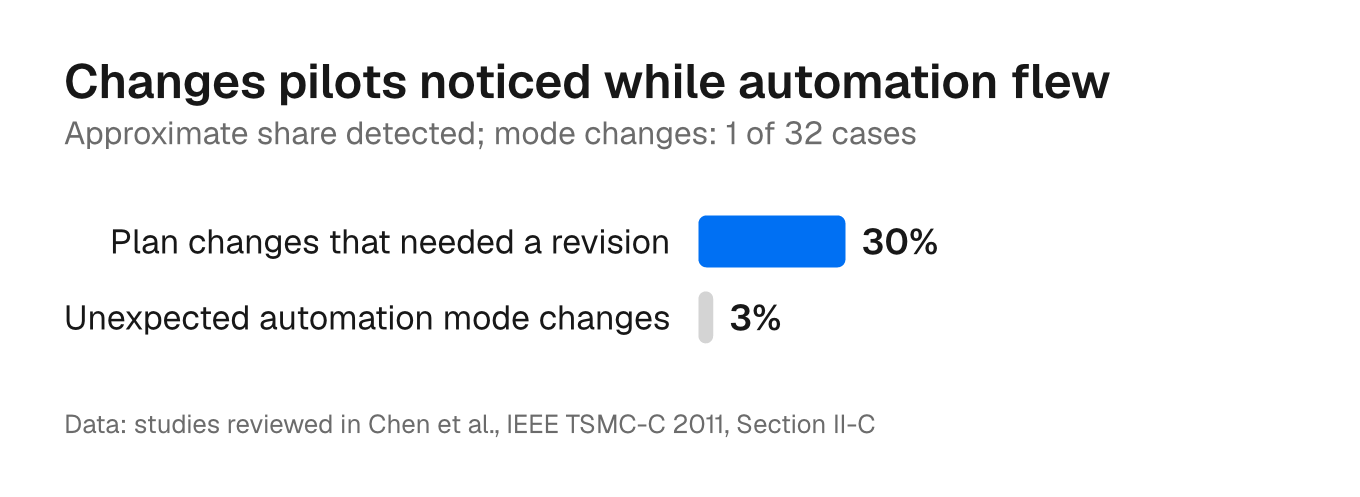
- Pilots noticed only about 30% of plan changes and 3% (1 of 32) of unexpected automation mode changes.
- Below about 70% reliability, an automated aid was worse than no aid.
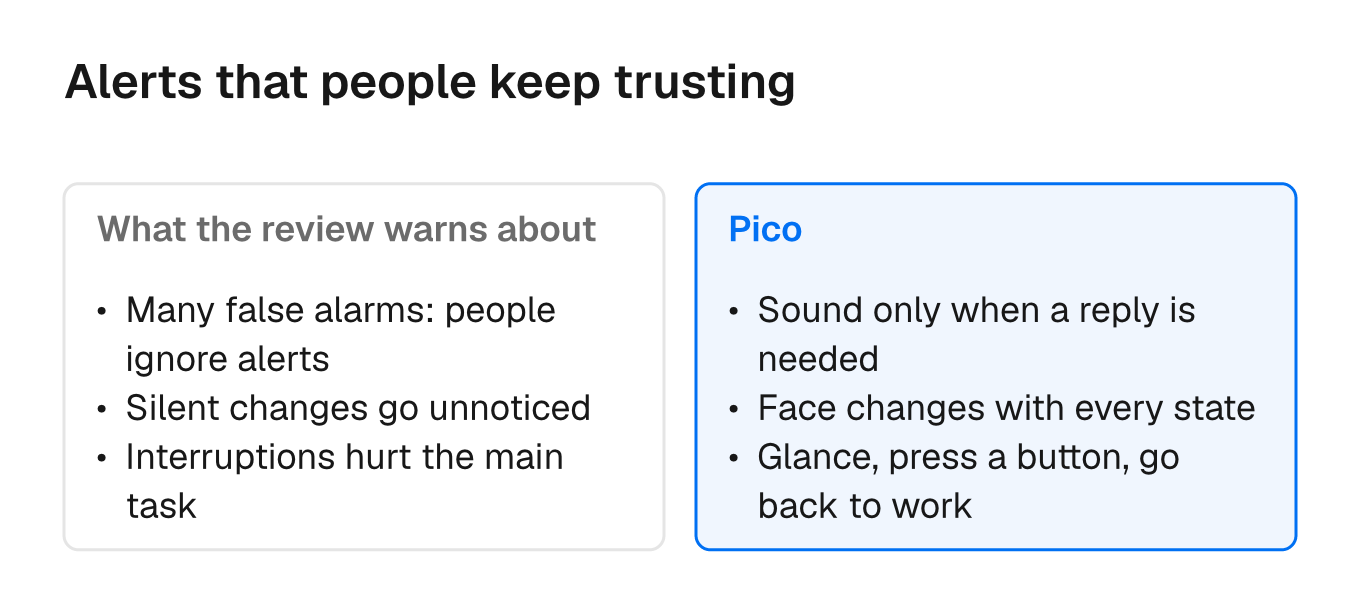
- Frequent false alarms made people ignore alerts (the “cry wolf” effect).
- In one study, the limit for direct control was between 8 and 12 robots.
How Pico builds on it
People miss changes when they only watch, and they ignore noisy alerts. Pico makes a sound only when the agent needs an answer and changes its face for every state, so you can glance, press a button and go back to work.
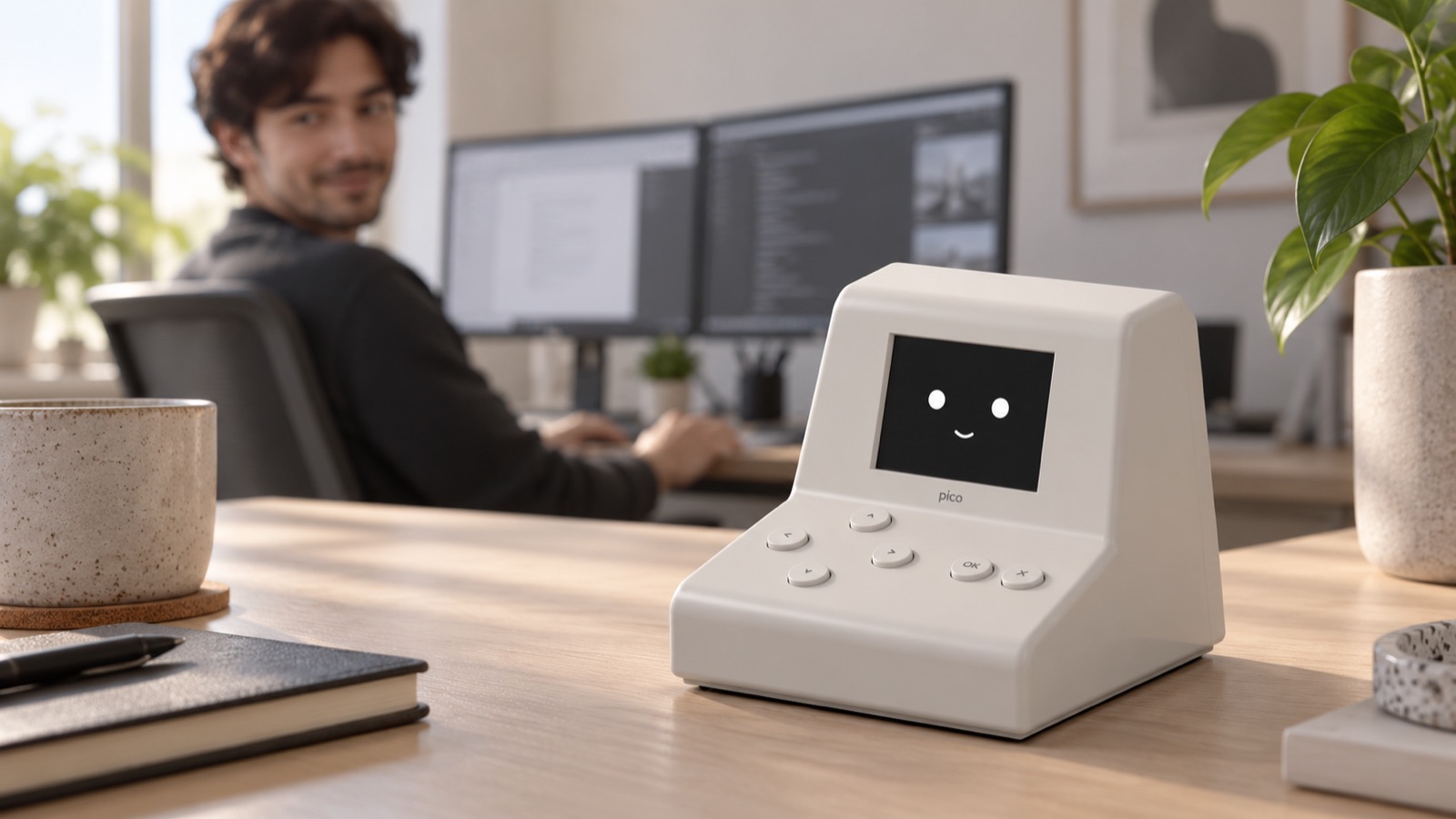
Concept image of Pico, generated with Codex.
Source
Jessie Y. C. Chen, Michael J. Barnes, Michelle Harper-Sciarini, “Supervisory Control of Multiple Robots: Human-Performance Issues and User-Interface Design,” IEEE Transactions on Systems, Man, and Cybernetics, Part C (Applications and Reviews), 41(4) · U.S. Army Research Laboratory, 2011. DOI: 10.1109/TSMCC.2010.2056682.
Sara Jamil
01
Applications, Challenges, and Future Directions of Human-in-the-Loop Learning
What they did
This is a survey, not an experiment. The authors review 207 references on human-in-the-loop (HITL) learning, where people give feedback to a machine learning system. They group the work by method, by field (such as cars, health and finance) and by nine kinds of challenge.
What they found
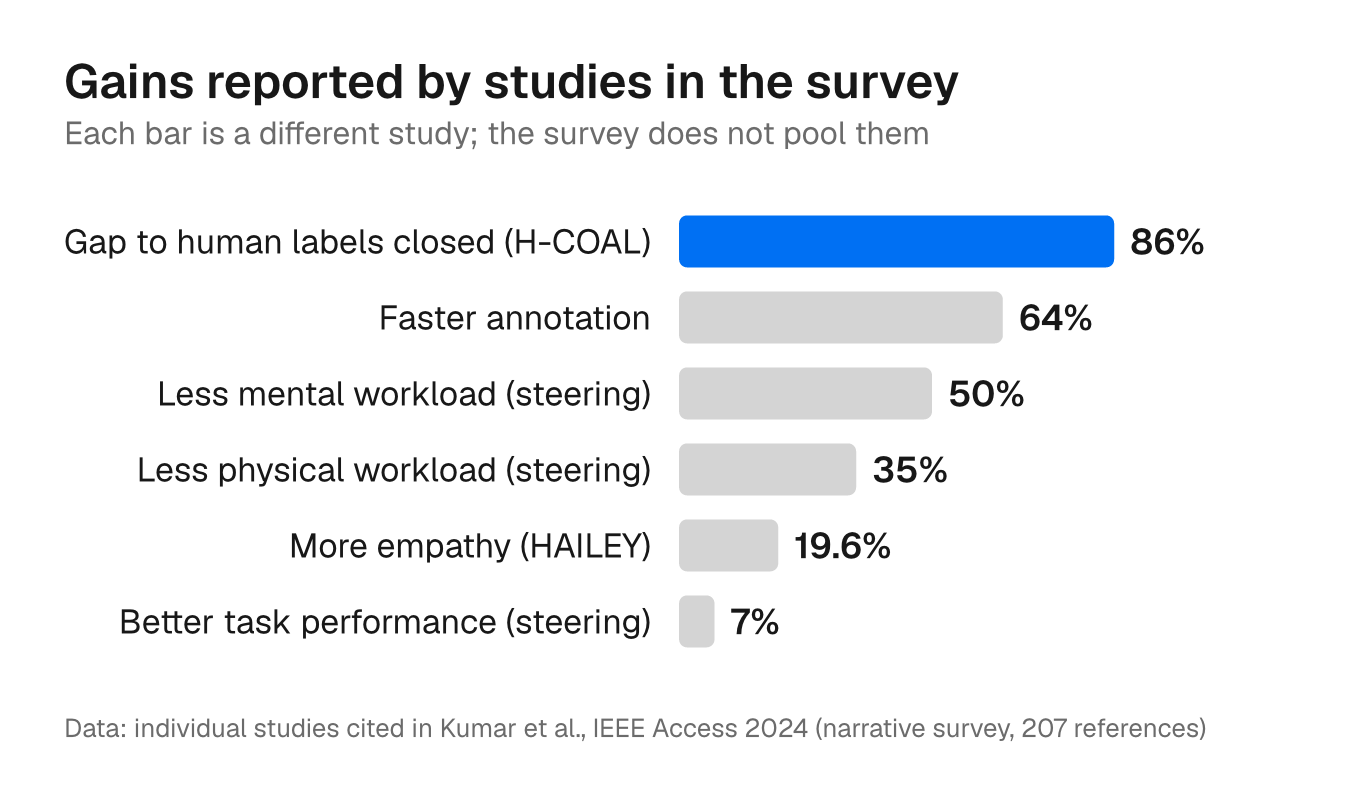
- The survey reports gains from single studies but does not combine them.
- People correcting 20% of labels closed up to 86% of the gap to human labels (H-COAL).
- A steering study cut mental workload by about 50% and physical workload by about 35%.
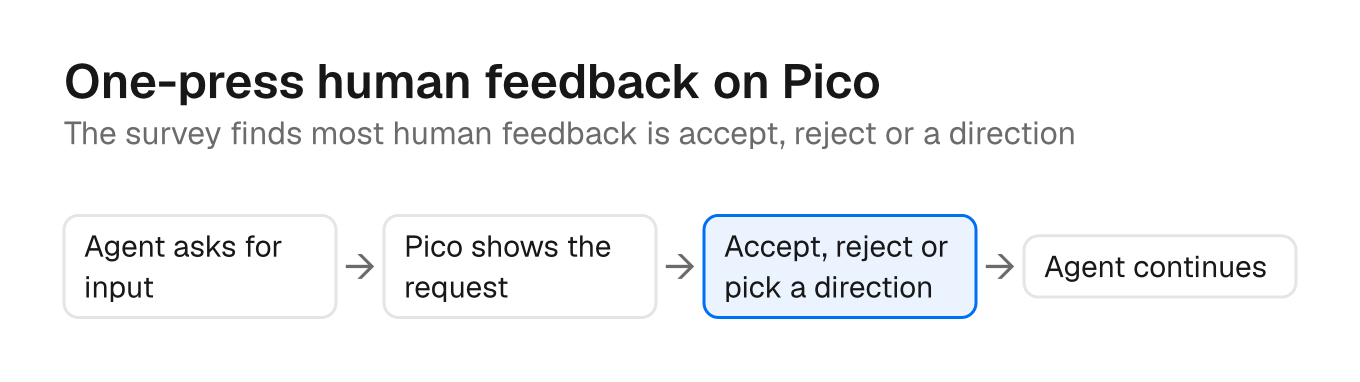
- Human input does not grow with the data, so it becomes the slow step. Most feedback today is just accept, reject or a direction.
How Pico builds on it
The survey says the person is the bottleneck and gives simple answers. Pico’s OK, X and arrow buttons match those three answers, so a person can reply to a coding agent with one press and without going back to the computer. The survey does not test a device like Pico.
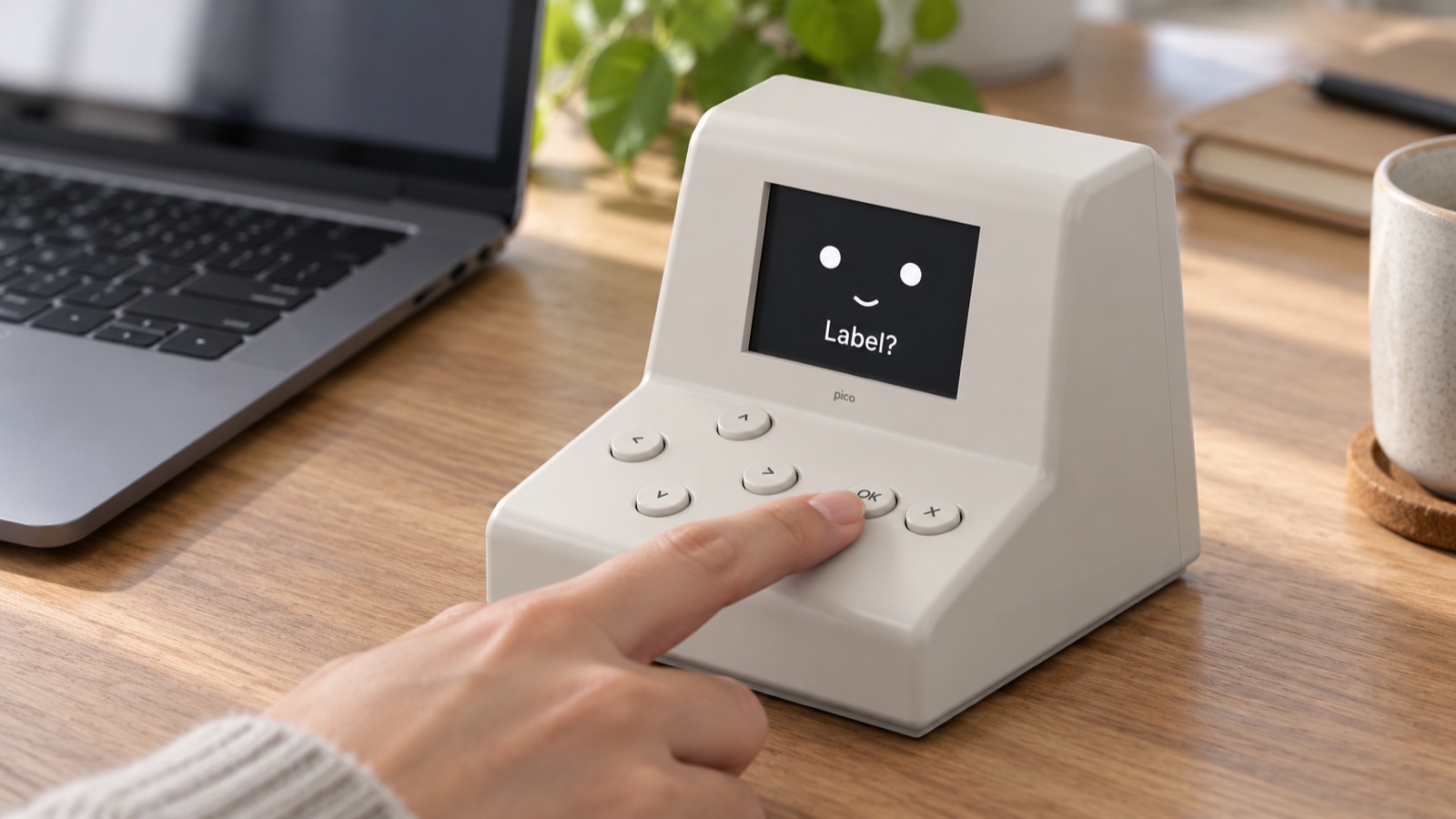
Concept image of Pico, generated with Codex.
Source
Sushant Kumar, Sumit Datta, Vishakha Singh, Deepanwita Datta, Sanjay Kumar Singh, Ritesh Sharma, “Applications, Challenges, and Future Directions of Human-in-the-Loop Learning,” IEEE Access, 2024. DOI: 10.1109/ACCESS.2024.3401547.
02
MCP-Secure: A Runtime Access Control Layer for Privilege-Aware LLM Agent Tooling
What they did
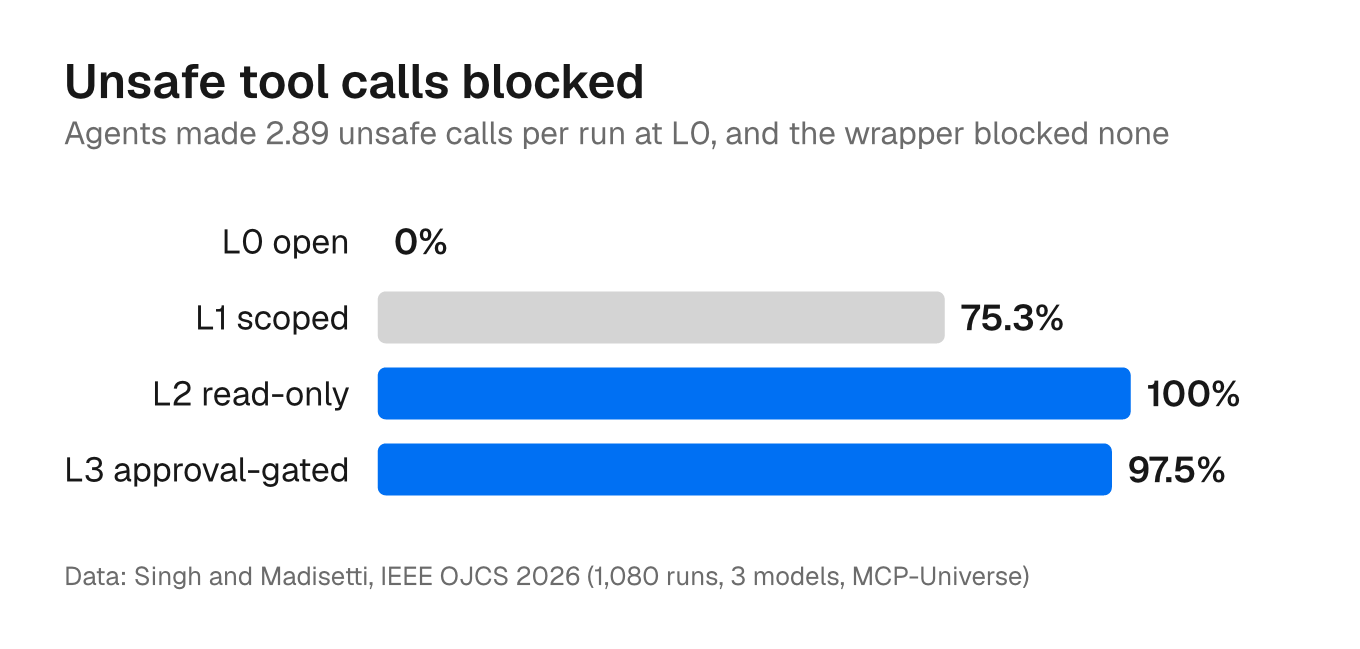
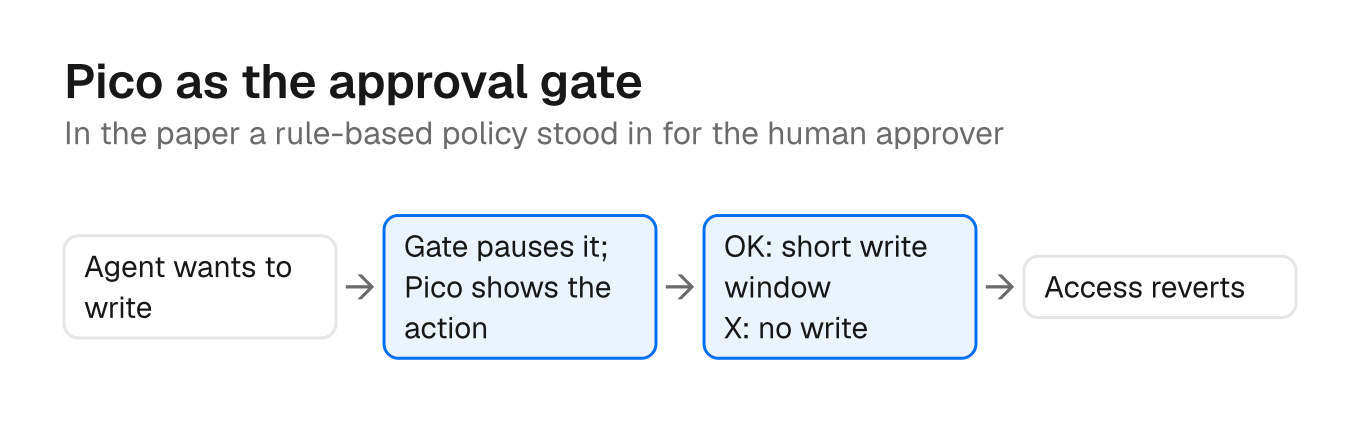
MCP-Secure is a layer between an AI agent and its tools (MCP servers). It limits which tools the agent sees, makes writes do nothing by default, and holds sensitive actions for approval. They tested four levels, from open (L0) to approval-gated (L3), in 1,080 runs with GPT-5, Claude Sonnet 4 and Grok-4.
What they found
- With no limits, agents made 2.89 unsafe calls per run and none were blocked.
- Scoped access blocked 75.3%, read-only 100% and approval gating 97.5%.
- The cost was progress: a pull request task fell from 0.43 to 0.00 under read-only and approval.
- The layer added only 0.4–0.5 ms per run.
How Pico builds on it
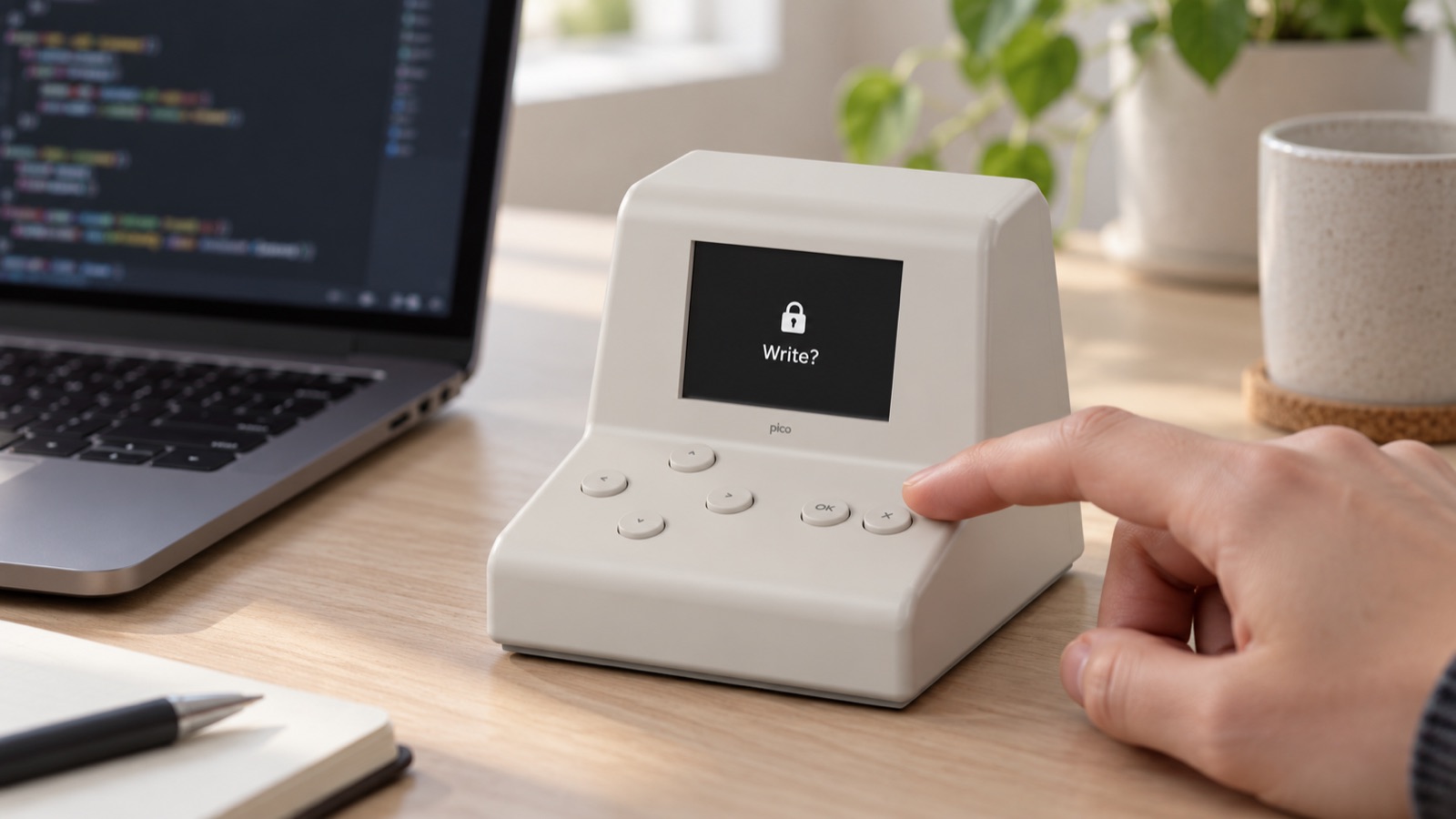
In the tests a simple rule played the human approver, so real human delay was not measured. Pico can be that human step: it shows the pending write, and one press opens a short write window or keeps the agent blocked. This could let write-heavy tasks keep going without giving up safety, but that is still untested.
Concept image of Pico, generated with Codex.
Source
Gamini Singh, Vijay K. Madisetti, “MCP-Secure: A Runtime Access Control Layer for Privilege-Aware LLM Agent Tooling,” IEEE Open Journal of the Computer Society, 2026. DOI: 10.1109/OJCS.2026.3664314.
03
SAGE: A Stabilize-Assess-Govern-Enforce Framework for Deployment-Oriented Evaluation of LLM-Based Autonomous Agents
This summary is based on the published abstract only. The full text is behind the IEEE paywall.
What they did
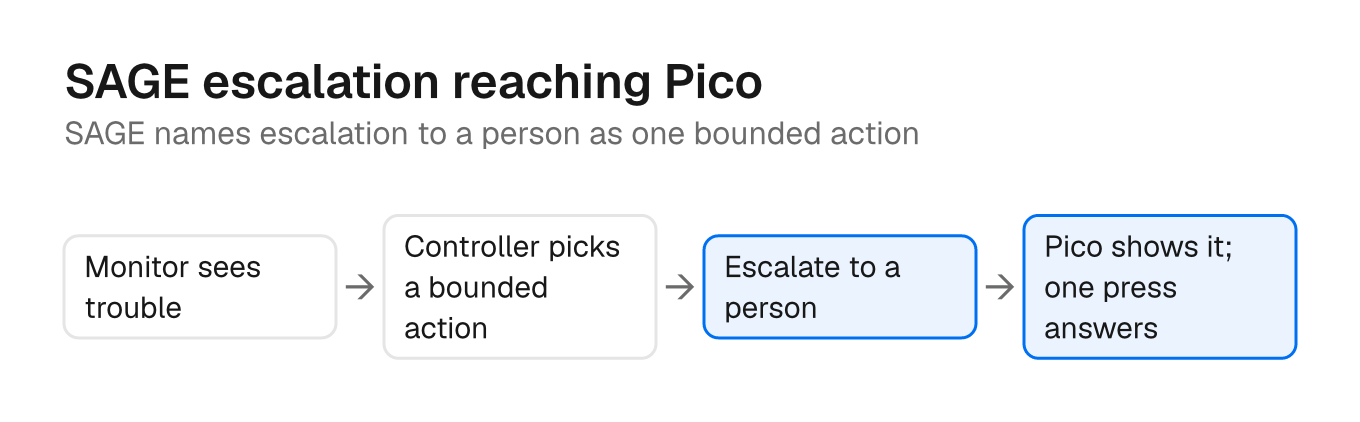
SAGE is a framework for judging if an AI agent is ready for real use, beyond task success. It watches the agent for warning signs, scores success per dollar, sorts failures into ten classes and adds a controller. The controller can replan, retry or escalate to a person. They tested it in a simulation and with a real agent on HotpotQA.
What they found
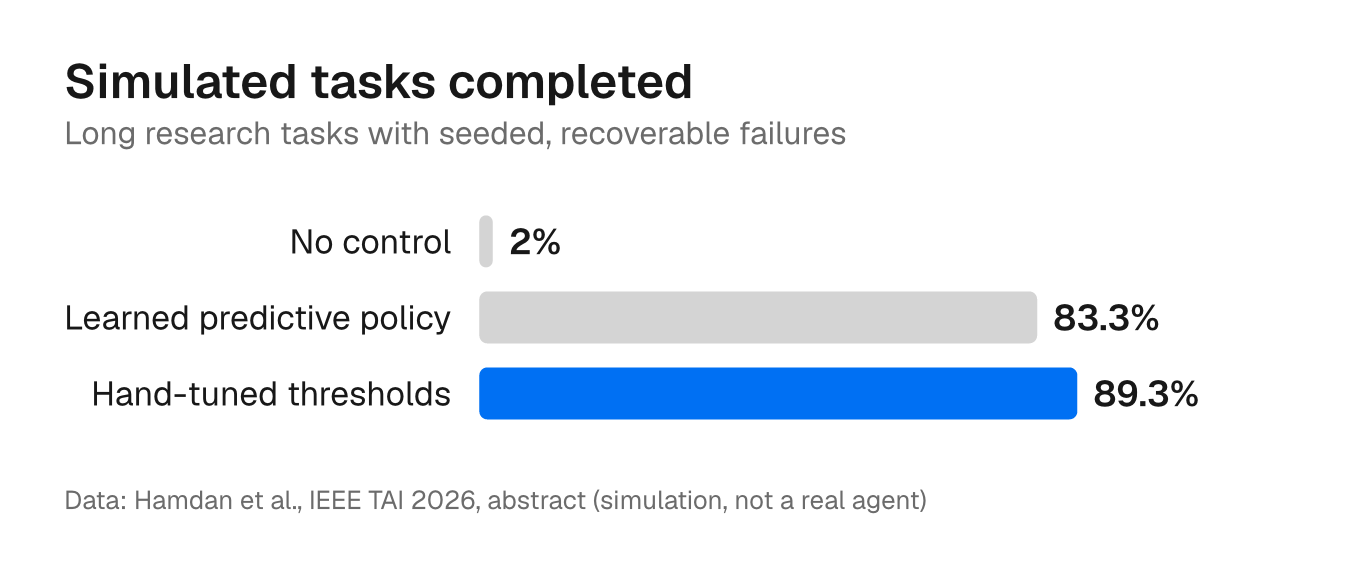
- In simulation, completion rose from 2.0% with no control to 89.3% with hand-tuned thresholds (83.3% with a learned policy).
- Higher completion cost more money.
- Warning signs predicted a failure five steps ahead with an AUC of 0.752 (0.5 is chance).
- With the real agent, the controller gave no significant benefit.
How Pico builds on it
SAGE lists escalation to a person as one of the controller’s actions, but does not test that step. Pico can receive the escalation, show it with a worried face and a sound, and take the person’s answer with one press.
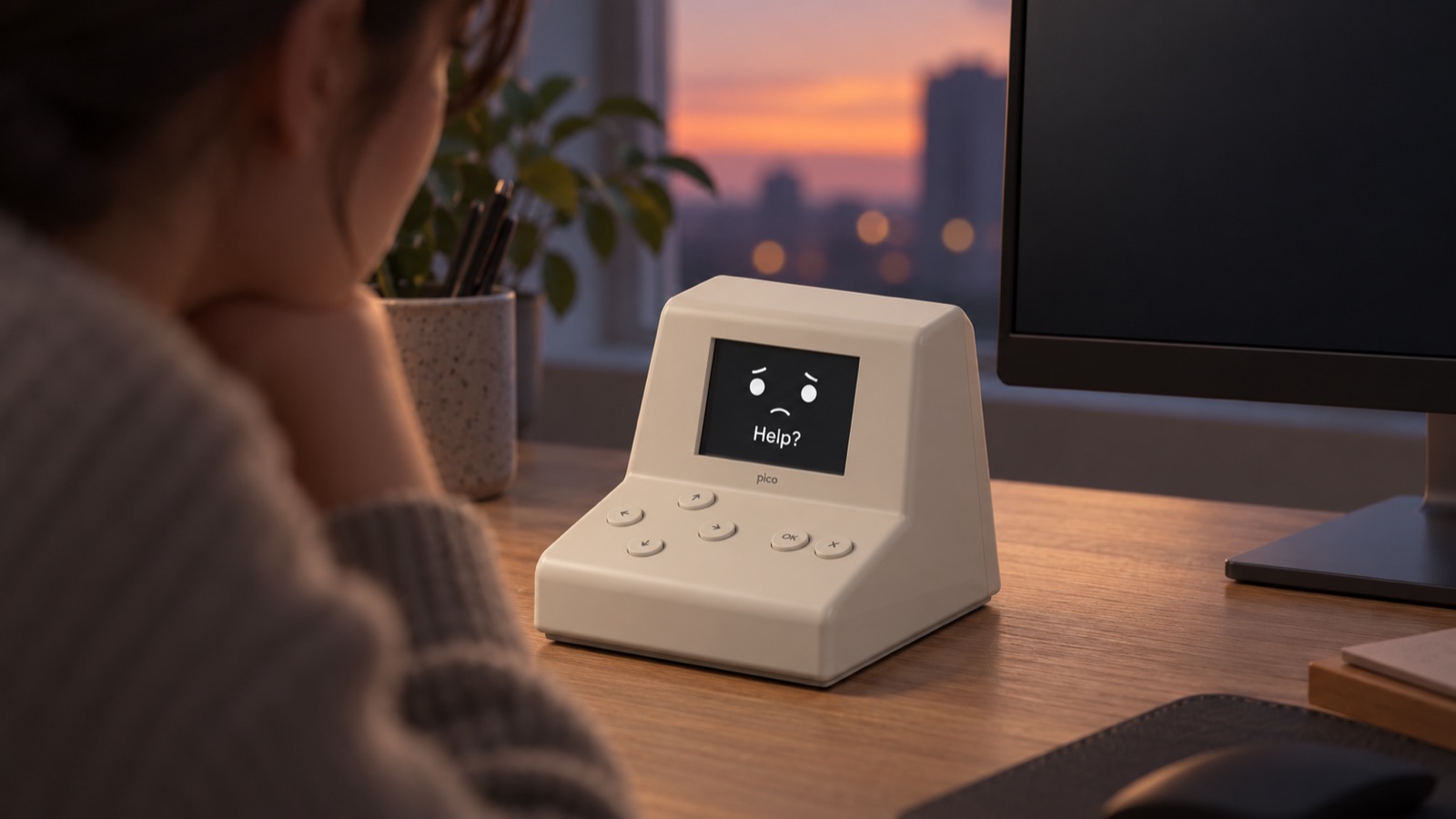
Concept image of Pico, generated with Codex.
Source
Mohammed Hamdan, Vincenzo Dentamaro, Giuseppe Pirlo, Mohamed Cheriet, “SAGE: A Stabilize-Assess-Govern-Enforce Framework for Deployment-Oriented Evaluation of LLM-Based Autonomous Agents,” IEEE Transactions on Artificial Intelligence (Early Access), 2026. DOI: 10.1109/TAI.2026.3731348.
04
AgentBound: Securing Execution Boundaries of AI Agents
What they did
MCP servers give AI agents tools but usually run with full access to the computer. AgentBound gives each server a permission list, like Android apps, and a sandbox that blocks anything not on it. They tested it on the 296 most popular MCP servers and on real malicious ones.
What they found
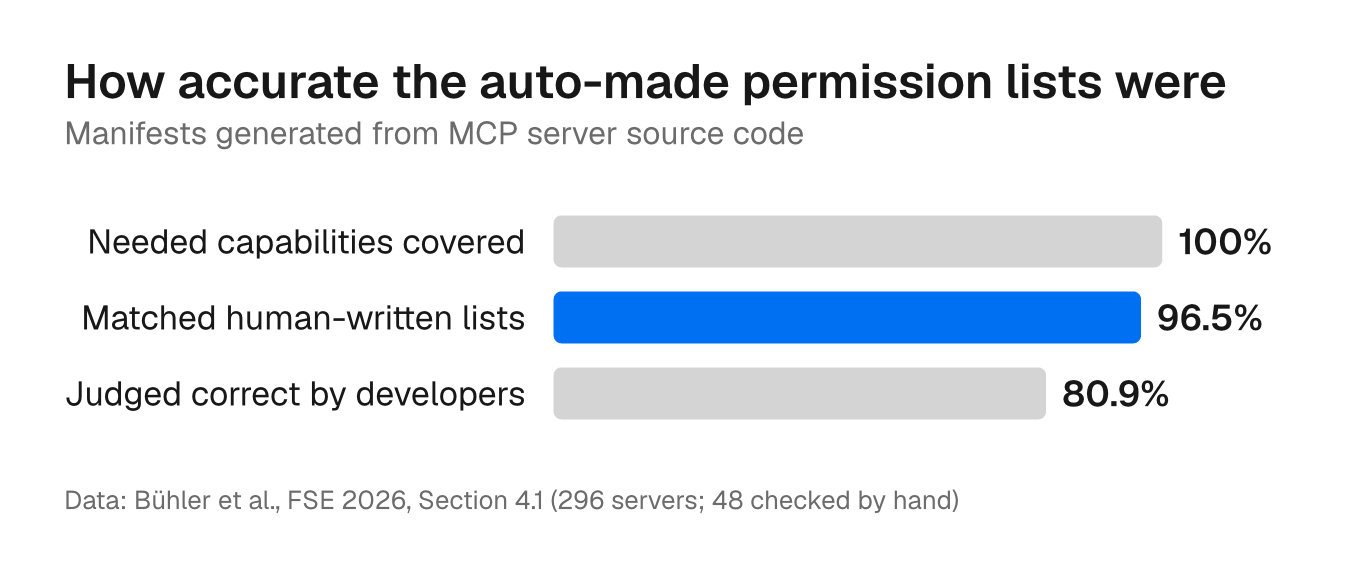
- Permission lists made automatically from source code matched hand-written ones 96.5% of the time.
- Developers who answered judged 80.9% of the lists correct, and none said a needed permission was missing.
- The sandbox stopped all 9 attacks that reached for files, network or the shell. A “puppet” attack that only tricks the model was not stopped.
- It added only 0.6 ms per operation on macOS (150–400 ms once at startup).
How Pico builds on it
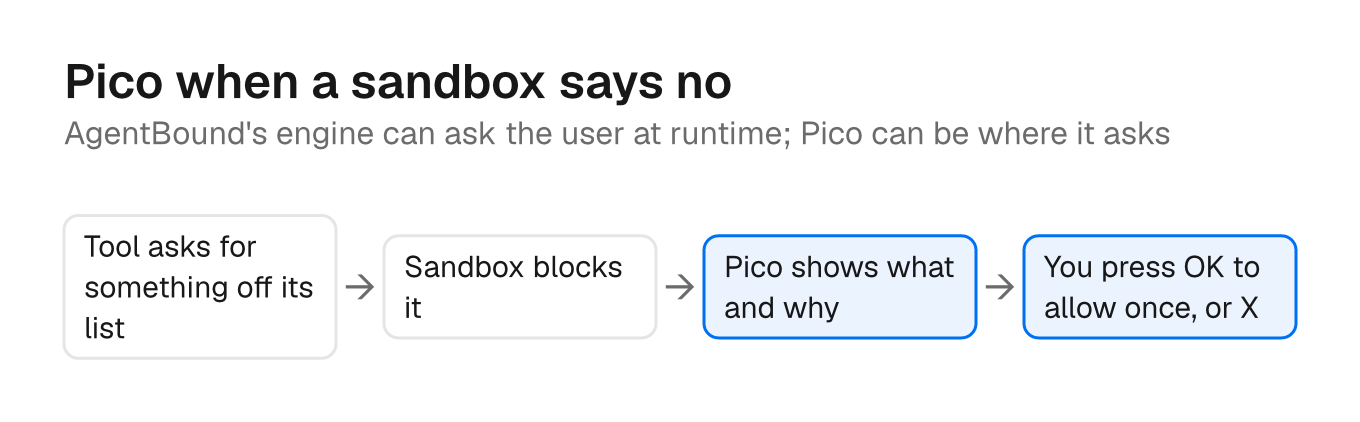
AgentBound can ask the user at runtime when a server wants something new. Pico can be that prompt: it shows what was asked for, OK allows it once and X keeps it blocked. AgentBound cannot catch attacks that stay inside the allowed list, and Pico cannot either.
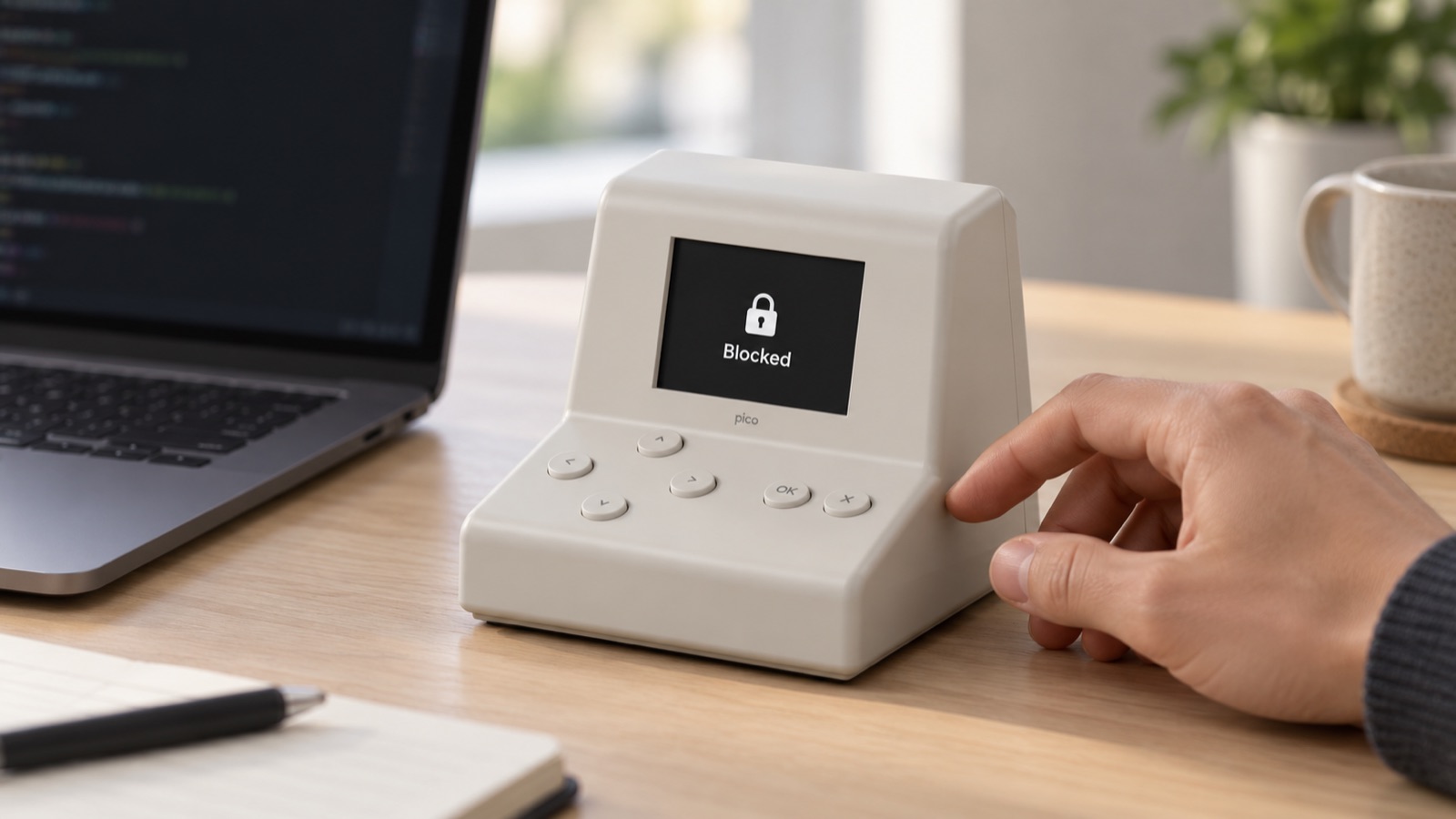
Concept image of Pico, generated with Codex.
05
From Human-in-the-Loop to Human-on-the-Loop: VALID Framework for Resilient Trust in Autonomous AI Agent Contract Execution
What they did
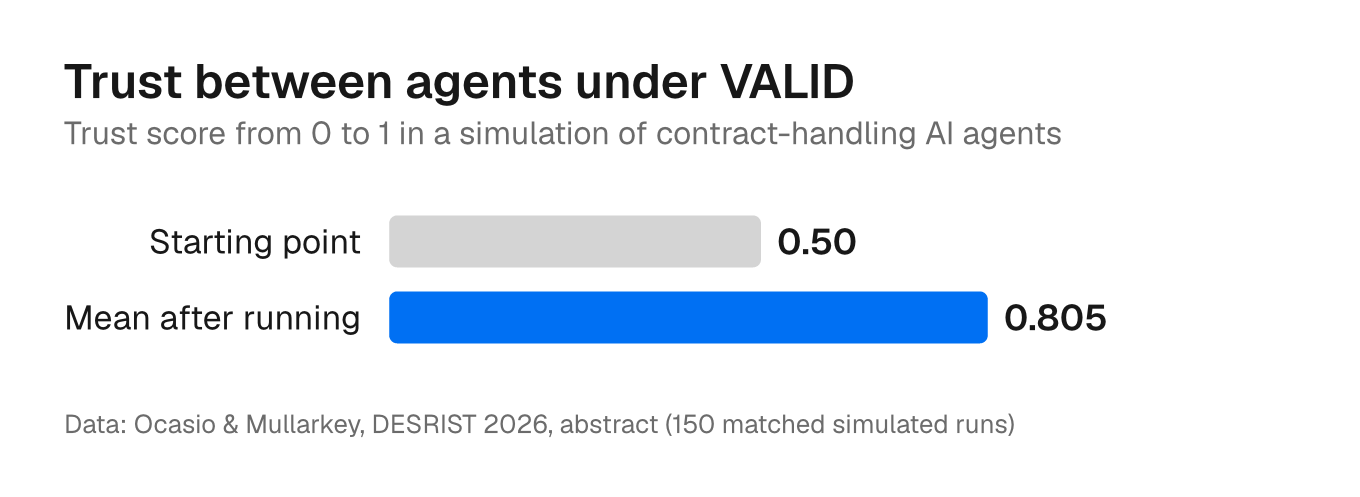
VALID is a five-layer governance design for AI agents that handle business contracts. It aims to move people from approving each step (in the loop) to supervising (on the loop). They tested it in a simulation of AI agents against a simulated human with built-in biases like fatigue.
What they found
(from the abstract)
- Over 150 matched runs, trust between agents rose from 0.50 to a mean of 0.805.
- Decision quality stayed stable, agents avoided decisions less, and trust recovered after shock events.
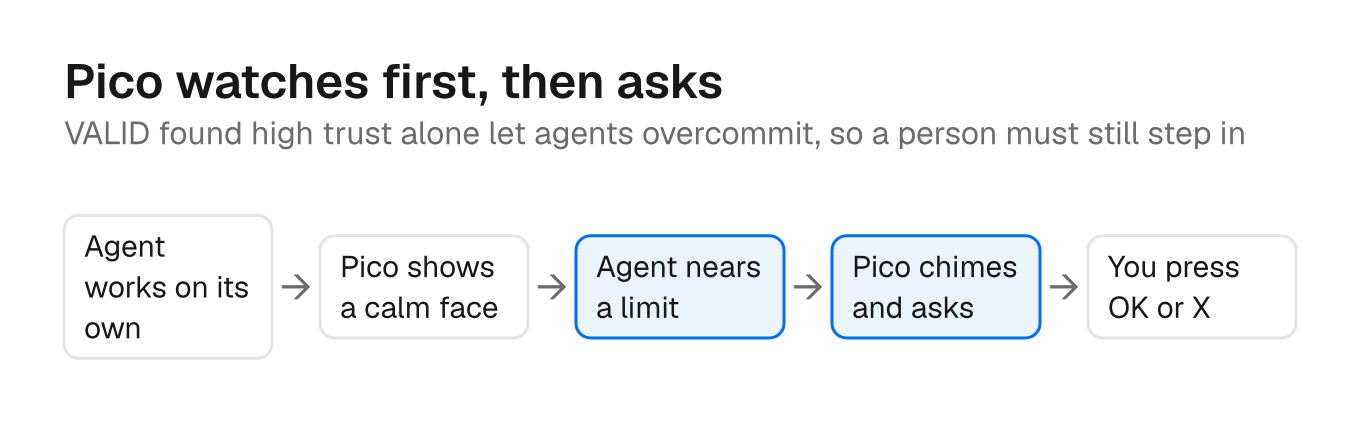
- Agents at peak trust took on more than their company could deliver, so trust alone was not enough.
- The authors conclude that human-on-the-loop supervision is still a key safeguard.
How Pico builds on it
VALID tested simulated agents, not real people, and not coding. Pico applies its main lesson to coding agents: let the agent work while Pico shows a calm face, then chime and ask when it reaches a limit. One press on OK or X brings the person back in the loop.
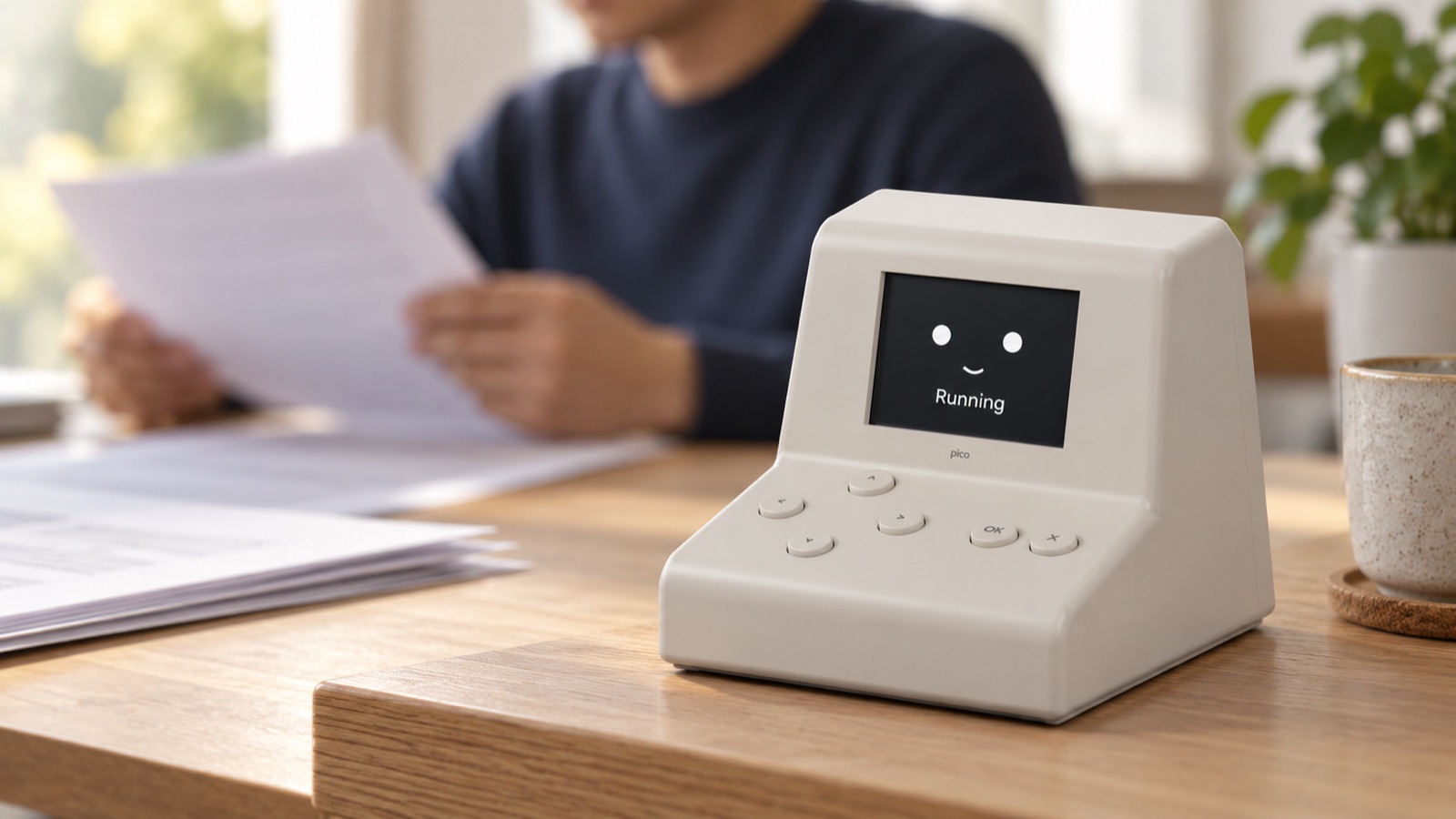
Concept image of Pico, generated with Codex.
Source
Jonathan Ocasio, Matthew Mullarkey, “From Human-in-the-Loop to Human-on-the-Loop: VALID Framework for Resilient Trust in Autonomous AI Agent Contract Execution,” DESRIST 2026, Design Science Research in Information Systems and Technology (LNCS 16605) · University of South Florida, 2026. DOI: 10.1007/978-3-032-28316-0_17.
06
Human-in/on-the-Loop Design for Human Controllability
What they did
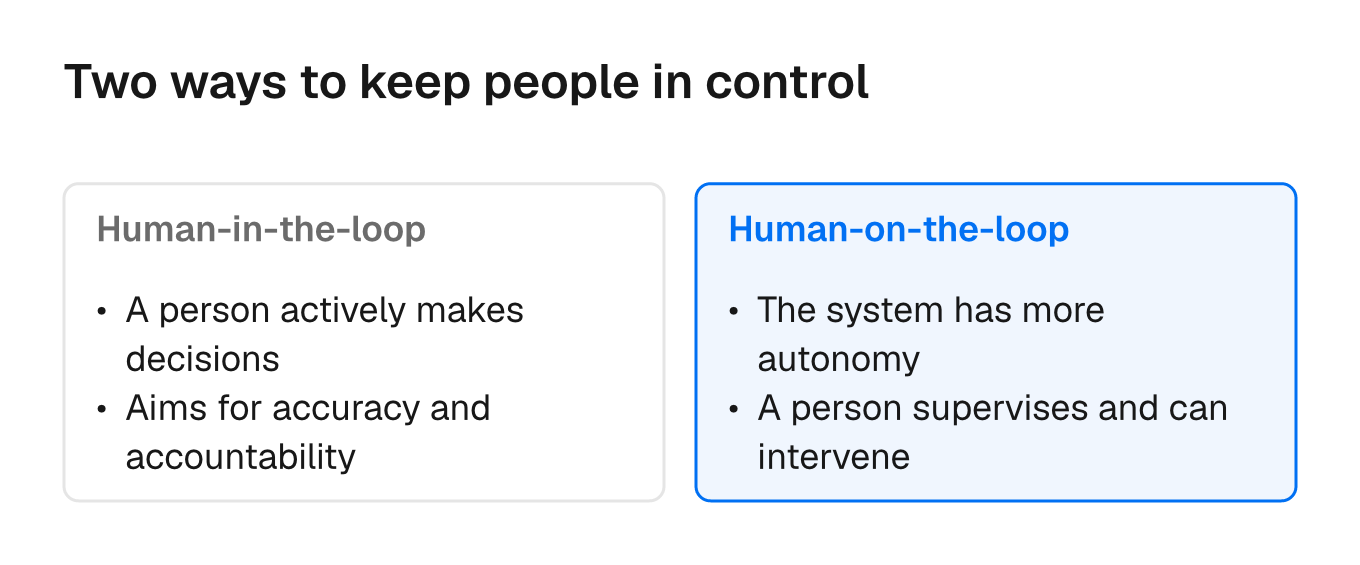
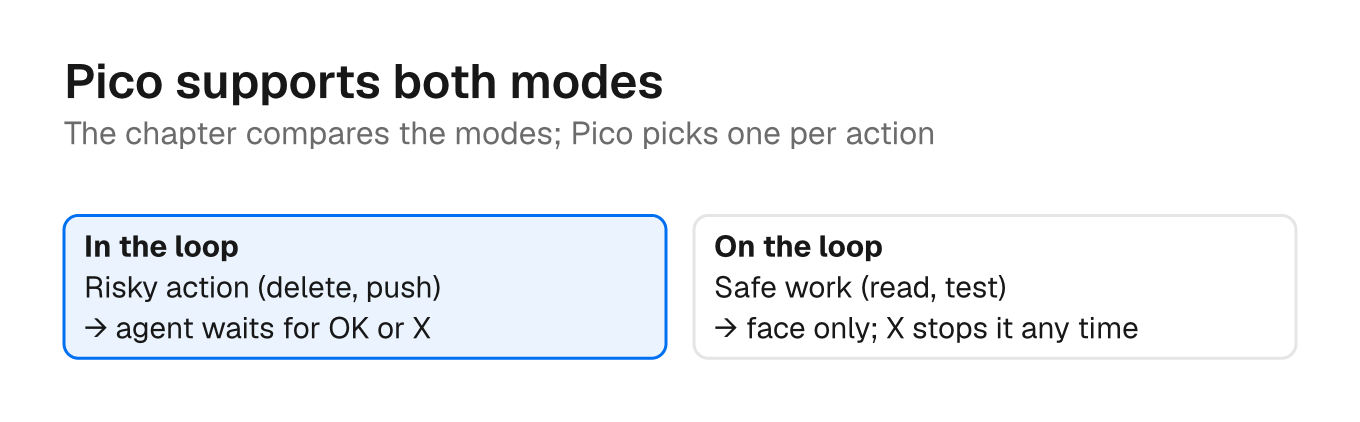
This handbook chapter compares two ways to keep people in control of AI. In human-in-the-loop (HITL) a person makes decisions actively. In human-on-the-loop (HOTL) the system acts more on its own while a person supervises and can step in.
What they found
(from the abstract; this is a review chapter with no new experiments)
- HITL aims for accuracy and accountability; HOTL gives more autonomy under supervision.
- It draws on examples from healthcare, autonomous systems and finance, where both approaches improved reliability and efficiency.
- It compares the benefits and limits of the two and offers a design framework built on trust, transparency, controllability, ethics and user experience.
How Pico builds on it
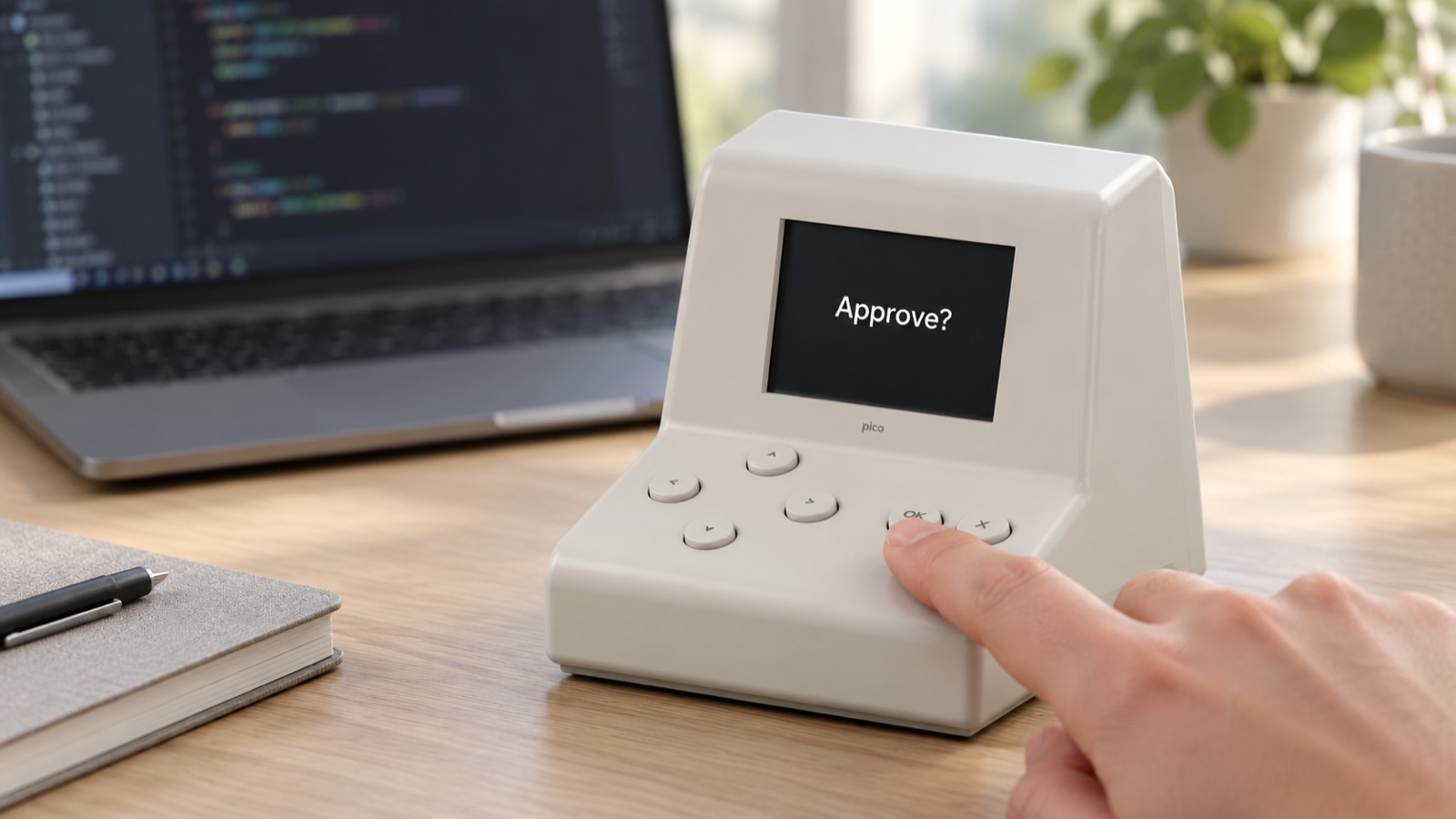
The chapter treats HITL and HOTL as two options to compare. Pico uses both at the same time and picks one per action: risky actions wait for a press, while safe work only changes the face and X can stop it. We have not yet tested which actions people want in each group.
Concept image of Pico, generated with Codex.
07
Open-Source Robotic Study Companion with Multimodal Human–Robot Interaction to Improve the Learning Experience of University Students
What they did
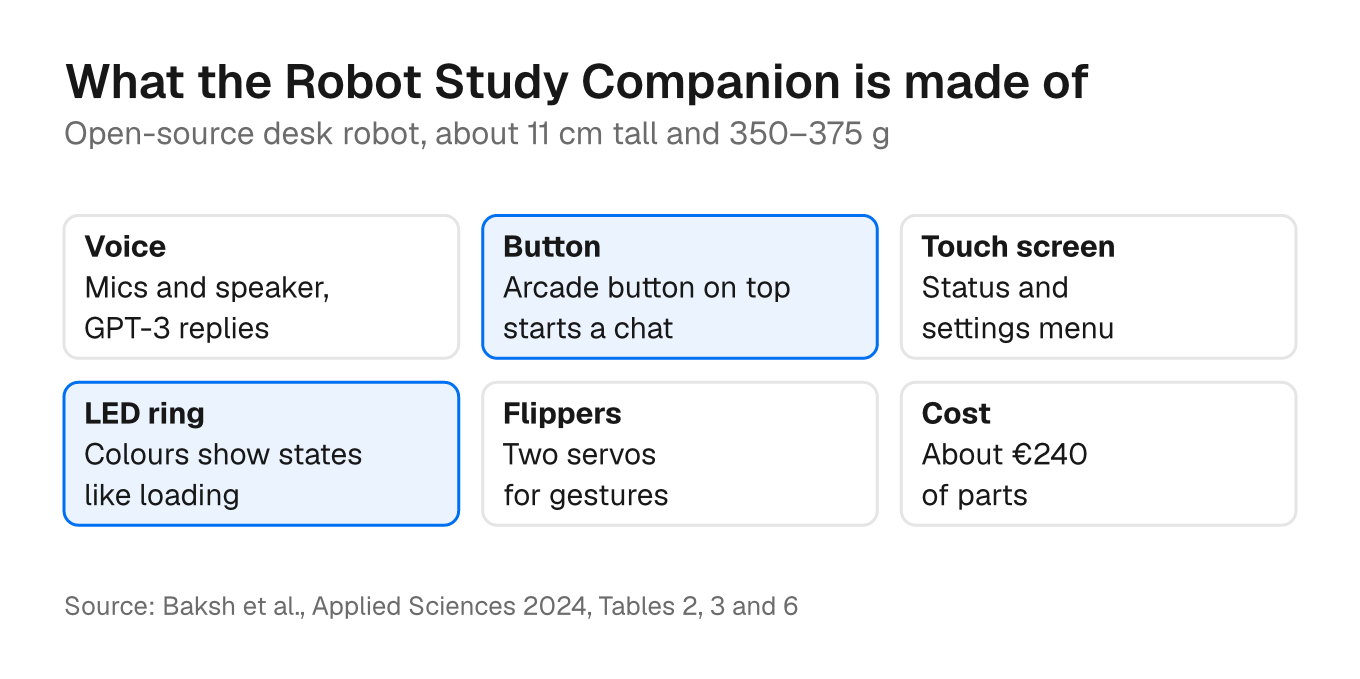
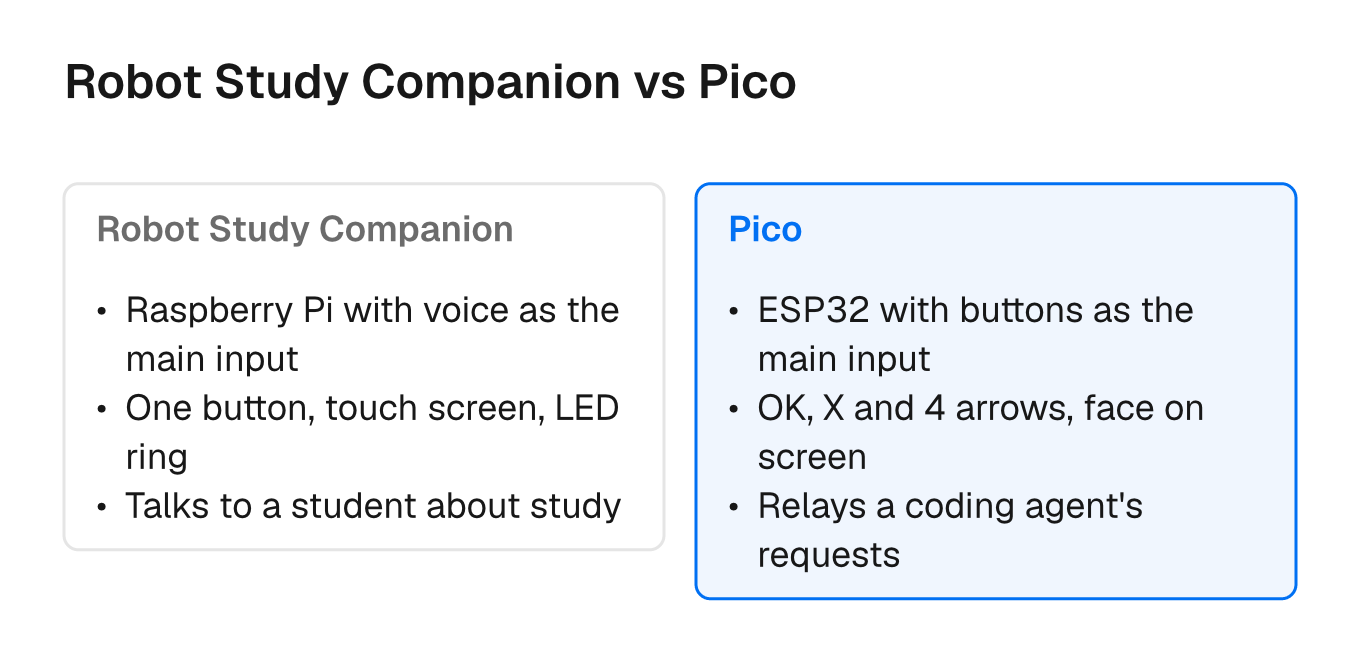
The team built the Robot Study Companion (RSC), an open-source desk robot for university students. It has a Raspberry Pi, microphones, a speaker, a top button, a small touch screen, an LED ring and two moving flippers in a 3D-printed case.
What they found
This is mainly a design paper with a small informal check.
- The parts cost about €240, and the robot is about 11 cm tall and 350–375 g.
- 8 students tried it for up to 5 minutes; feedback was mostly positive (“tiny”, “cute”).
- Students ranked speech and touch as their top ways to interact, and named privacy and cost as their main worries.
- The button-to-talk and no camera were chosen for privacy. Slow replies hurt the experience.
How Pico builds on it
The RSC shows that a cheap, 3D-printed desk companion with a screen, lights and a button can be built and shared openly. Pico uses this form for a coding agent, with six buttons instead of voice as the main input. Like the RSC, Pico has no camera, and it waits for a press before acting.
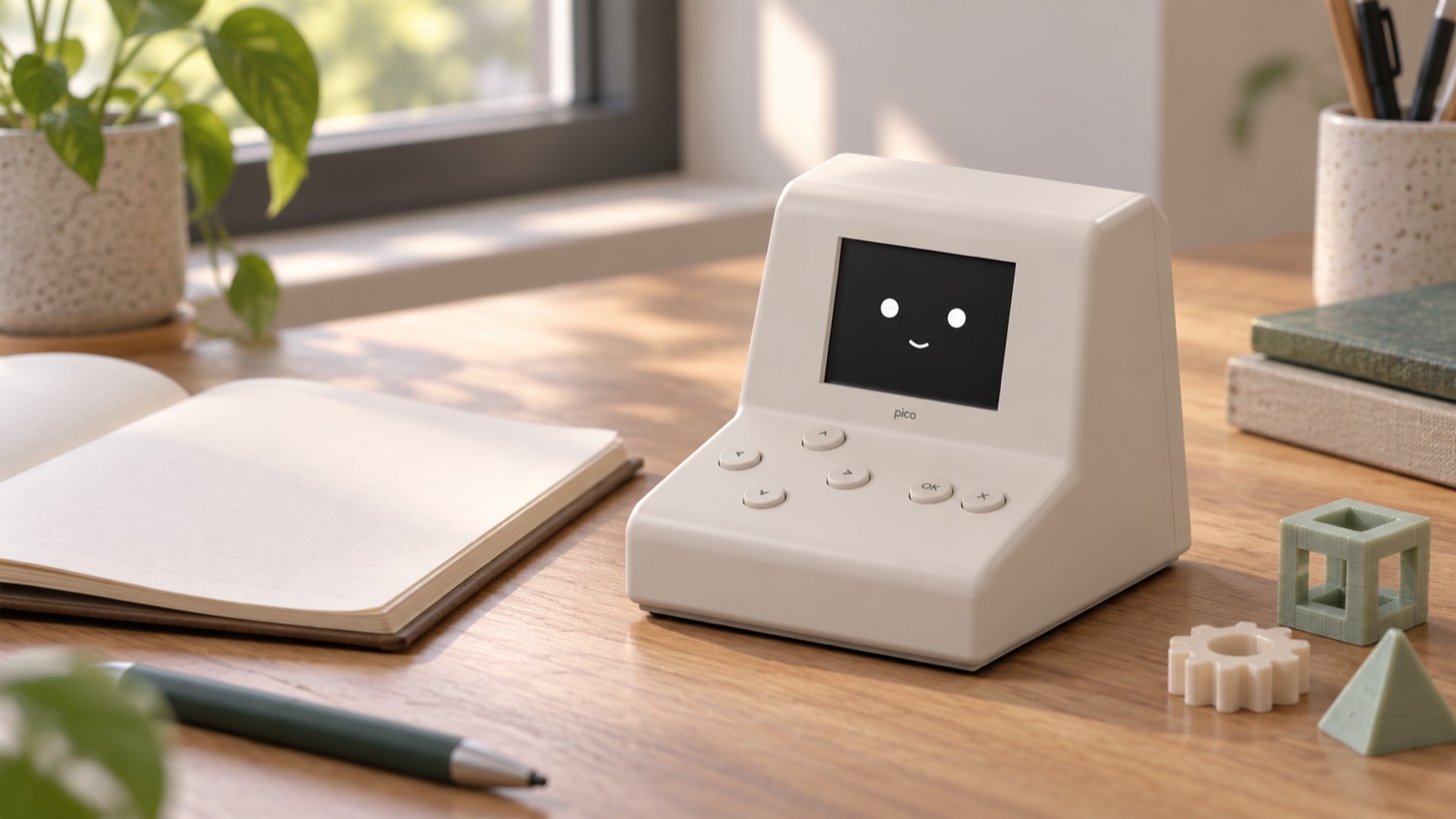
Concept image of Pico, generated with Codex.
08
Measuring and Understanding Trust Calibrations for Automated Systems: A Survey of the State-Of-The-Art and Future Directions
What they did
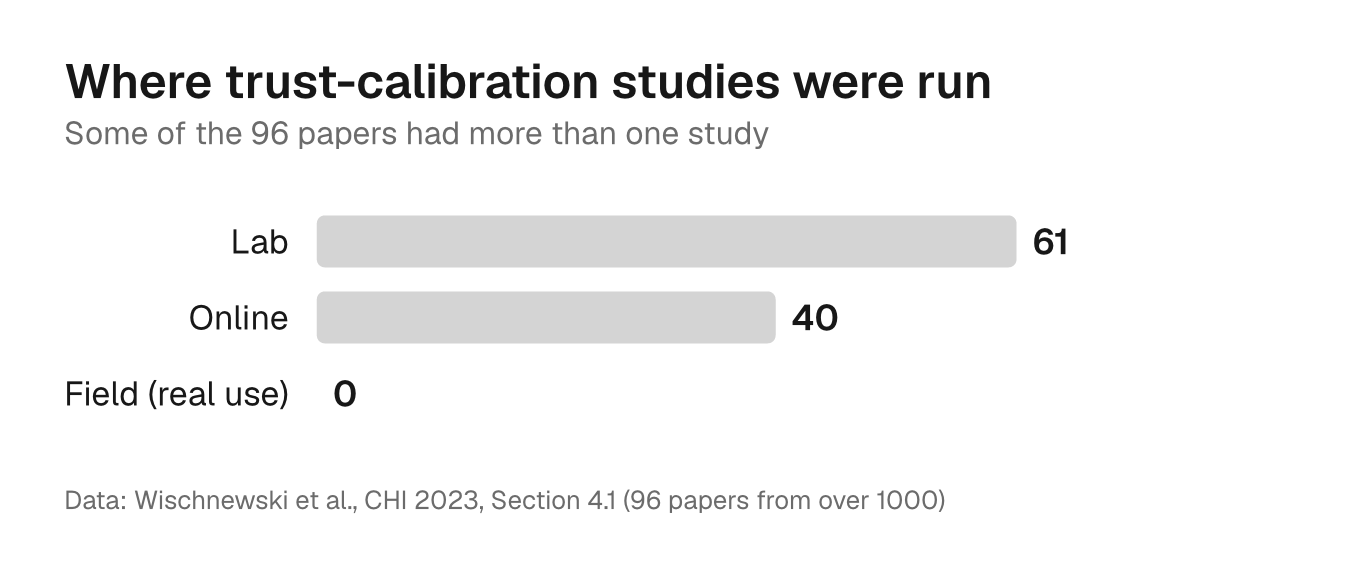
People can trust automation too much (overreliance) or too little (disuse). This survey looked at studies that tried to bring trust in line with what a system can really do. From over 1000 papers, they kept 96.
What they found
This is a survey, so its numbers describe the studies, not new results.
- 61 studies were in a lab and 40 online; none tested people in real, everyday use.
- Only 18 papers measured what people actually did (reliance), not just what they said.
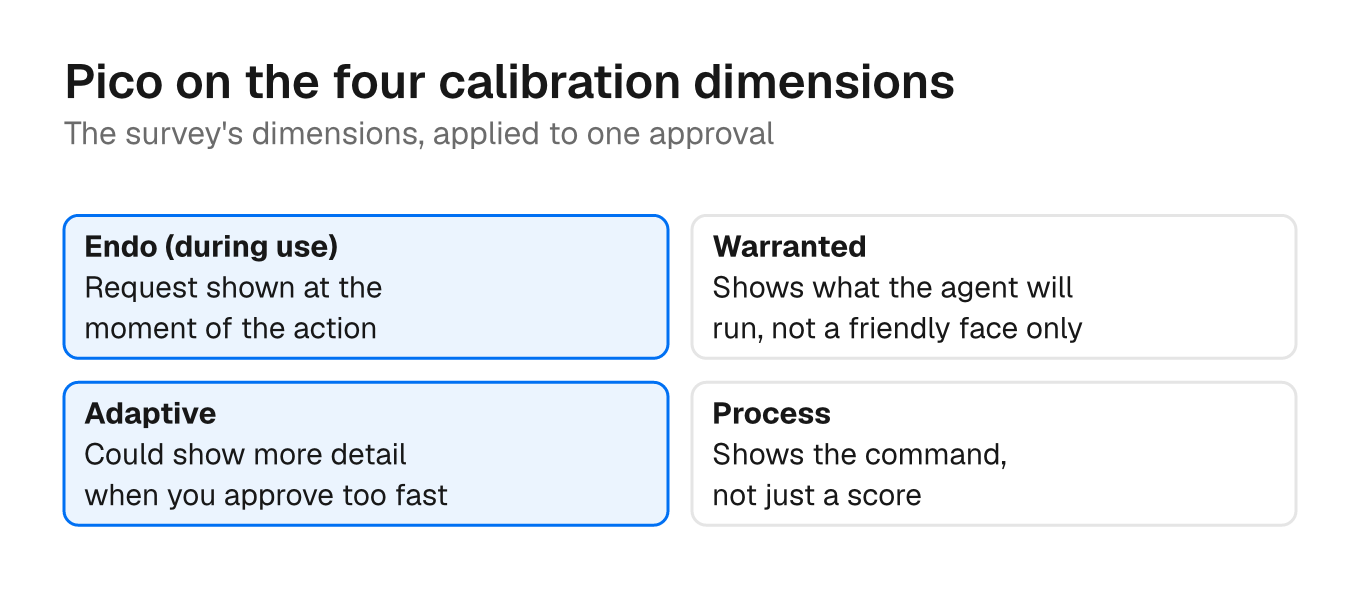
- They group the methods on four dimensions: before/after vs during use, warranted vs unwarranted, static vs adaptive, and performance vs process.
- In one study, cues shown only when people over- or under-relied beat showing performance all the time.
How Pico builds on it
Pico shows the real request at the moment of the action, a “during use” cue. A friendly face could raise trust without reason, so it must never replace the command itself. Pico could become adaptive by showing more detail when approvals come too fast, and it can be tested in real daily use, which the survey found missing.
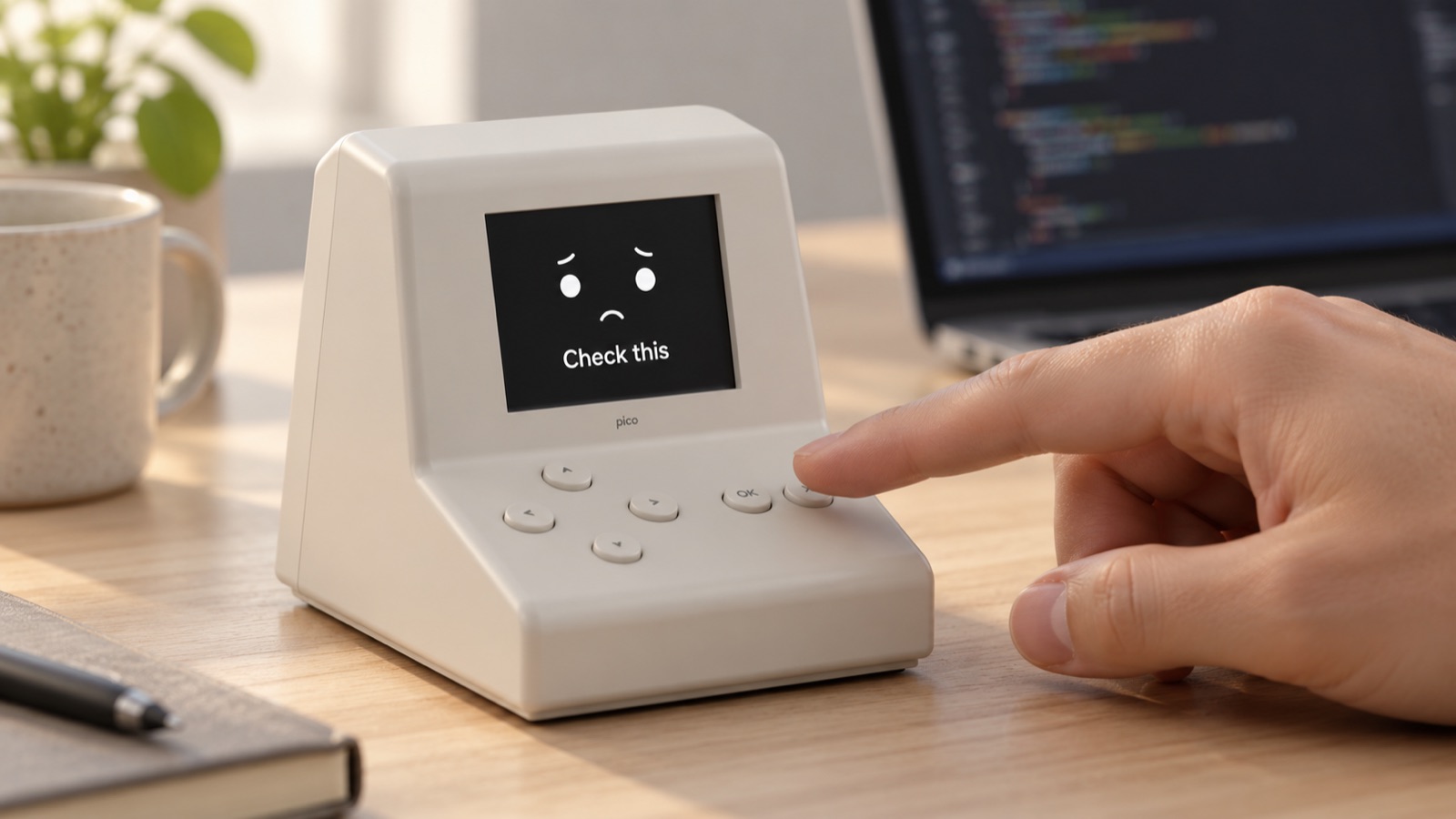
Concept image of Pico, generated with Codex.
Source
Magdalena Wischnewski, Nicole Krämer, Emmanuel Müller, “Measuring and Understanding Trust Calibrations for Automated Systems: A Survey of the State-Of-The-Art and Future Directions,” CHI 2023, ACM Conference on Human Factors in Computing Systems · Research Center Trustworthy Data Science and Security (TU Dortmund, University of Duisburg-Essen), 2023. DOI: 10.1145/3544548.3581197.
09
Making Data Tangible: A Cross-disciplinary Design Space for Data Physicalization
What they did
A data physicalization shows data as a physical object, using shape, light or movement. The authors reviewed 47 of them from 18 venues and built a design space with 13 dimensions under three groups: context, structure and interactions.
What they found
This is a design-space paper; the numbers count artifacts in the review.
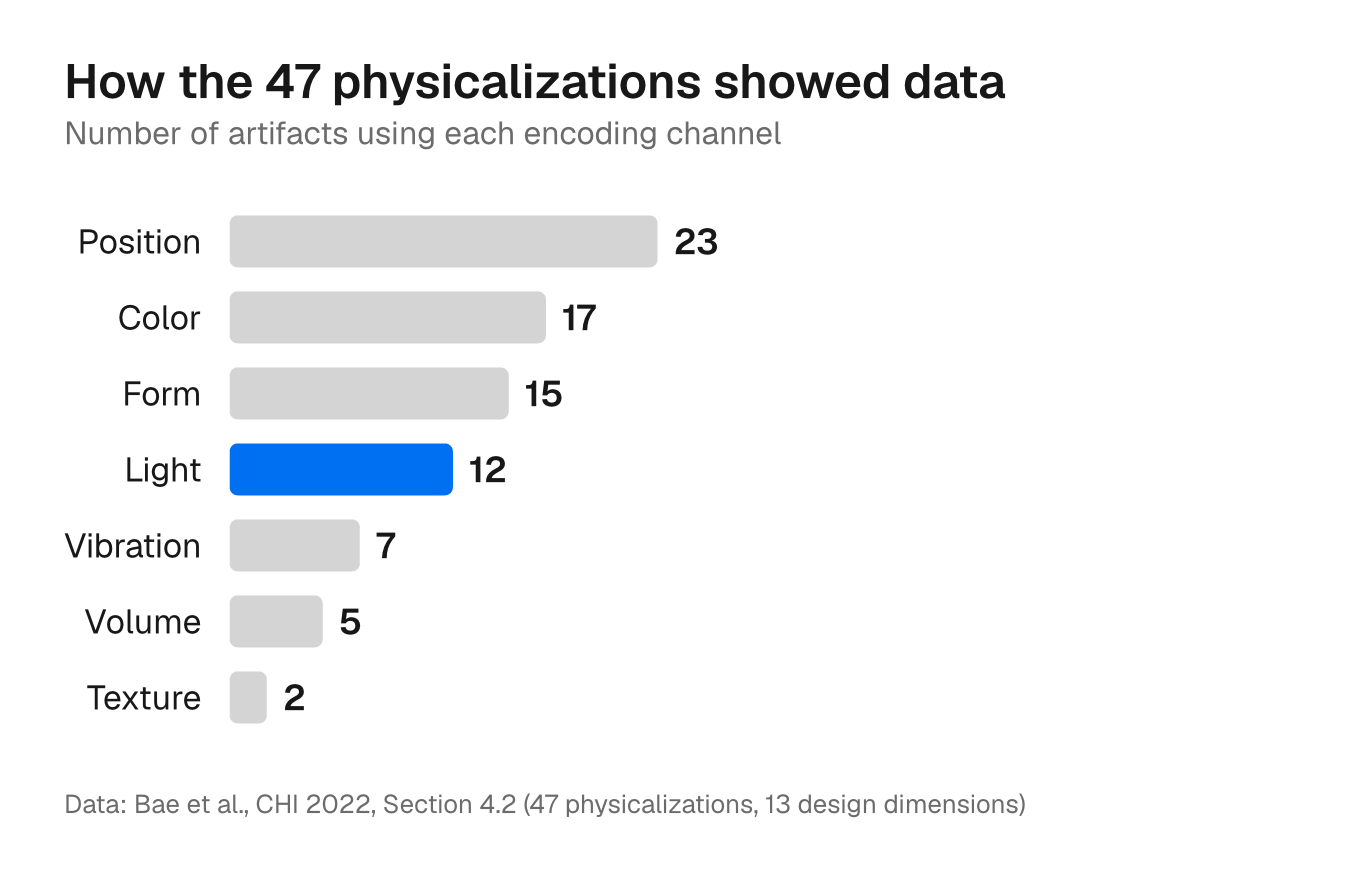
- Position was the most used way to show data (23/47), then color (17), form (15) and light (12).
- 35/47 used electronics, and 12 showed live data from sensors in real time.
- Most were for the general public (21/47); 8 were placed in workspaces and 10 in homes.
- 36/47 stayed in one place.
How Pico builds on it
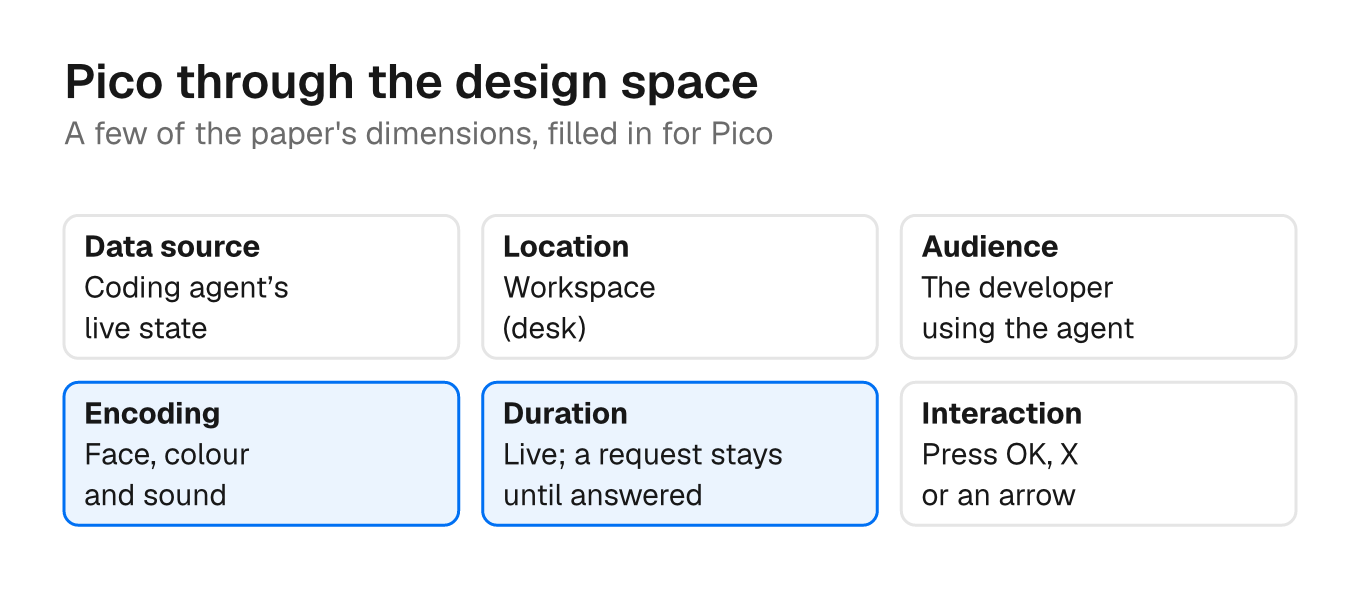
Pico can be described with this design space: live data (the agent’s state), a desk location, and output through face, colour and sound. The paper’s examples mostly let people view data; Pico also takes an answer back with its buttons. A request stays on screen until it is answered, so it is not missed like a short flash.
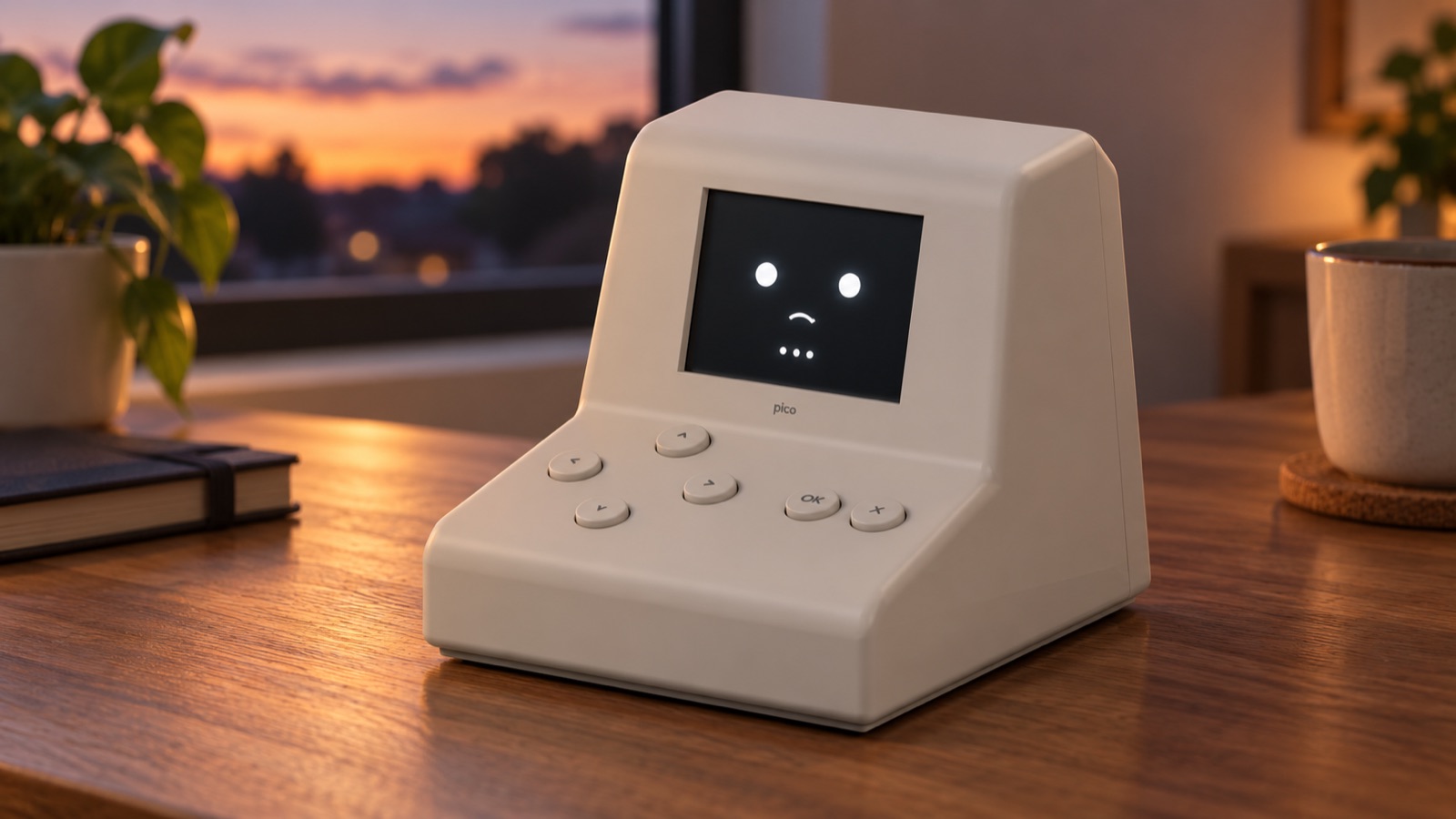
Concept image of Pico, generated with Codex.
Source
S. Sandra Bae, Clement Zheng, Mary Etta West, Ellen Yi-Luen Do, Samuel Huron, Danielle Albers Szafir, “Making Data Tangible: A Cross-disciplinary Design Space for Data Physicalization,” CHI 2022, ACM Conference on Human Factors in Computing Systems · University of Colorado Boulder, 2022. DOI: 10.1145/3491102.3501939.
10
Review: Development and Technical Design of Tangible User Interfaces in Wide-Field Areas of Application
What they did
This review looks at tangible user interfaces (TUIs), where people control digital things by handling physical objects. It covers 64 articles, mostly from 2010–2020, and describes how each system was built.
What they found
This is a descriptive review with no new experiments.
- It sorts TUIs into eight main application areas (such as teaching, medicine and music), plus adjustable TUIs and smart toys.
- Systems are built in one of two ways: sensors in the objects, or a camera with computer vision.
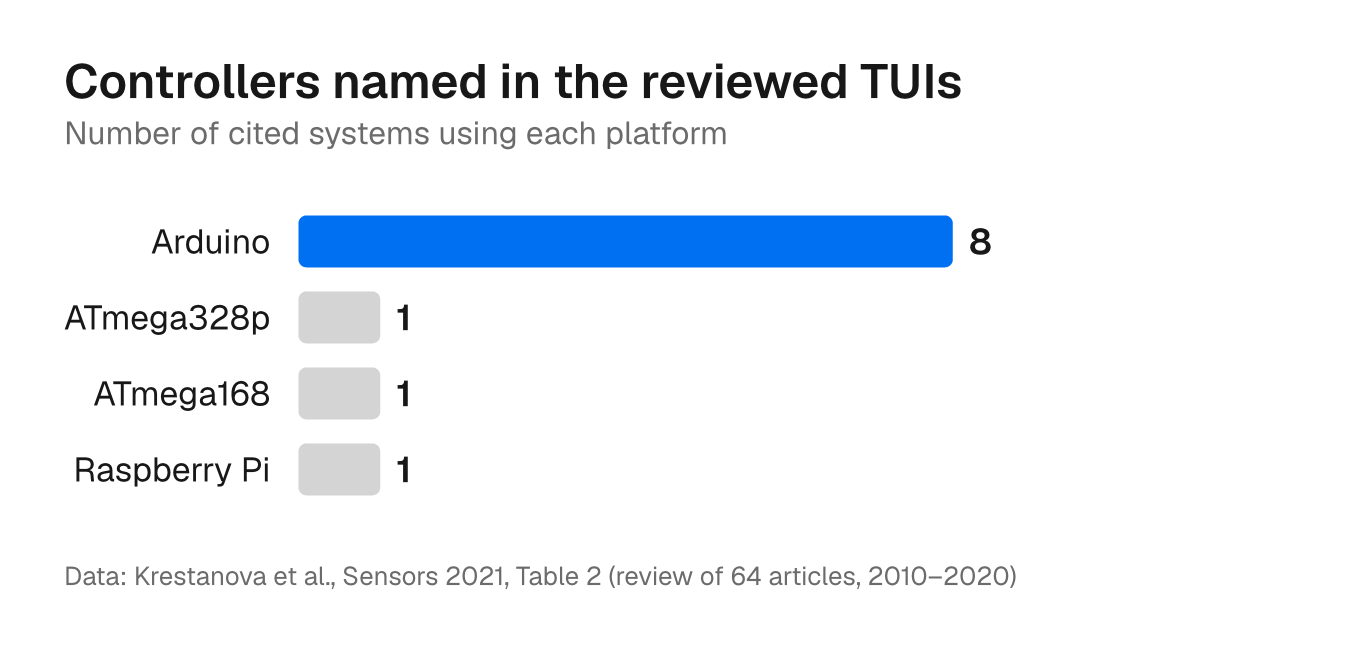
- In sensor-based systems, Arduino was the most named controller (8 cited systems). RFID was the most common wireless technology (11).
- Feedback can be visual, haptic or audio, alone or combined. The authors see technology limits as the main barrier to wider use.
How Pico builds on it
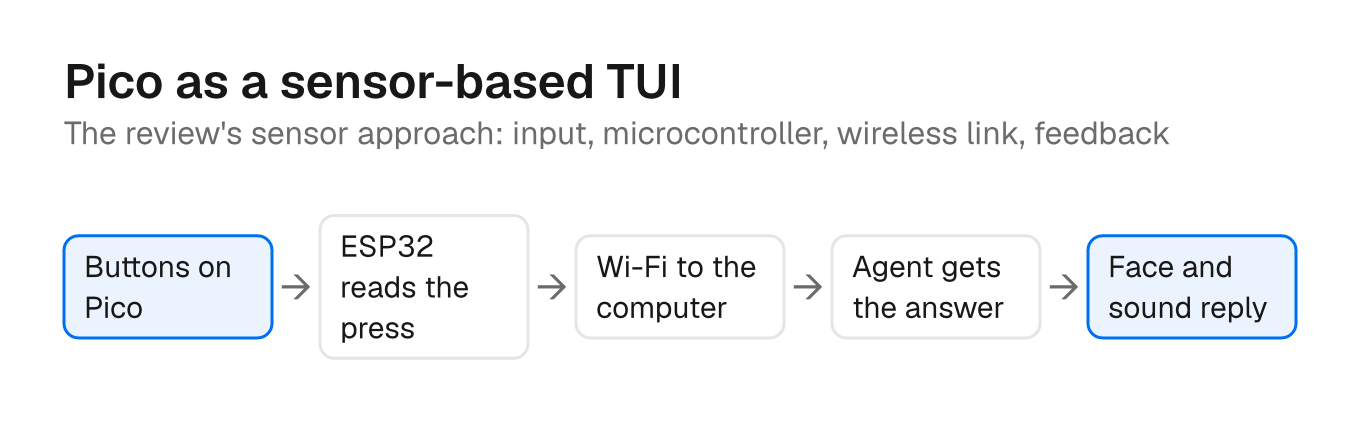
Pico follows the review’s sensor-based pattern: buttons, a microcontroller (ESP32), a wireless link (Wi-Fi) and visual and audio feedback. The review does not compare TUIs with on-screen controls, so it cannot show buttons are better than pop-ups. Pico’s job is to test that for coding agents.
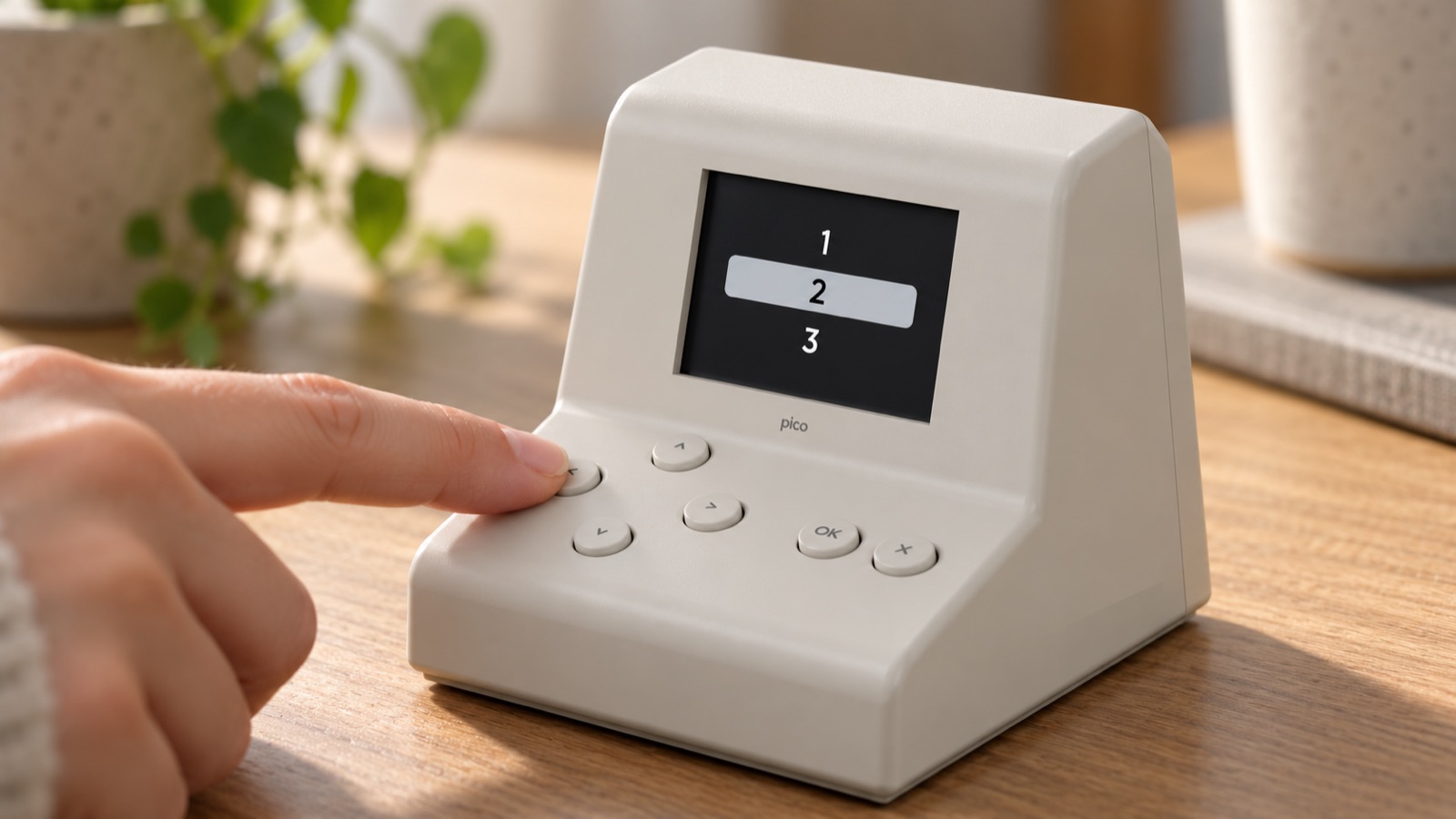
Concept image of Pico, generated with Codex.
Silma Subha
01
Design and Evaluation of a Socially Assistive Robot Schoolwork Companion for College Students with ADHD
What they did
11 college students with ADHD did schoolwork in their dorm rooms next to Blossom, a small crocheted desk robot. They started 25-minute sessions on a touch screen while the robot made simple idle motions. The study ran three weeks; in the last week, using the robot was optional.
What they found
- 10 of 11 students (91%) kept using the robot when it was optional, for 93 minutes on average that week.
- The system scored 83.9 out of 100 for usability (an “A” grade).
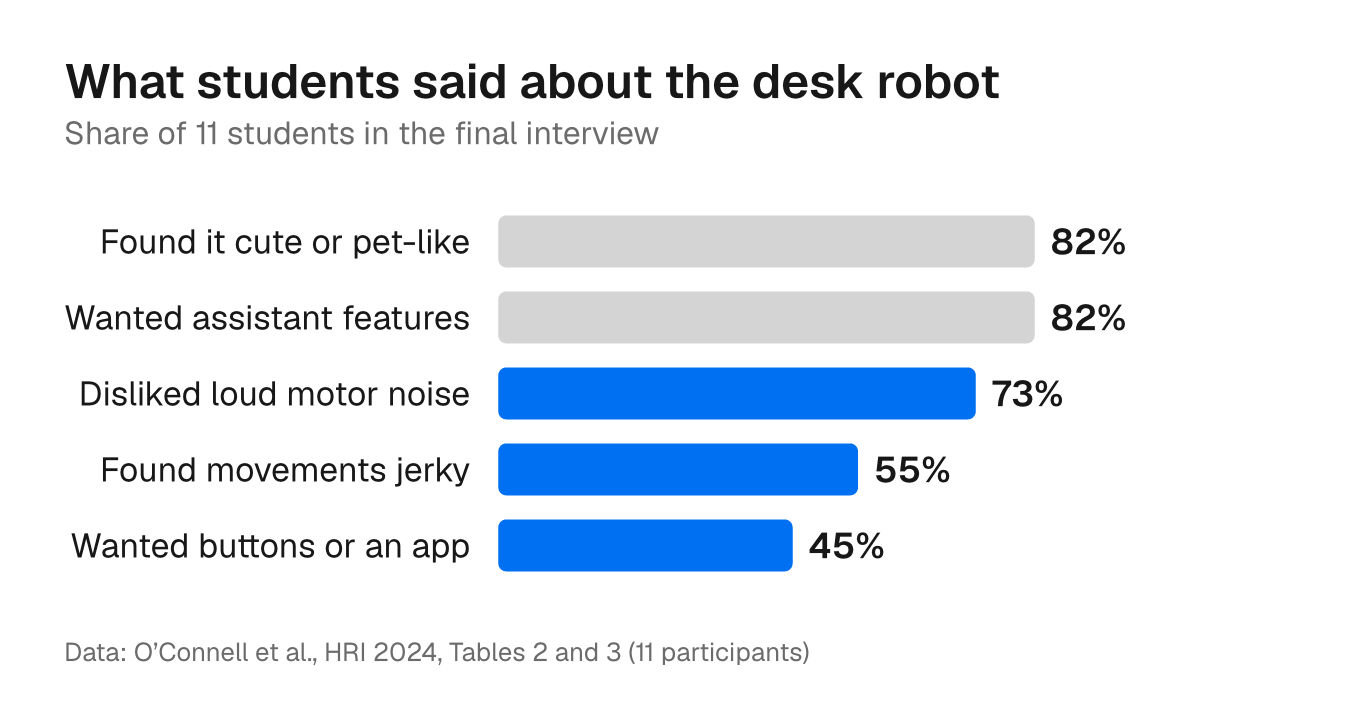
- 73% disliked the loud motor noise and 55% found the movements jerky.
- 45% wanted the touch screen replaced with physical buttons or a phone app.
How Pico builds on it
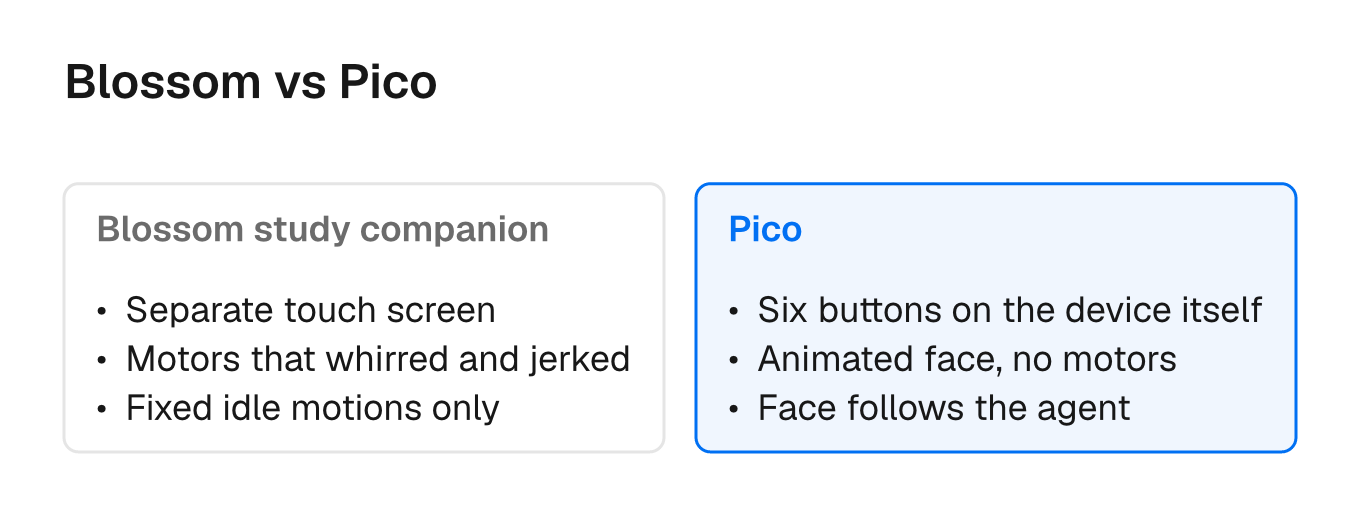
Even a simple robot on the desk gave students company and kept them working. Pico takes this quiet desk presence but fixes the main complaints: it has buttons on the device itself and an animated face instead of noisy motors. Its face also reacts to what the agent is doing, while Blossom’s motions never changed.
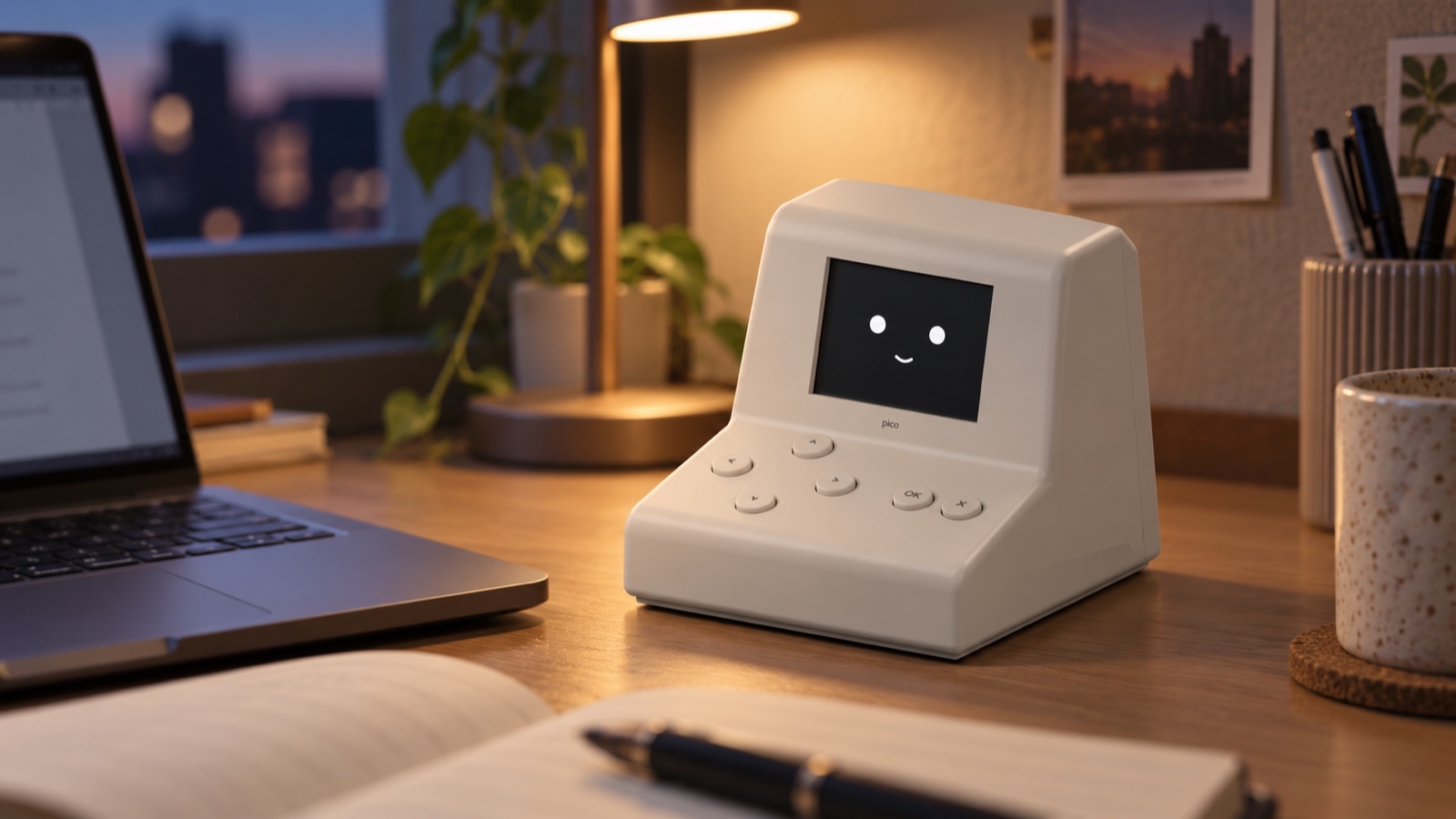
Concept image of Pico, generated with Codex.
Source
Amy O’Connell, Ashveen Banga, Jennifer Ayissi, Nikki Yaminrafie, Ellen Ko, Andrew Le, Bailey Cislowski, Maja Mataric, “Design and Evaluation of a Socially Assistive Robot Schoolwork Companion for College Students with ADHD,” HRI 2024, 19th ACM/IEEE International Conference on Human-Robot Interaction, 2024. DOI: 10.1145/3610977.3634929.
02
“Oh, Sorry, I Think I Interrupted You”: Designing Repair Strategies for Robotic Longitudinal Well-being Coaching
What they did
A robot well-being coach ran weekly sessions with 12 office workers for four weeks. Each week it made two planned mistakes, such as interrupting or staying silent, and then repaired them with either an empathic or a plain apology. Users then designed their own repairs in a workshop.
What they found
- Empathic repairs were rated slightly better, but trust and perceived empathy dropped over the weeks in both groups.
- Users said repeated explanations felt like “excuses” and sometimes “made [the interaction] worse”.
- In the workshop, users picked a brief apology (48 votes) or doing nothing (32) far more than a technical explanation (6).
- Users wanted instructions only when they could fix the cause themselves.
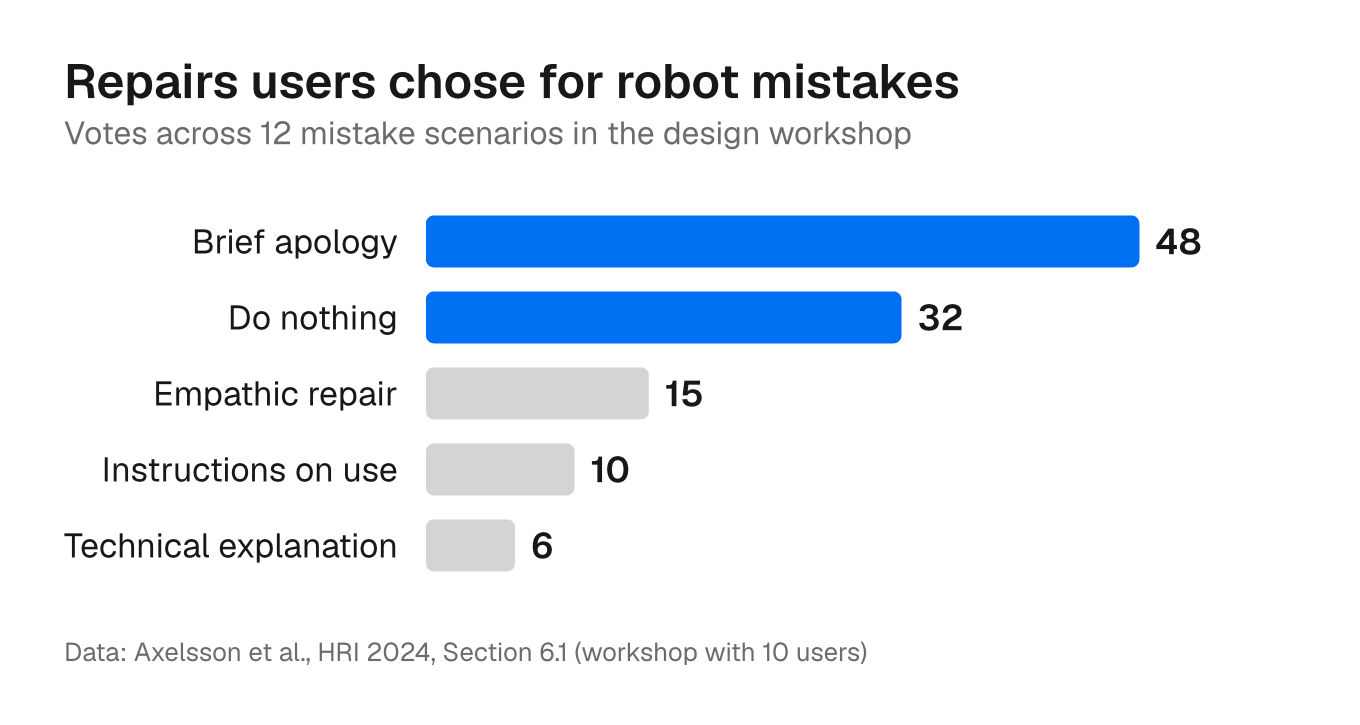
How Pico builds on it
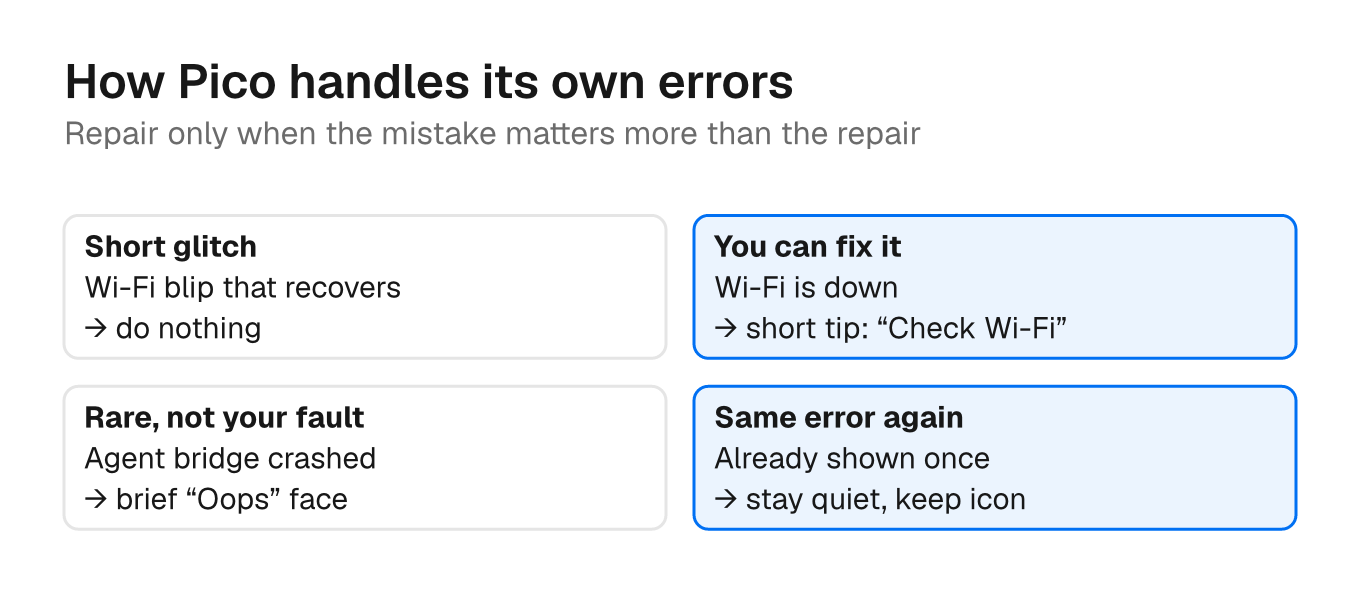
Pico will also fail sometimes, for example when Wi-Fi drops or the agent stops. From this paper Pico takes one rule: repair only when the mistake matters more than the repair. So it ignores short glitches, gives a short tip when you can fix the problem, and does not repeat the same error message.
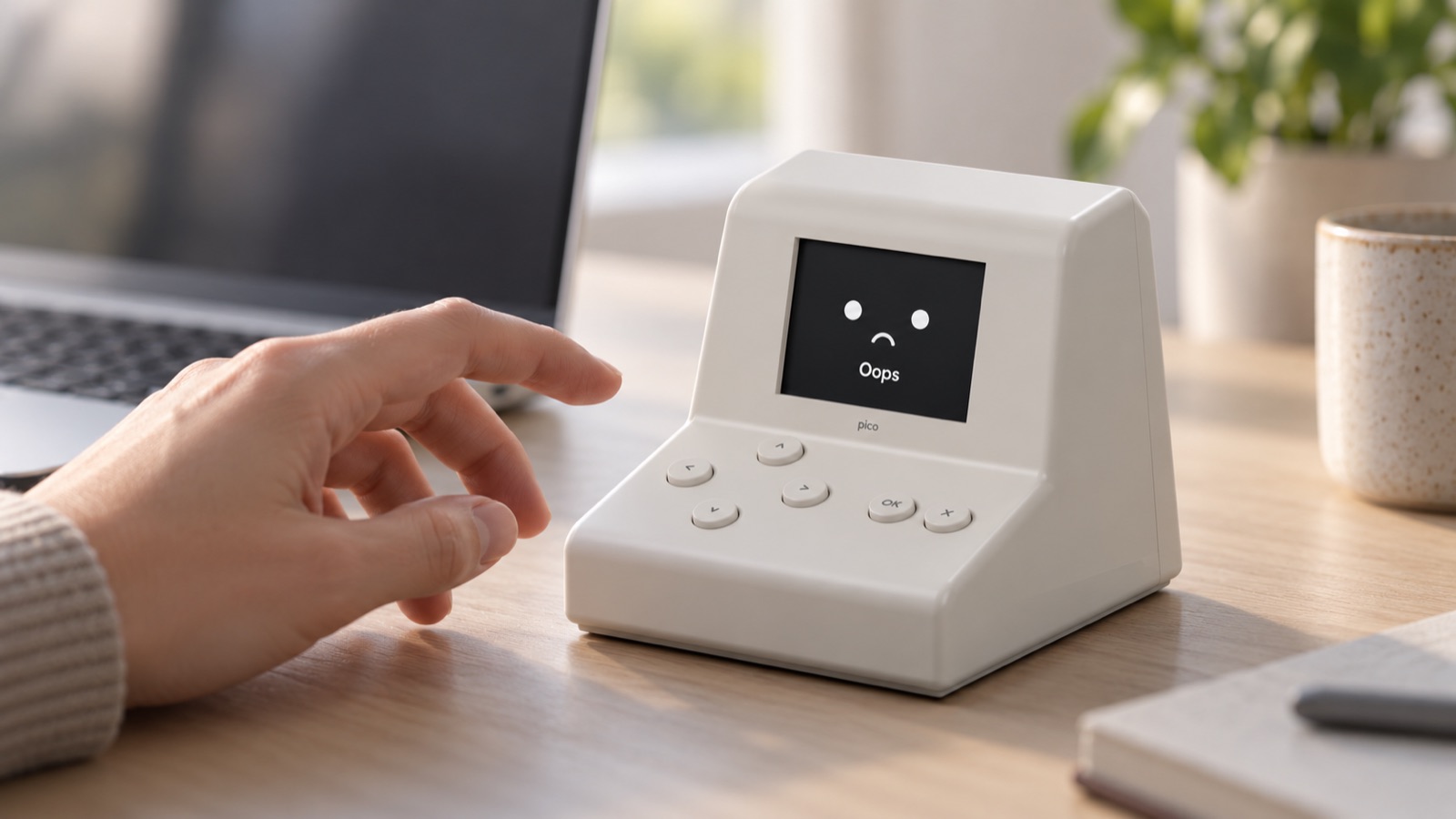
Concept image of Pico, generated with Codex.
Source
Minja Axelsson, Micol Spitale, Hatice Gunes, ““Oh, Sorry, I Think I Interrupted You”: Designing Repair Strategies for Robotic Longitudinal Well-being Coaching,” HRI 2024, 19th ACM/IEEE International Conference on Human-Robot Interaction, 2024. DOI: 10.1145/3610977.3634948.
03
Autonomy Acceptance Model (AAM): The Role of Autonomy and Risk in Security Robot Acceptance
What they did
236 US adults watched a short news video about a security robot in a hotel parking lot. The video changed how much the robot acted on its own (human-controlled, semi-autonomous or fully autonomous) and how risky its job was. People then rated their trust in the robot and whether they would accept it.
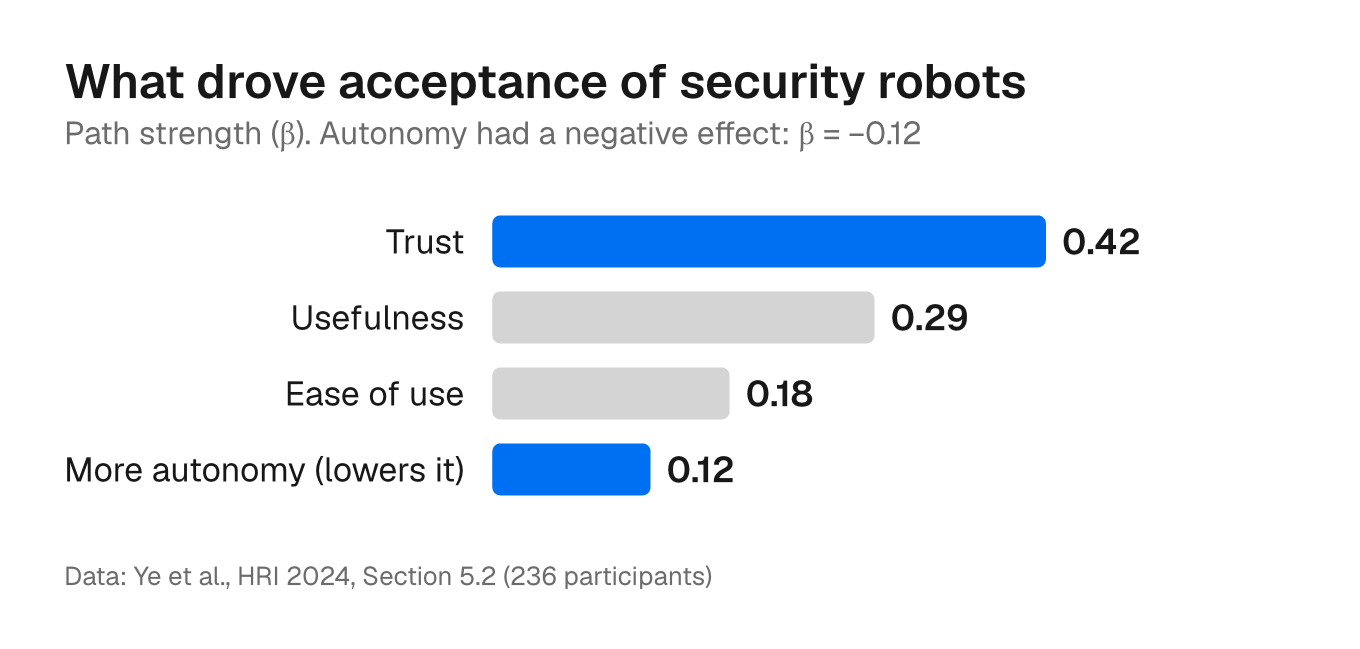
What they found
- Trust had the strongest effect on acceptance (β = 0.42), more than usefulness (0.29) or ease of use (0.18).
- More autonomy lowered acceptance (β = −0.12).
- This drop happened only for the low-risk job. For the high-risk job, autonomy made no clear difference.
- Risk itself did not change acceptance directly.
How Pico builds on it
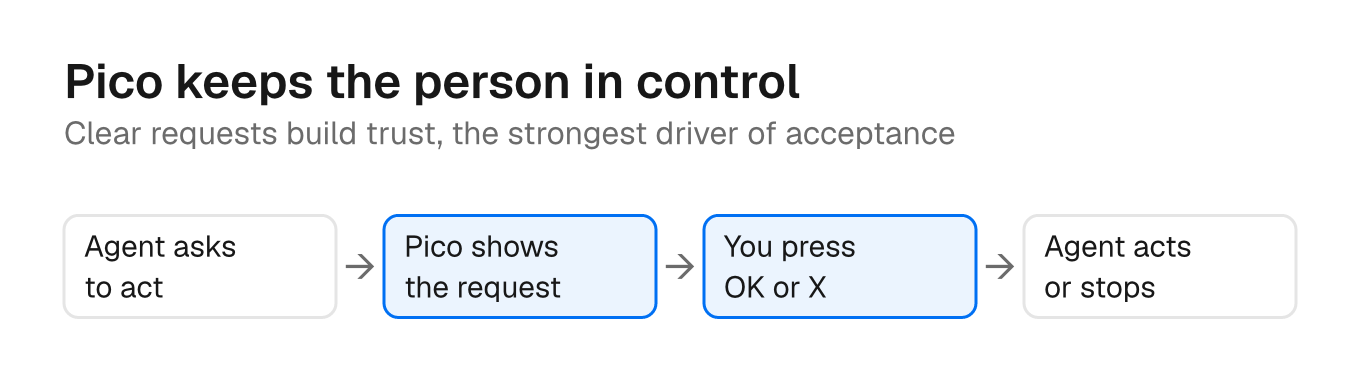
This paper is about security robots, not AI agents, but the lesson carries over: people accept a system less when it acts alone, and trust matters most. Pico keeps the person in control. The agent asks, Pico shows the request clearly, and the person approves or rejects it with one button.
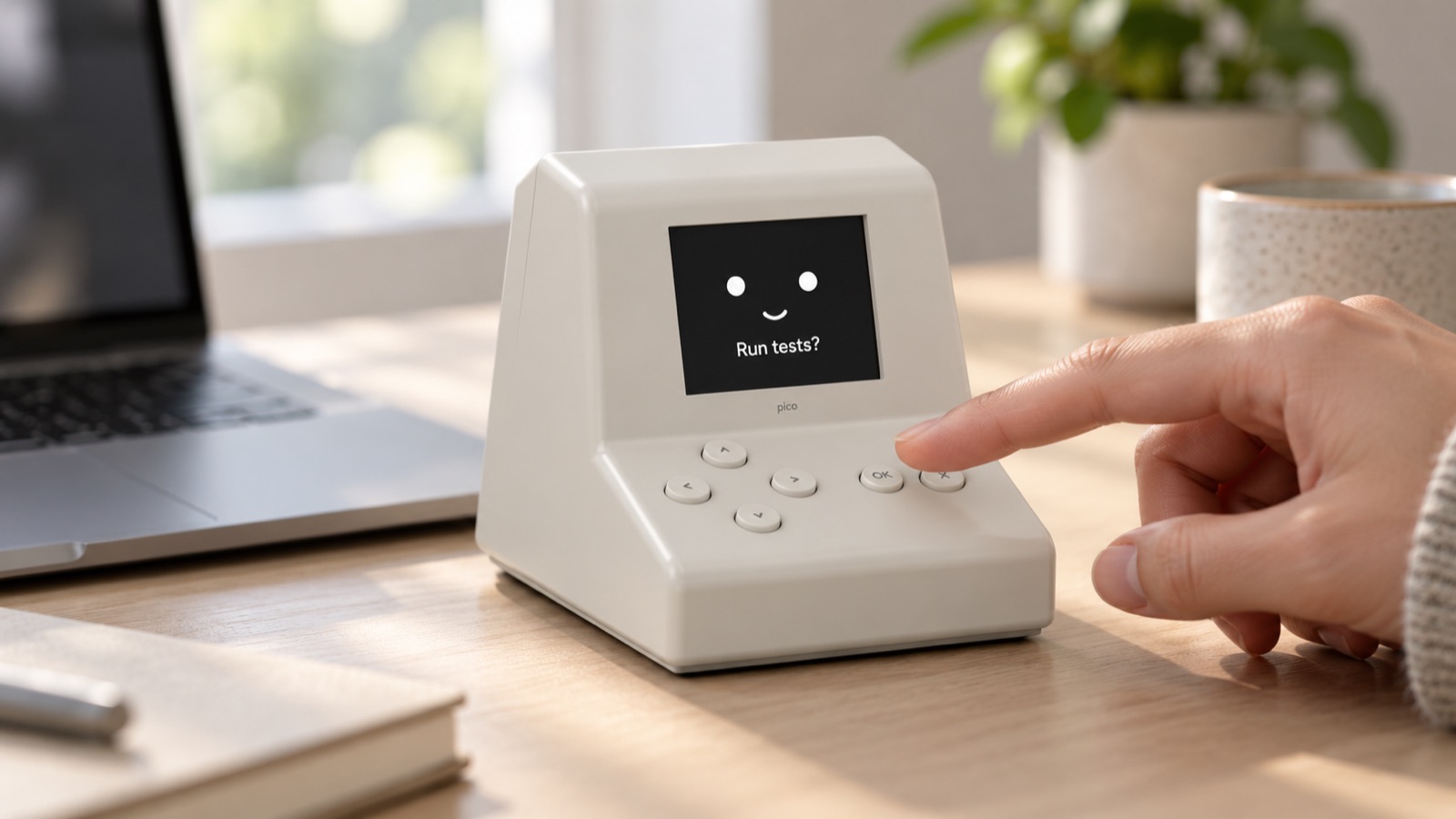
Concept image of Pico, generated with Codex.
Source
Xin Ye, Wonse Jo, Arsha Ali, Samia Cornelius Bhatti, Connor Esterwood, Hana Andargie Kassie, Lionel Peter Robert, “Autonomy Acceptance Model (AAM): The Role of Autonomy and Risk in Security Robot Acceptance,” HRI 2024, 19th ACM/IEEE International Conference on Human-Robot Interaction, 2024. DOI: 10.1145/3610977.3635005.
04
Development of the Lifelike Head Unit for a Humanoid Cybernetic Avatar ‘Yui’ and Its Operation Interface
What they did
The team built Yui, a child-like android head that a remote person controls through a VR headset. Eye and face tracking in the headset copy the operator’s gaze, mouth and expressions onto the robot, while cameras in its eyes and microphones in its ears send stereo video and sound back. This is a build paper with simple checks, not a user study.
What they found
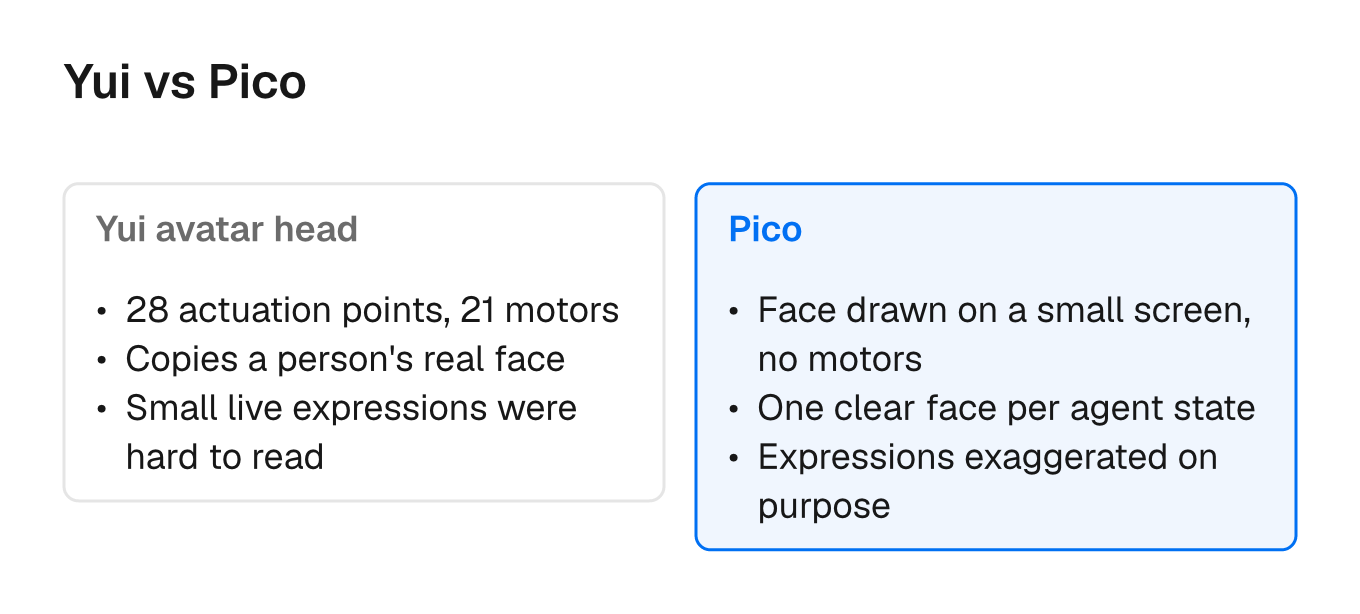
- The head has 28 actuation points driven by 21 motors, using wires under a soft skin.
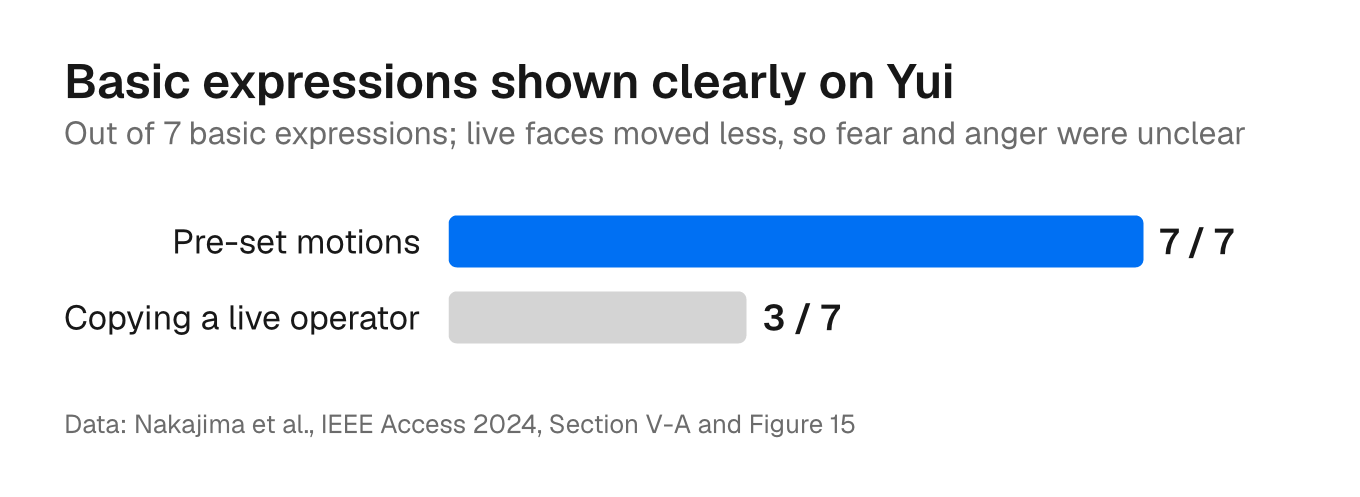
- With pre-set motions it showed all 7 basic expressions (happiness, sadness, surprise, fear, anger, disgust, contempt).
- When copying a live operator, only happiness, sadness and surprise were clear. Faces moved less, so the authors suggest amplifying expressions.
- The ear microphones picked up which side a sound came from, but not front from back.
How Pico builds on it
Yui shows that a face is a strong way to show internal state, but it needs 21 motors and careful tuning. Pico takes the idea and keeps it cheap: a drawn face on a small screen, with a few large, exaggerated expressions mapped to agent states. This follows the paper’s own advice to amplify small expressions.
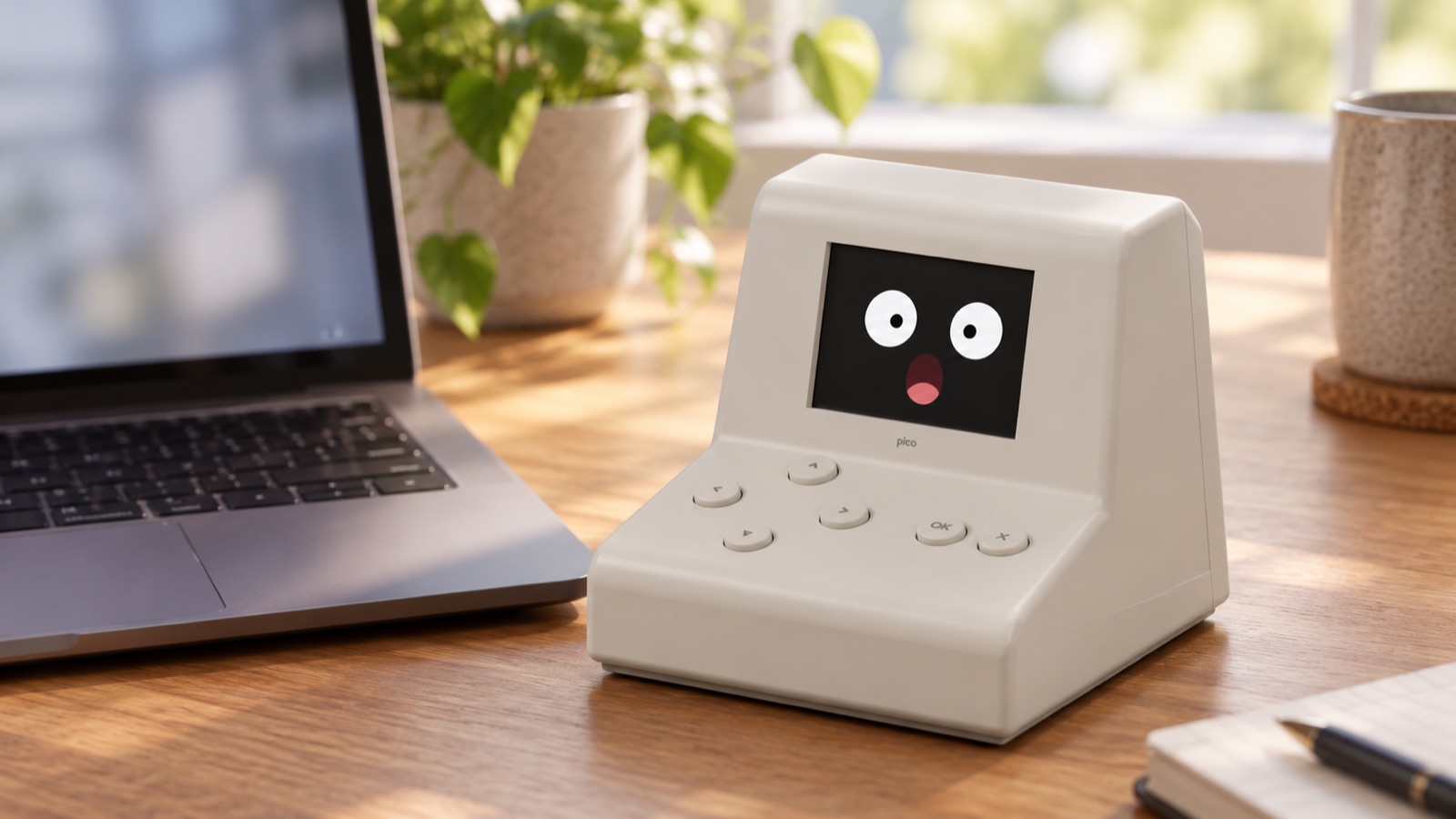
Concept image of Pico, generated with Codex.
Source
Mizuki Nakajima, Kaoruko Shinkawa, Yoshihiro Nakata, “Development of the Lifelike Head Unit for a Humanoid Cybernetic Avatar ‘Yui’ and Its Operation Interface,” IEEE Access, vol. 12 · Tokyo Denki University and The University of Electro-Communications, 2024. DOI: 10.1109/ACCESS.2024.3365723.
05
TARAD: Task-Aware Robot Affordance-Centric Diffusion Policy Learned From LLM-Generated Demonstrations
What they did
TARAD turns a spoken-style instruction into robot arm motions. An LLM breaks the task into steps, vision models find the target object, and a simple planner creates demonstrations automatically. A diffusion policy is then trained on these, with no human demonstrations. It was tested in simulation and on a real UR5e arm.
What they found
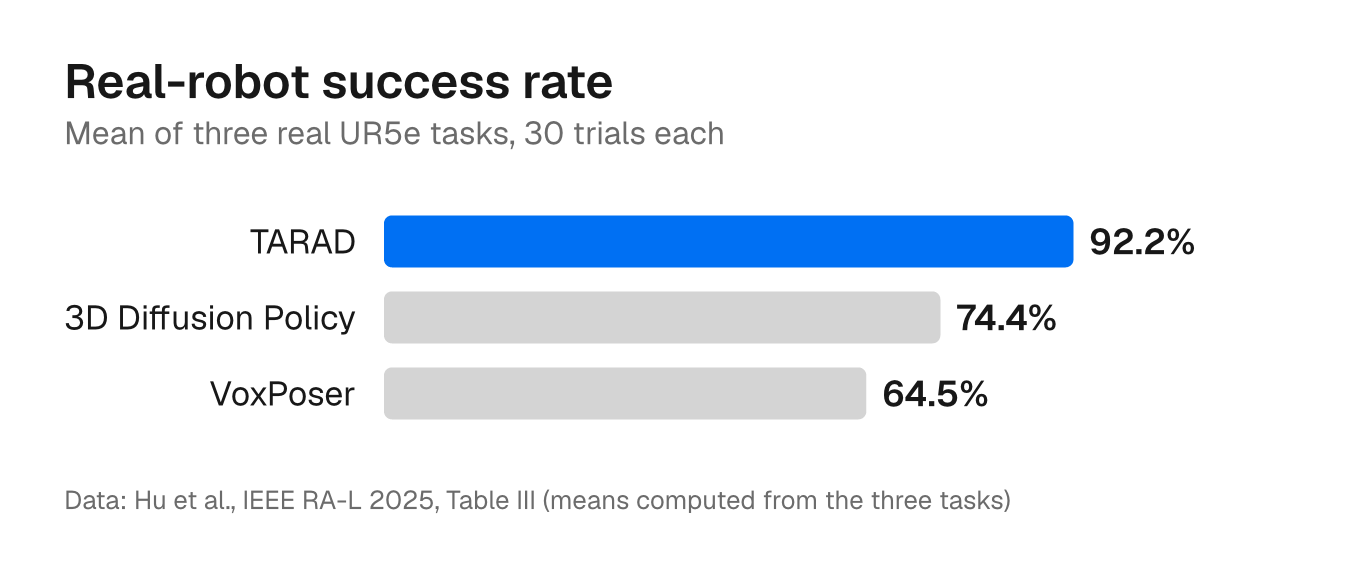
- On three real tasks, TARAD succeeded 96.7%, 93.3% and 86.7% of the time, above VoxPoser and 3D Diffusion Policy.
- In a cluttered scene it kept 96.7% on the sponge task, while 3D Diffusion Policy fell to 33.3%.
- GPT-4o checks the object detector’s guesses before the robot acts.
- One perceive-and-act loop takes about 1 second (130 ms sensing, 110 ms tracking, 650 ms motion).
How Pico builds on it
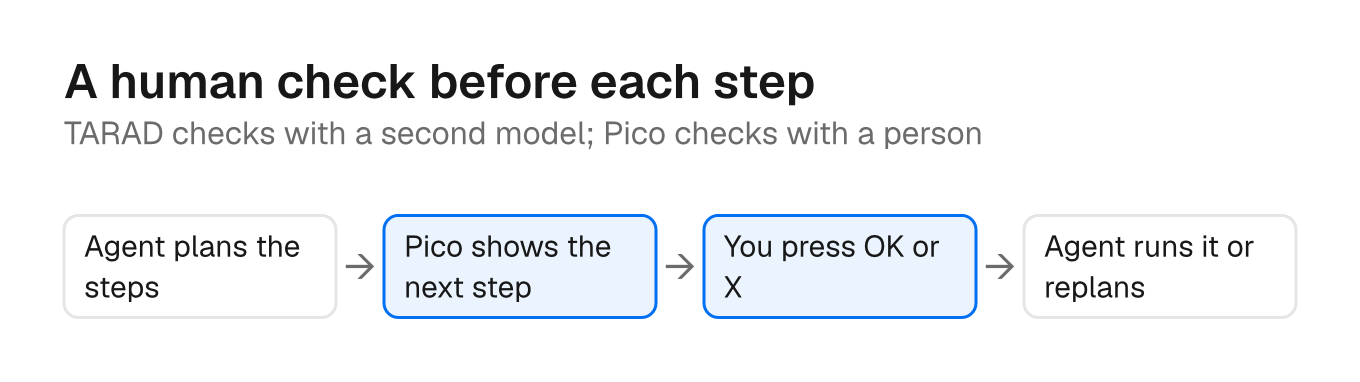
This paper is about robot arms, and it has no human approval step. What carries over is its structure: the model plans, a second check confirms the target, then the action runs. Pico puts a person at that check for coding agents, showing the planned step and waiting for OK or X.
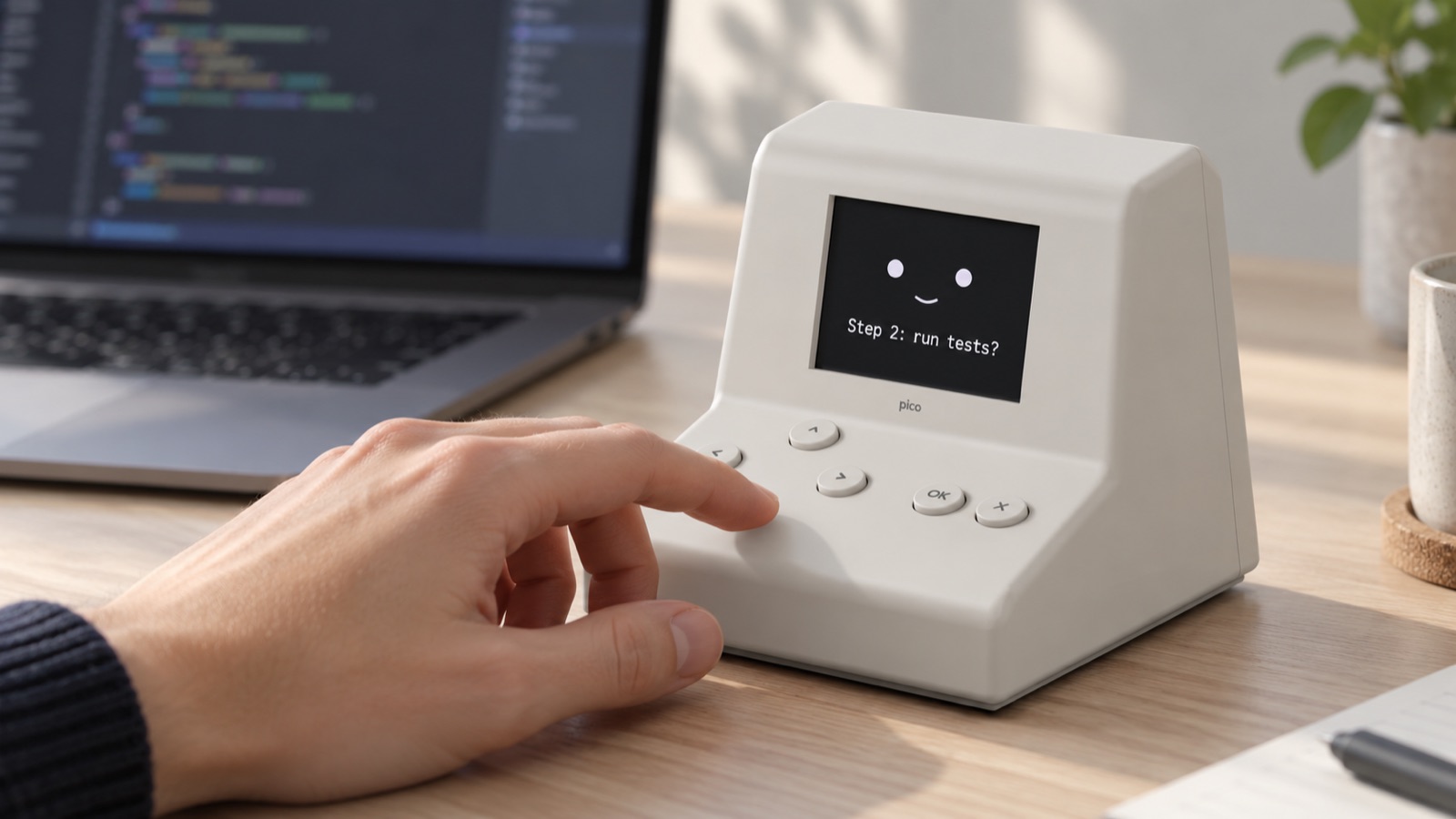
Concept image of Pico, generated with Codex.
Source
Site Hu, Takayuki Nagai, Takato Horii, “TARAD: Task-Aware Robot Affordance-Centric Diffusion Policy Learned From LLM-Generated Demonstrations,” IEEE Robotics and Automation Letters, vol. 10, no. 10 · Osaka University, 2025. DOI: 10.1109/LRA.2025.3598998.
06
Open Remote Web Lab for Learning Robotics and ROS With Physical and Simulated Robots in an Authentic Developer Environment
What they did
The team built a web lab where learners book a time slot and get a full Linux ROS desktop in their browser. Each desktop runs in a Docker container linked over Wi-Fi to one of eight real robots, with a live camera view of that robot. They ran it in a seven-week online ROS course.
What they found
- 191 people signed up, 101 finished the first module and 49 finished all six, with no local setup.
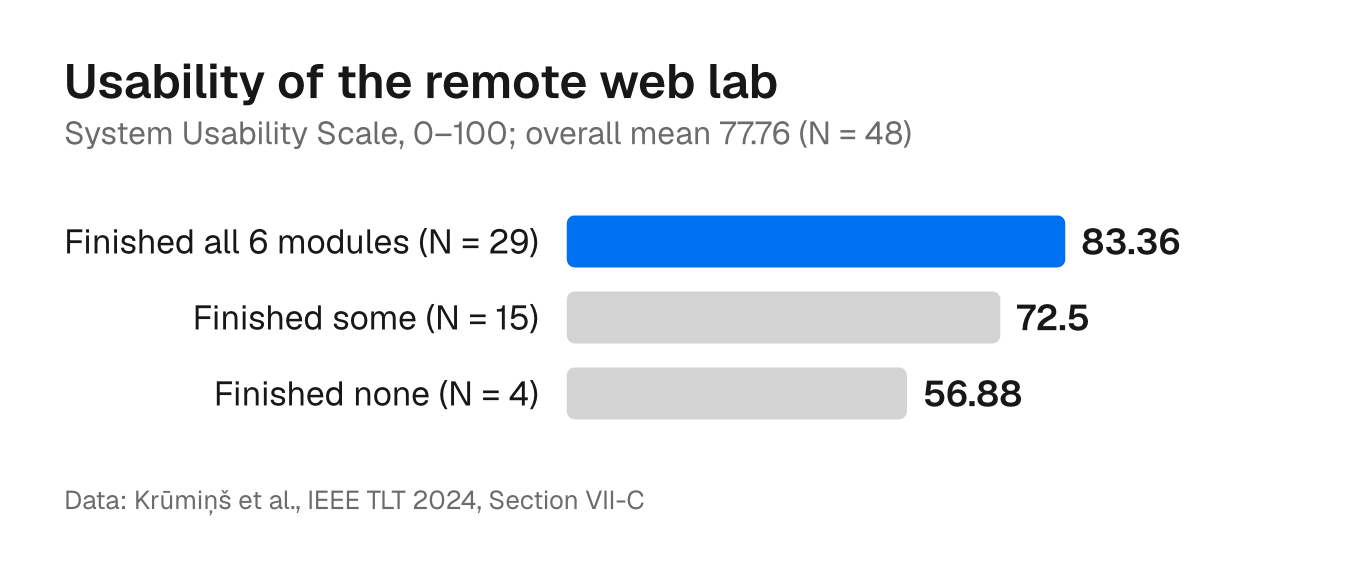
- Usability (SUS) averaged 77.76 (“good”, N = 48), and 83.36 for those who finished everything.
- The server became overloaded at 5 parallel Gazebo simulations, or 8 with lighter RViz views.
- Delay to the robots was small, but unreliable home internet hurt the experience.
How Pico builds on it
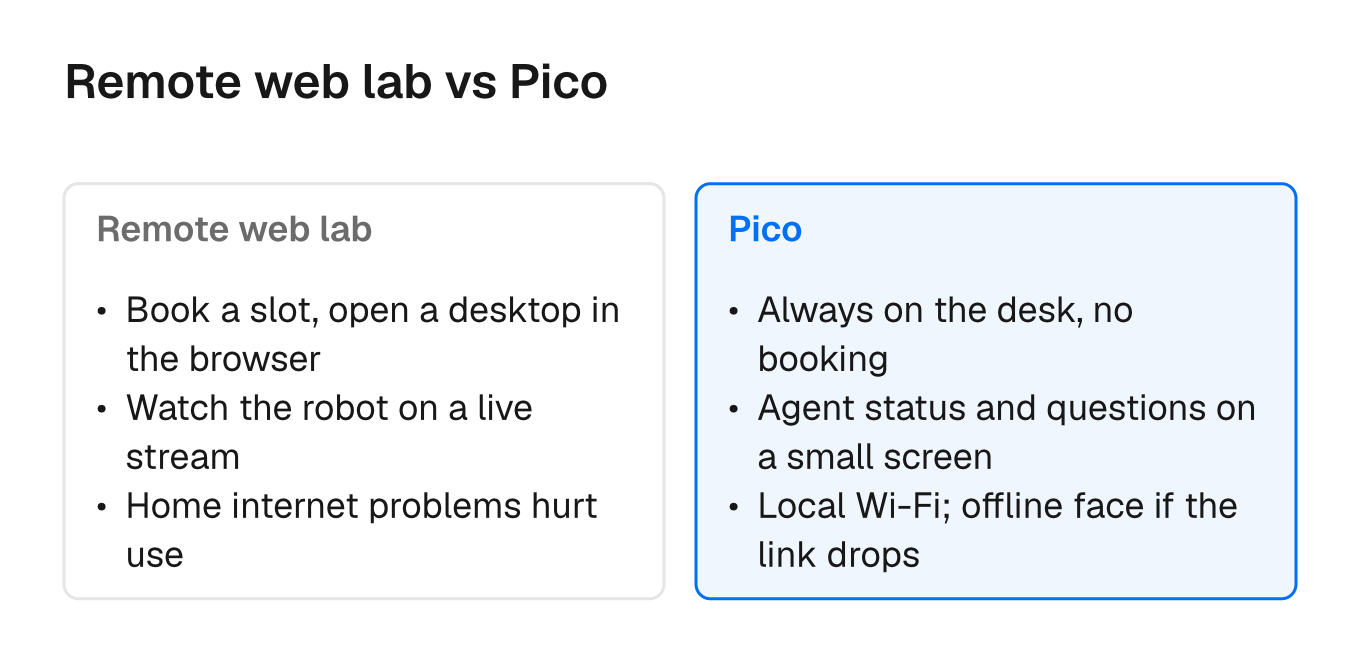
The lab lets people watch the robot in the same window where they control it. Pico does the reverse for coding agents: the agent’s status and questions come to a small device, and the answer goes back from it. Pico stays on the local Wi-Fi, avoiding the internet problems seen here, and shows an offline face if the link drops.
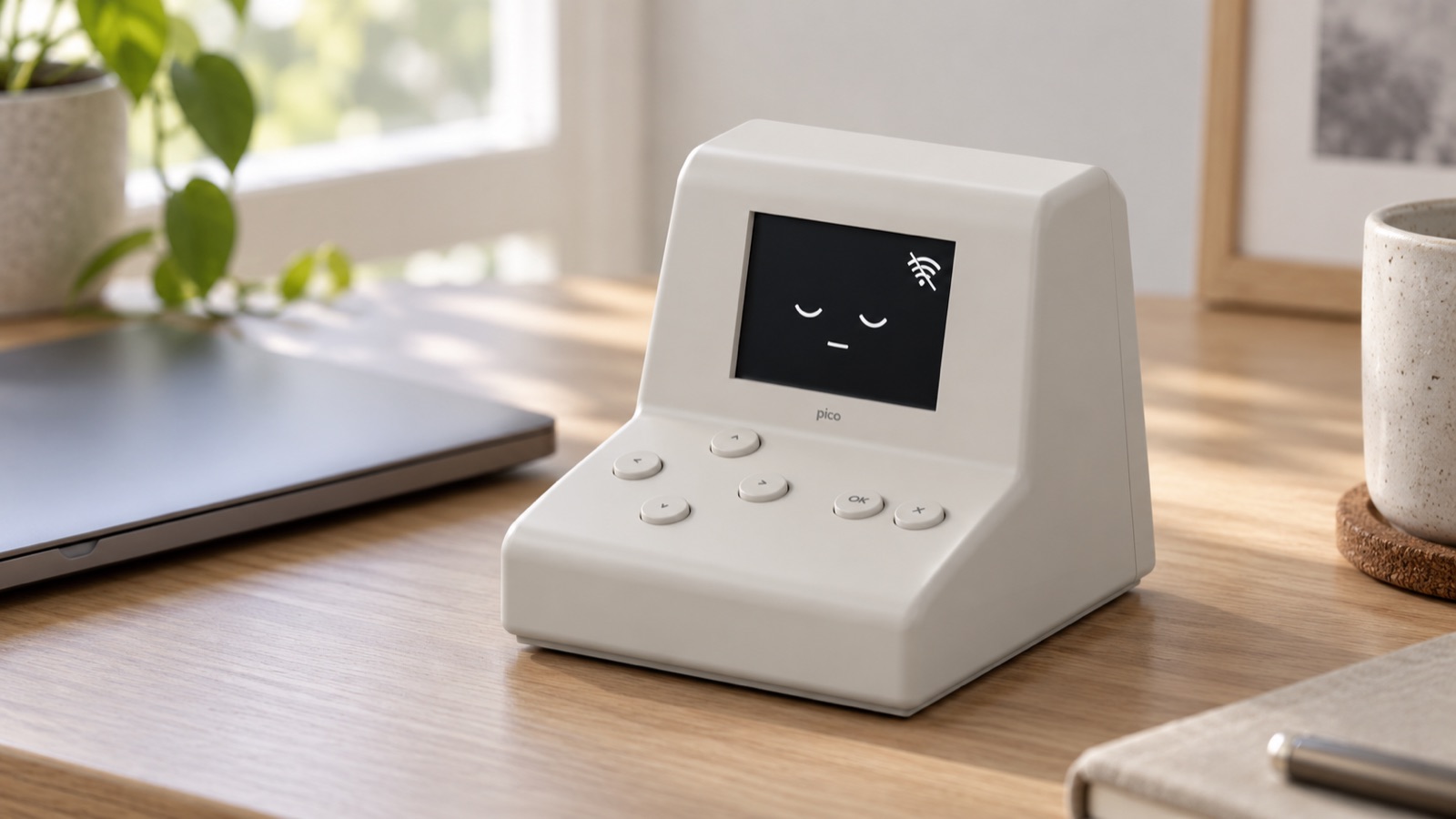
Concept image of Pico, generated with Codex.
Source
Dāvis Krūmiņš, Sandra Schumann, Veiko Vunder, Rauno Põlluäär, Kristjan Laht, Renno Raudmäe, Alvo Aabloo, Karl Kruusamäe, “Open Remote Web Lab for Learning Robotics and ROS With Physical and Simulated Robots in an Authentic Developer Environment,” IEEE Transactions on Learning Technologies, vol. 17 · University of Tartu, 2024. DOI: 10.1109/TLT.2024.3381858.
Md Yeasin Sarder
01
Reactive or Proactive? How Robots Should Explain Failures
What they did
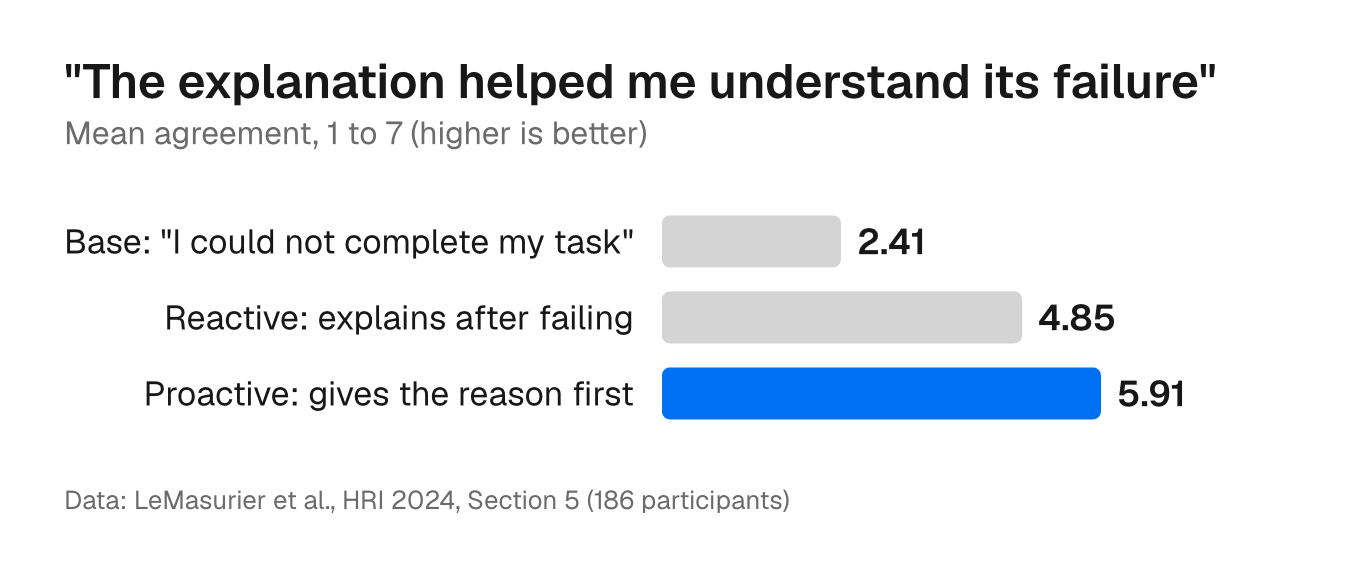
A Fetch robot picked screws for a kitting task while the team caused failures on purpose. 186 people watched videos of it online. They compared a robot that only said “I could not complete my task”, one that explained after it failed (Reactive), and one that checked its assumptions and gave the reason before it acted (Proactive).
What they found
- “The explanation helped me understand its failure”: 5.91 of 7 for Proactive, 4.85 Reactive, 2.41 Base.
- People rated the Proactive robot the most intelligent (4.55 vs 4.12 and 3.57) and the most trustworthy (4.47 vs 4.08 and 3.66).
- When the caddy was out of reach, 81% found the true cause with Proactive, against 39% with Reactive.
- 127 of 186 people preferred the Proactive explanation.
How Pico builds on it
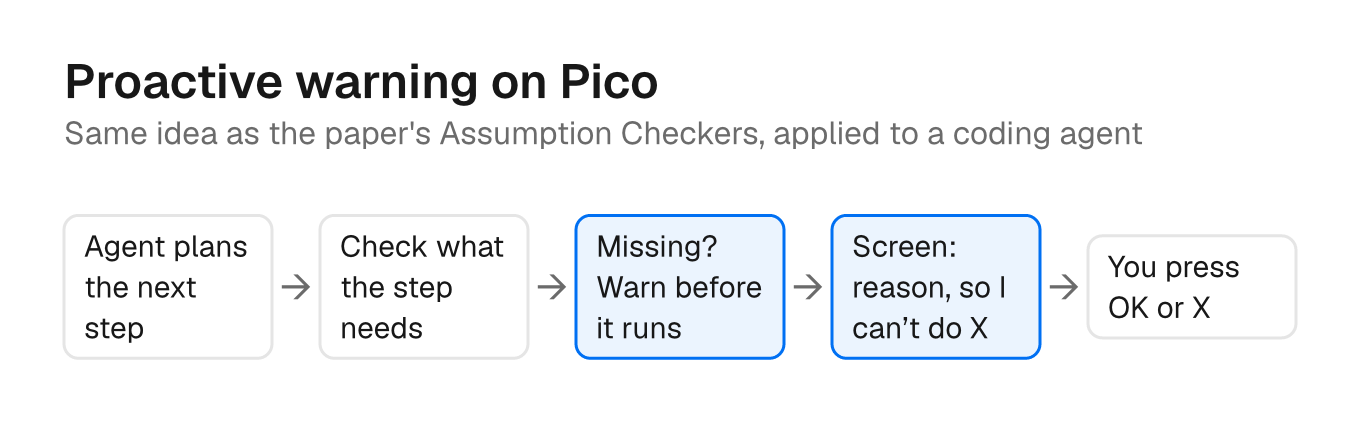
Coding agents also fail on hidden assumptions, like a missing API key. Pico can warn before the agent runs that step, with one line in the paper’s form “[reason], so I can’t [goal]”. Unlike the robot, Pico also lets the person answer at once with OK or X.
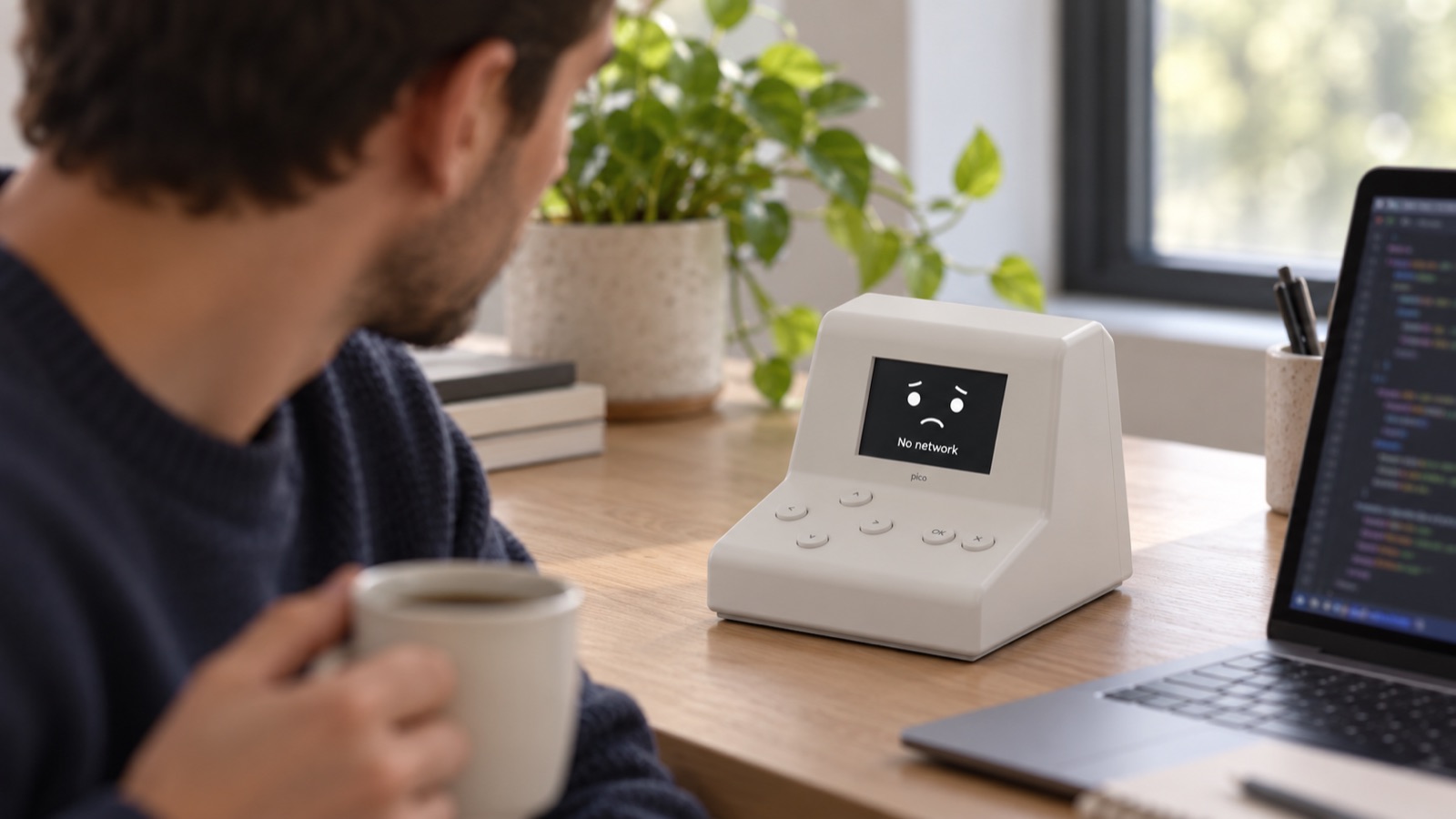
Concept image of Pico, generated with Codex.
Source
Gregory LeMasurier, Alvika Gautam, Zhao Han, Jacob W. Crandall, Holly A. Yanco, “Reactive or Proactive? How Robots Should Explain Failures,” HRI 2024, 19th ACM/IEEE International Conference on Human-Robot Interaction, 2024. DOI: 10.1145/3610977.3634963.
02
When Do People Want an Explanation from a Robot?
What they did
186 people watched 16 short videos of a TIAGo robot in seven kinds of situations, from normal work to errors and surprises. After each video, they rated six possible responses, such as explaining why, saying sorry, asking for help, or carrying on without comment.
What they found
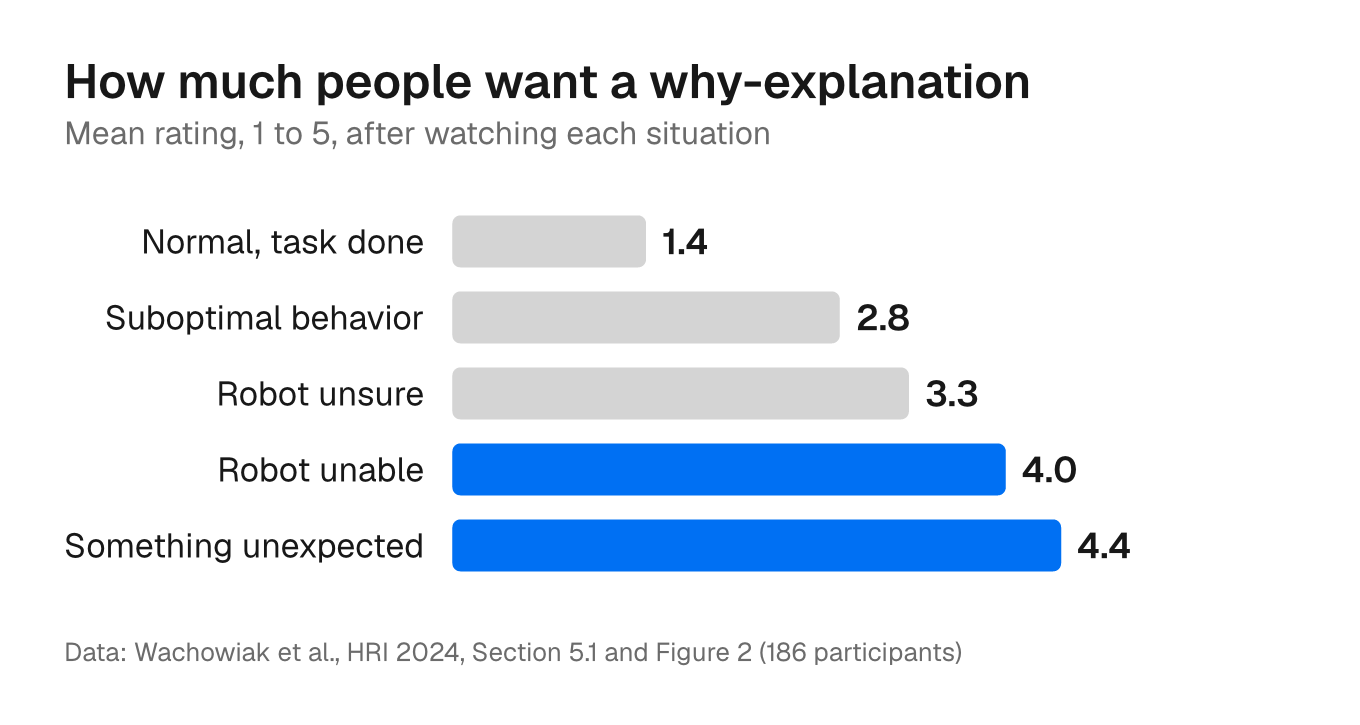
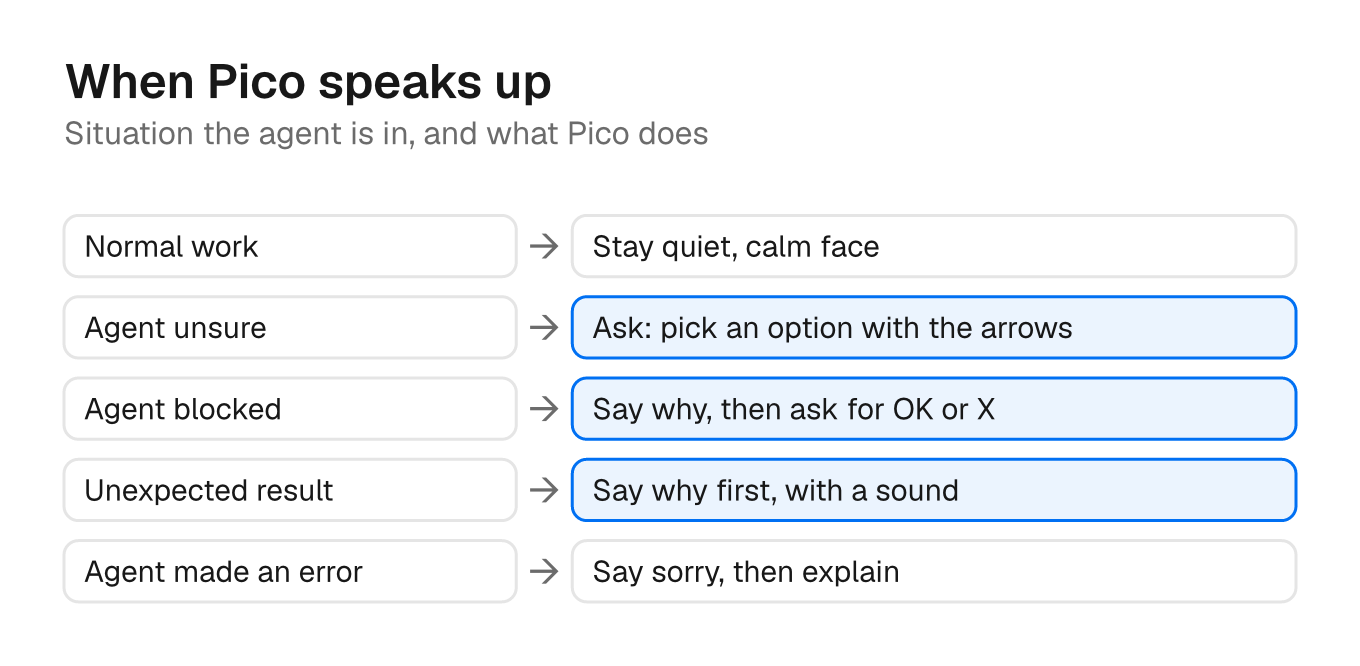
- The need for a why-explanation was lowest when all went well (1.4 out of 5) and highest after something unexpected (4.4) or when the robot could not do the task (4.0).
- When all went well, people preferred the robot to carry on without comment (3.6).
- When the robot was unsure, asking for help was the top response (4.21).
- An apology fit best after an error (3.99) or a social norm violation (3.47).
How Pico builds on it
These results give Pico a simple rule for when to interrupt. While the agent works normally, Pico stays quiet. When the agent is unsure, Pico asks the person to pick an option with the arrow buttons. When it is blocked, Pico shows why and then asks for OK or X.
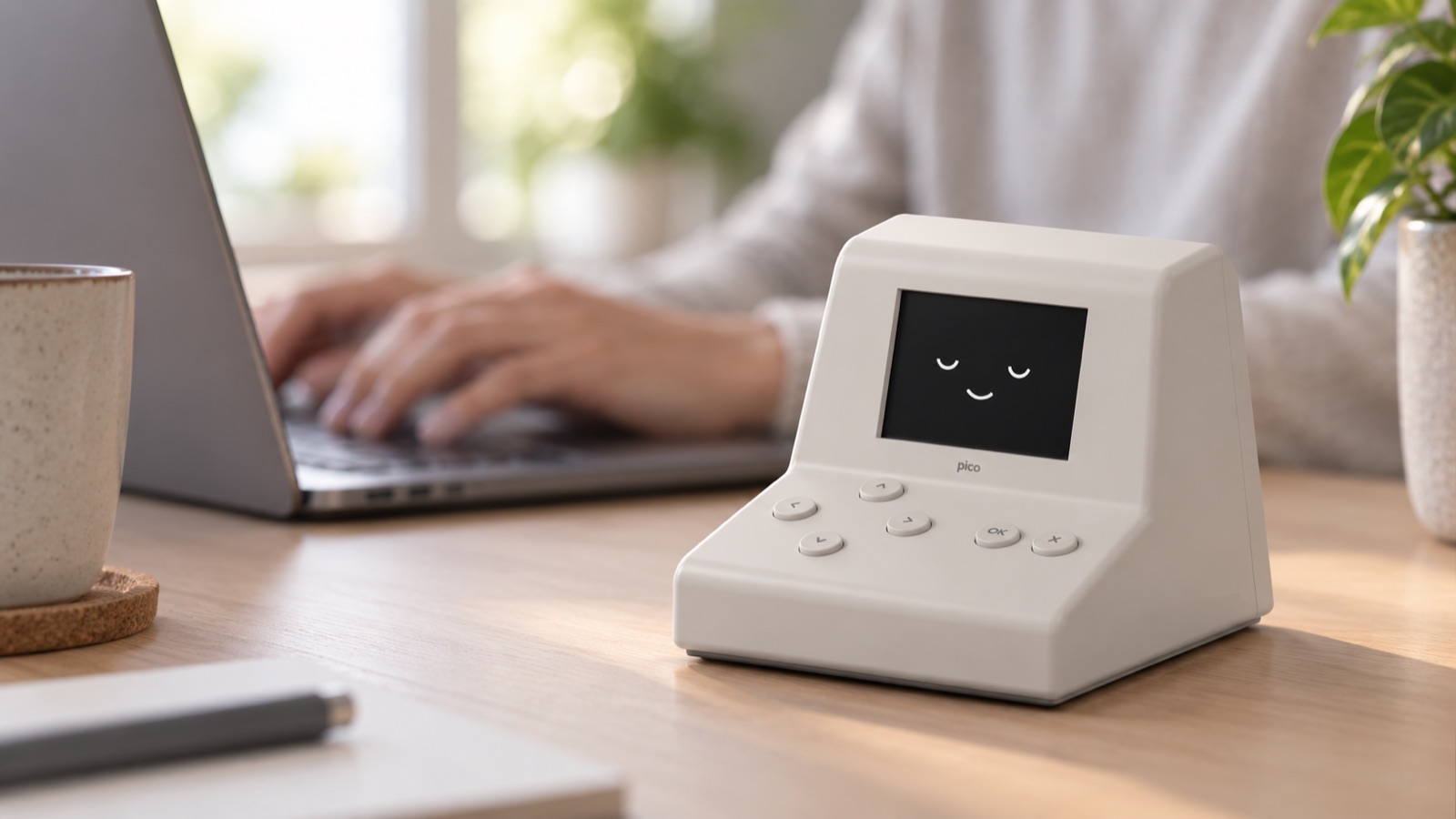
Concept image of Pico, generated with Codex.
Source
Lennart Wachowiak, Andrew Fenn, Haris Kamran, Andrew Coles, Oya Celiktutan, Gerard Canal, “When Do People Want an Explanation from a Robot?,” HRI 2024, 19th ACM/IEEE International Conference on Human-Robot Interaction, 2024. DOI: 10.1145/3610977.3634990.
03
A System for Human-Robot Teaming through End-User Programming and Shared Autonomy
What they did
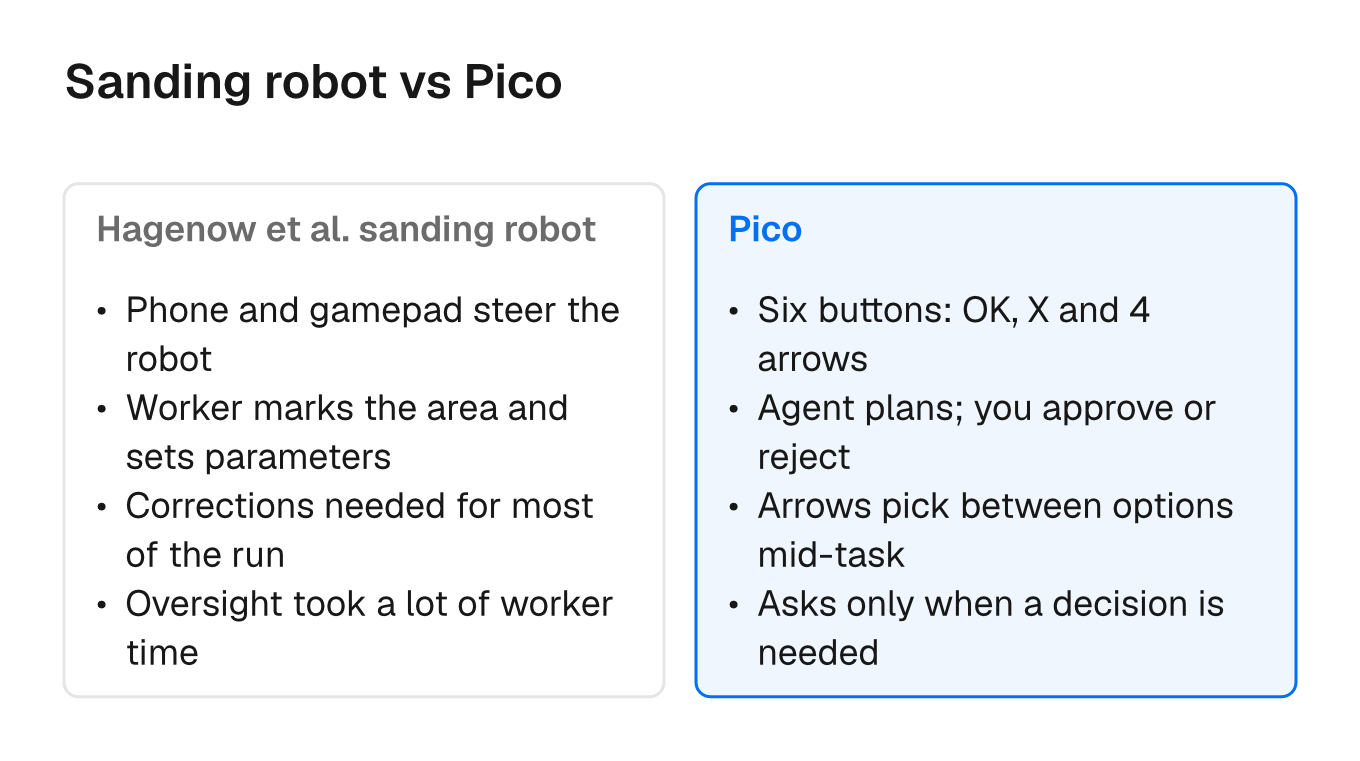
The authors built a sanding robot for aircraft factory work. A worker sets up the task on a phone with a gamepad, then corrects the robot’s force, pitch or path while it sands. They tested it in informal lab case studies and showed it at an aviation factory, with no formal user study.
What they found
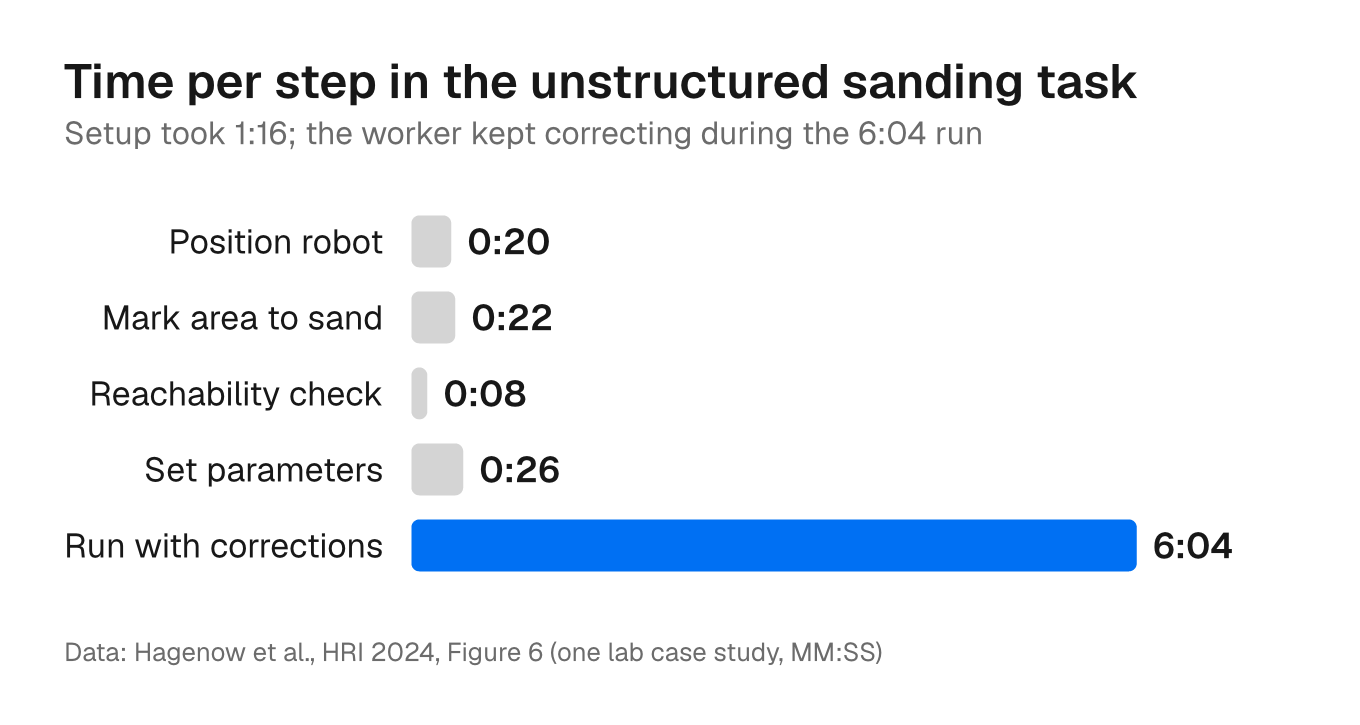
- In the unstructured task, setup took 1:16 (minutes:seconds), but the supervised run took 6:04.
- Corrections were needed for most of the run, even with a tuned task model. Without them, the robot sanded some areas too little and others too much.
- Factory staff liked the simple interface and low-dimension corrections most.
- The workflows took too much worker time.
How Pico builds on it
Pico uses the same split for coding agents: the agent does the work, and the person steers with a few simple inputs, like the gamepad here. Pico’s six buttons cover approve, reject and picking between options. To avoid the paper’s time cost, Pico asks only when the agent needs a decision, so the person can do other work in between.
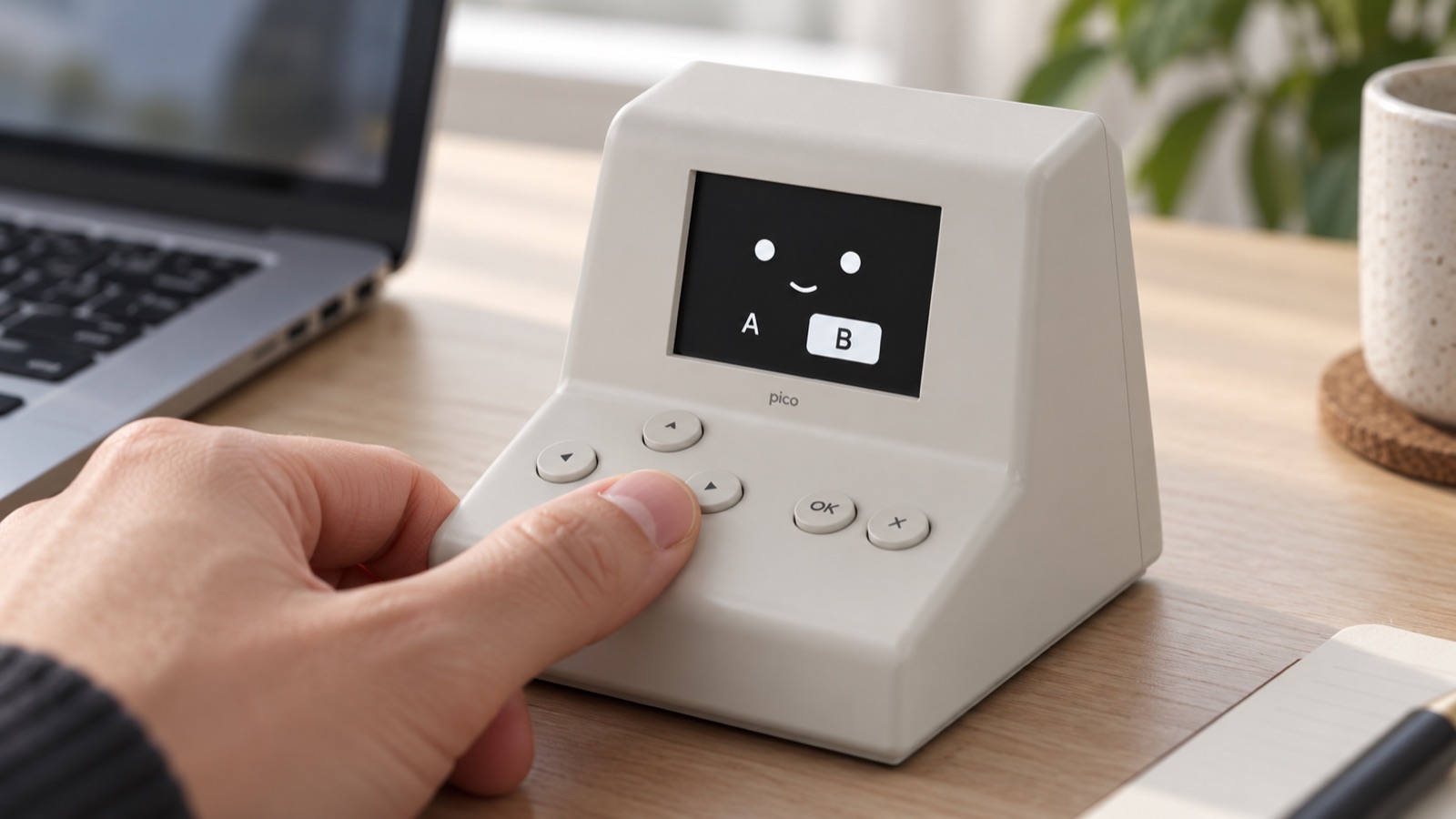
Concept image of Pico, generated with Codex.
Source
Michael Hagenow, Emmanuel Senft, Robert Radwin, Michael Gleicher, Michael Zinn, Bilge Mutlu, “A System for Human-Robot Teaming through End-User Programming and Shared Autonomy,” HRI 2024, 19th ACM/IEEE International Conference on Human-Robot Interaction, 2024. DOI: 10.1145/3610977.3634965.
04
Human-In-the-Loop Software Development Agents
What they did
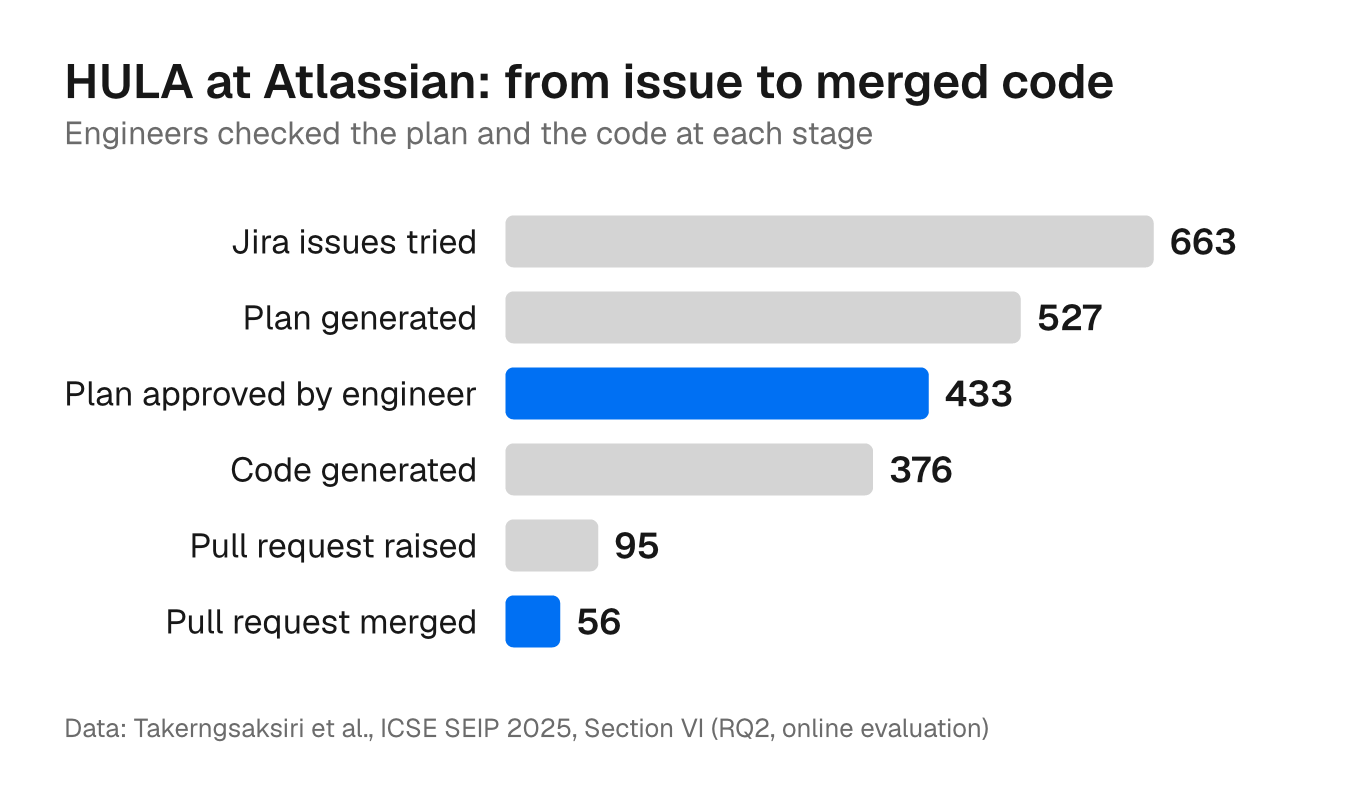
HULA is a coding agent built into Atlassian’s Jira. An AI planner writes a plan for an issue, an engineer checks and edits it, then an AI coder writes the code and the engineer checks it again. The team ran it on 663 real Jira issues and surveyed the engineers who used it.
What they found
- Engineers approved 82% of the generated plans (433 of 527).
- Code led to a pull request for 25% of issues (95 of 376), and 59% of those were merged (56).
- 61% of surveyed engineers said the code was easy to read and change.
- Only 41% said the plan matched the issue well; code quality was still a concern.
How Pico builds on it
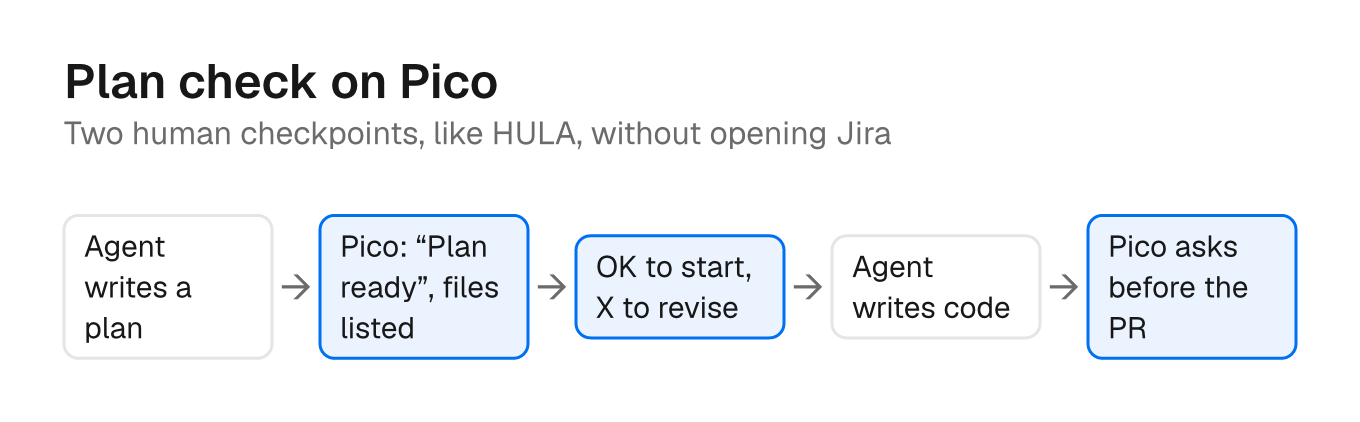
HULA shows that a human check on the plan and on the code makes agents useful in real work. Pico keeps the same two checkpoints but moves them to a desk device: “Plan ready” appears on screen and OK or X answers it, so the engineer does not need to watch Jira.
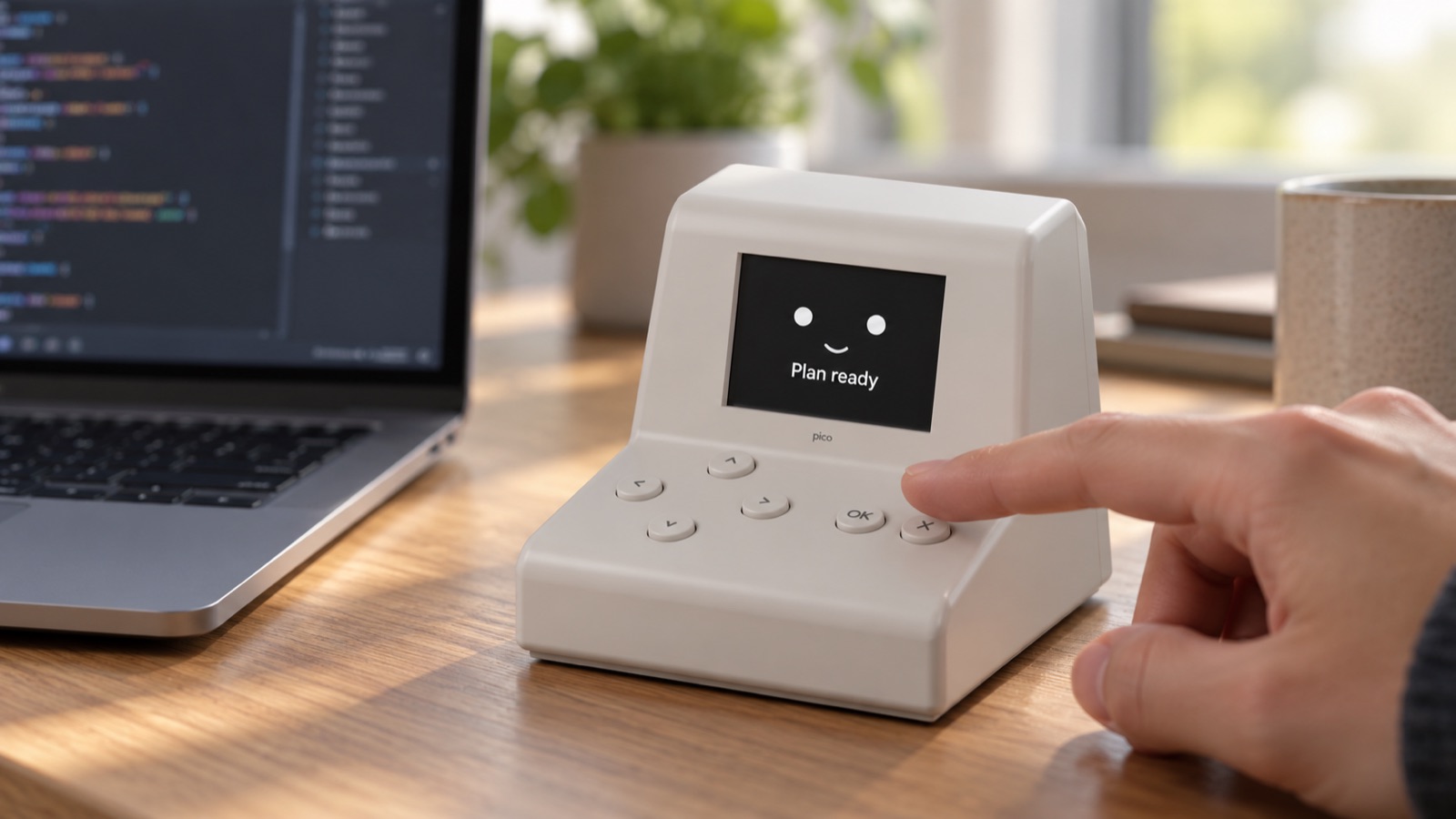
Concept image of Pico, generated with Codex.
Source
Wannita Takerngsaksiri, Jirat Pasuksmit, Patanamon Thongtanunam, Chakkrit Tantithamthavorn, Ruixiong Zhang, Fan Jiang, Jing Li, Evan Cook, Kun Chen, Ming Wu, “Human-In-the-Loop Software Development Agents,” ICSE SEIP 2025, 47th IEEE/ACM International Conference on Software Engineering, Software Engineering in Practice · Monash University, University of Melbourne and Atlassian, 2025. DOI: 10.1109/ICSE-SEIP66354.2025.00036.
05
Position: Humans are Missing from AI Coding Agent Research
What they did
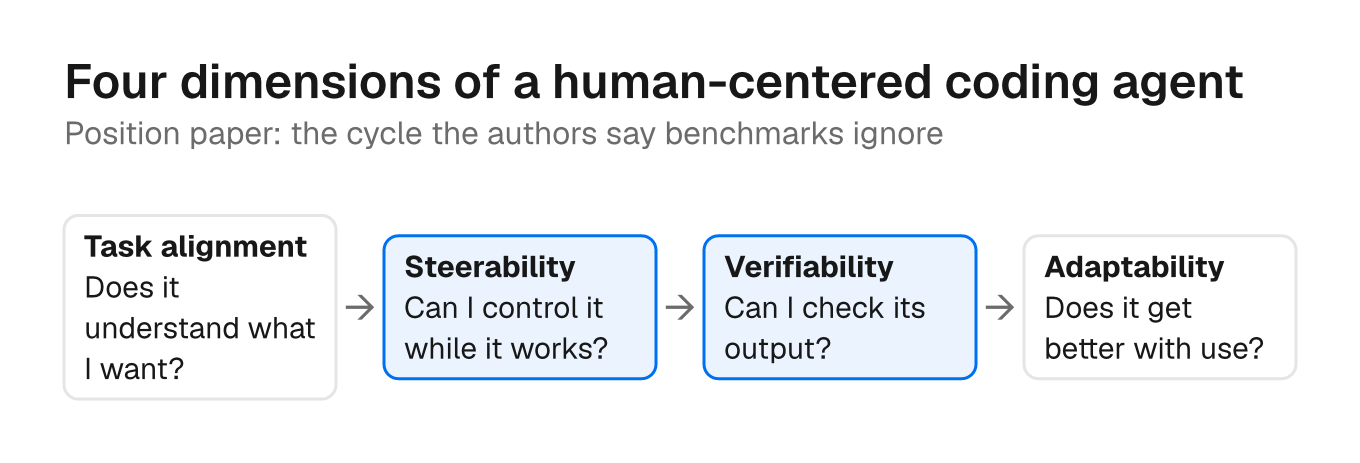
This position paper argues that coding agent research only chases benchmark scores. The authors say the real limit now is how people talk to, steer and trust agents. They define four dimensions for a human-centered agent and back them with an analysis of SWE-bench Verified patches.
What they found
This is a position paper, so most of it is argument. The numbers it reports:
- 4 dimensions: task alignment, steerability, verifiability and adaptability.
- Every model had more than 15% of its correct patches over 1.5 times longer than the human fix.
- For every model, over 50% of correct patches still did something different from the human fix.
- A cited survey: of the 84% of developers using AI tools, nearly half do not trust the output.
How Pico builds on it
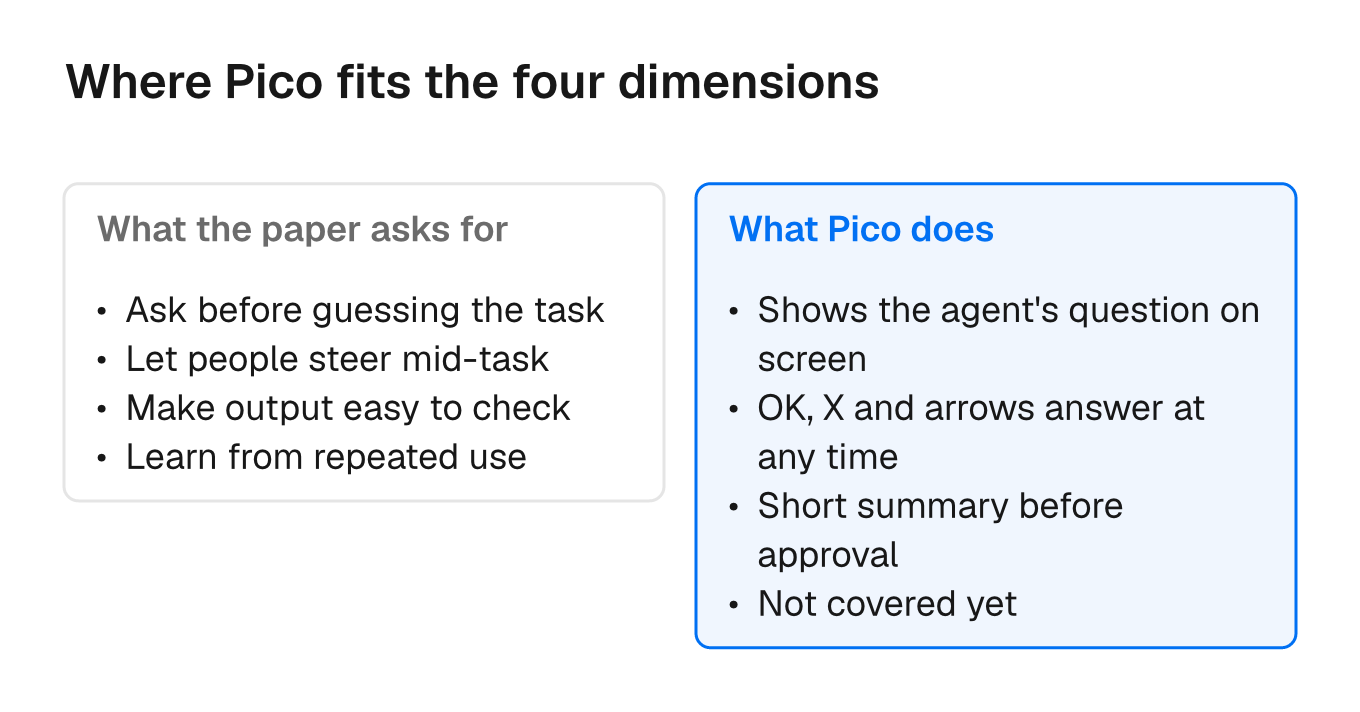
Pico targets two of the four dimensions directly: steerability (OK, X and arrows work while the agent runs) and verifiability (a short summary on screen before you approve). Task alignment is partly covered when the agent asks a question on Pico. Adaptability is not covered yet.
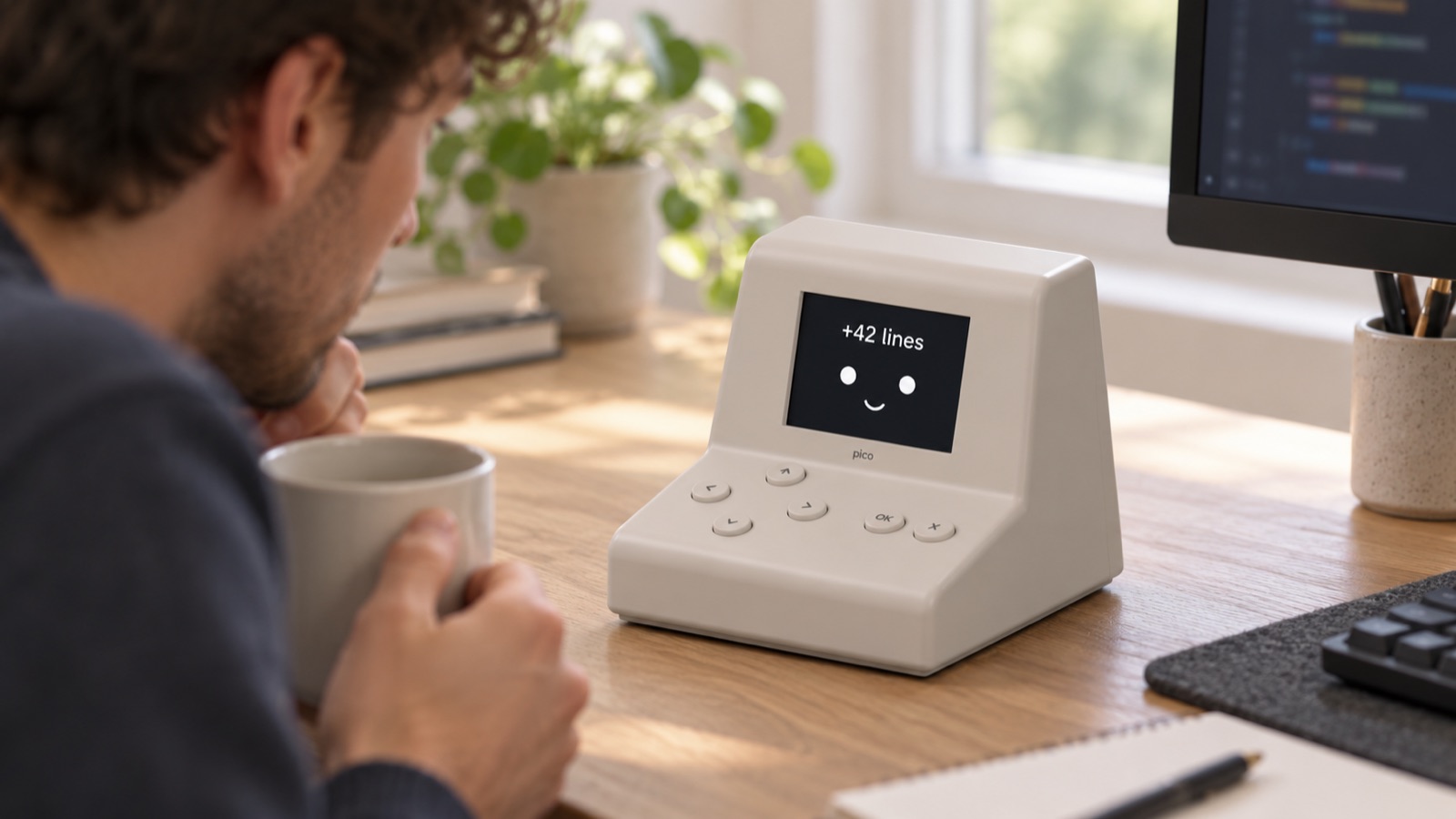
Concept image of Pico, generated with Codex.
Source
Zora Zhiruo Wang, John Yang, Kilian Lieret, Alexa Tartaglini, Valerie Chen, Yuxiang Wei, Zijian Wang, Lingming Zhang, Karthik Narasimhan, Ludwig Schmidt, Graham Neubig, Daniel Fried, Diyi Yang, “Position: Humans are Missing from AI Coding Agent Research,” arXiv preprint (position paper) · Carnegie Mellon University, Stanford University, Princeton University and UIUC, 2026. DOI: 10.48550/arXiv.2608.12355.
06
CodeAgent: Enhancing Code Generation with Tool-Integrated Agent Systems for Real-World Repo-level Coding Challenges
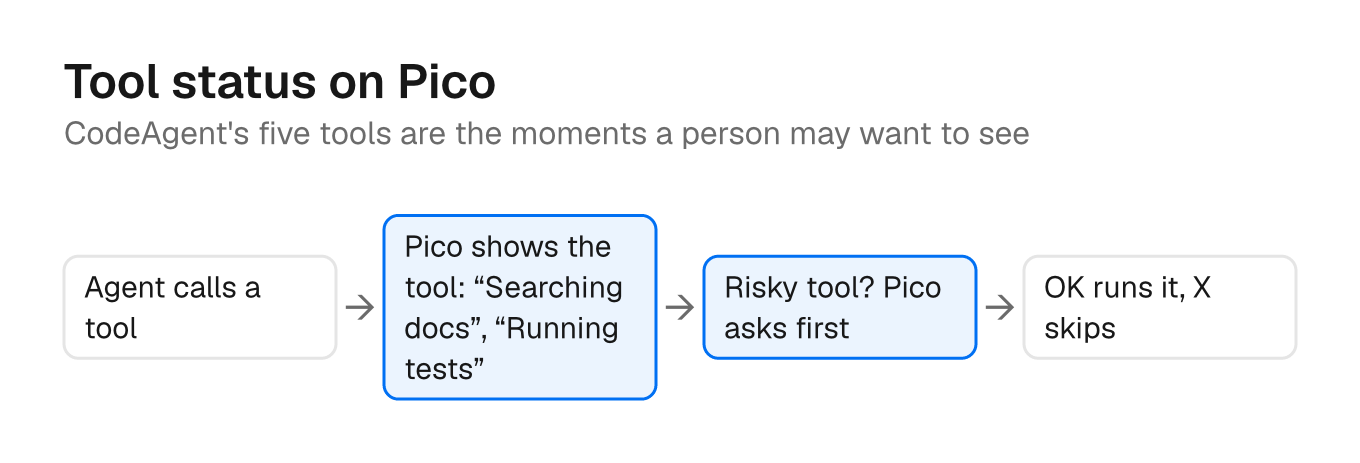
What they did
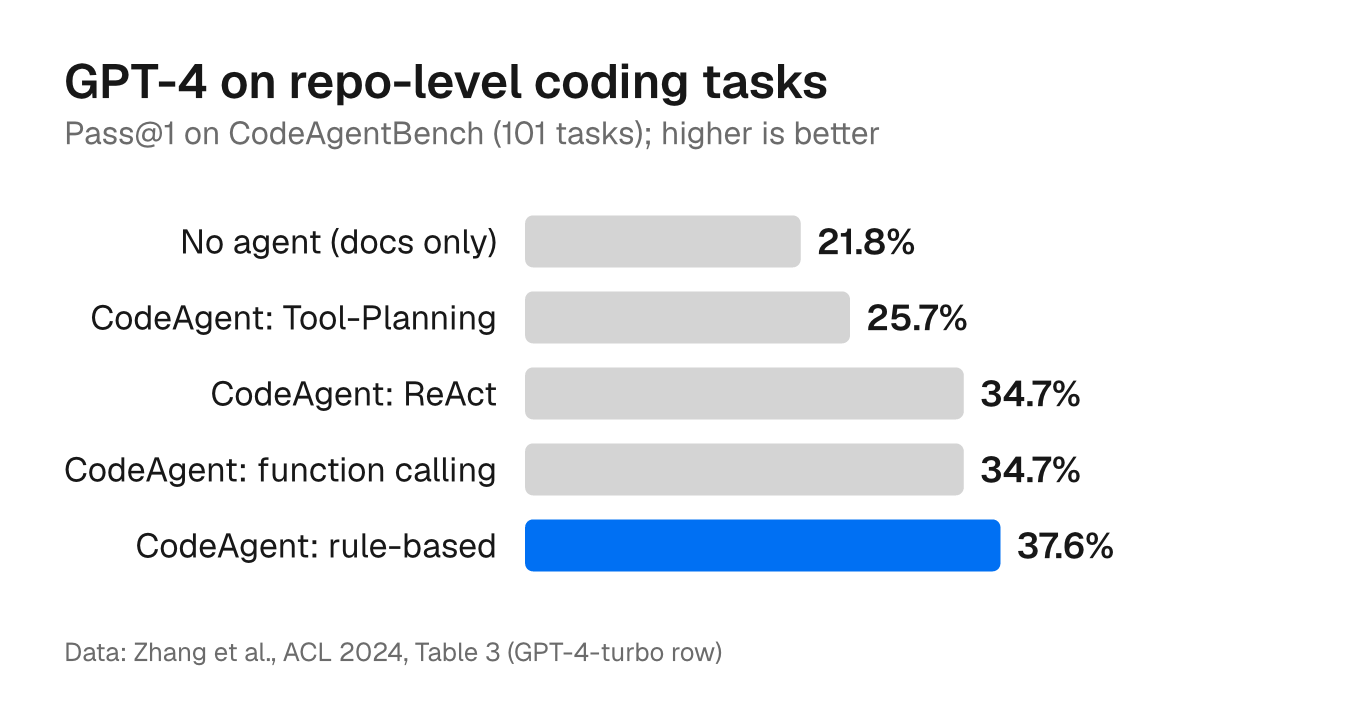
CodeAgent gives a language model five tools for working inside a real code repository: web search, documentation reading, code symbol search, format check and a Python interpreter. The authors built CodeAgentBench, 101 tasks from real Python projects, and tested nine models with four ways of using the tools.
What they found
- With GPT-4, pass@1 rose from 21.8% with no tools to 37.6%, a gain of 15.8 points.
- Gains across models ranged from 2.0 to 15.8 points.
- Code symbol search was used most (2.45 times per task); removing it cost the most (−7.9 points).
- On a hard subset, CodeAgent with GPT-4 solved 5 tasks; GitHub Copilot solved 1.
How Pico builds on it
CodeAgent shows that tool calls are where coding agents gain the most, and also where they act on your files. Pico turns each tool call into a short status like “Running tests”. For risky actions it asks first, so a person sees the agent’s work without reading the terminal.
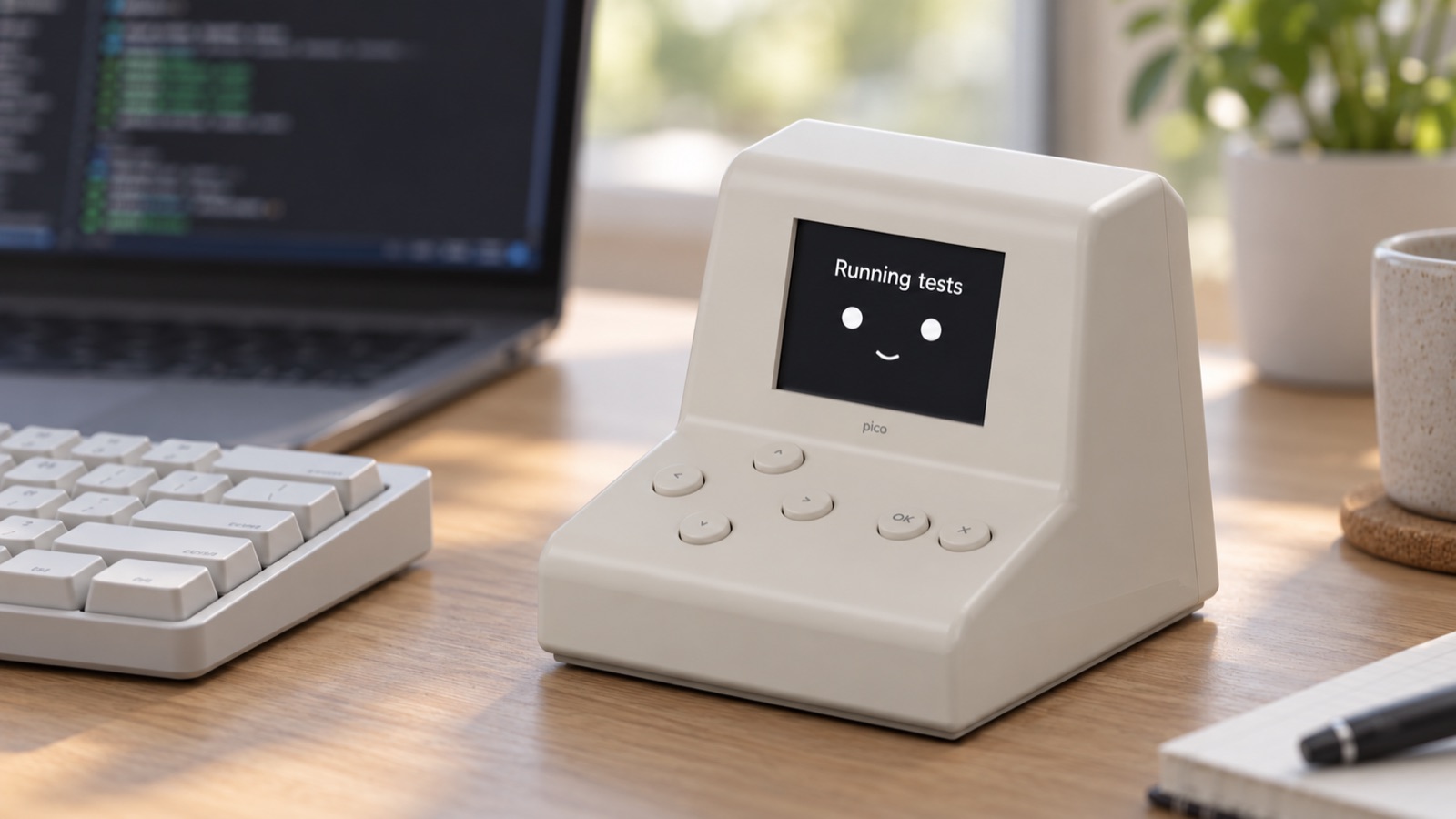
Concept image of Pico, generated with Codex.
Source
Kechi Zhang, Jia Li, Ge Li, Xianjie Shi, Zhi Jin, “CodeAgent: Enhancing Code Generation with Tool-Integrated Agent Systems for Real-World Repo-level Coding Challenges,” ACL 2024, 62nd Annual Meeting of the Association for Computational Linguistics · Peking University, 2024. DOI: 10.18653/v1/2024.acl-long.737.
07
FurChat: An Embodied Conversational Agent using LLMs, Combining Open and Closed-Domain Dialogue with Facial Expressions
What they did
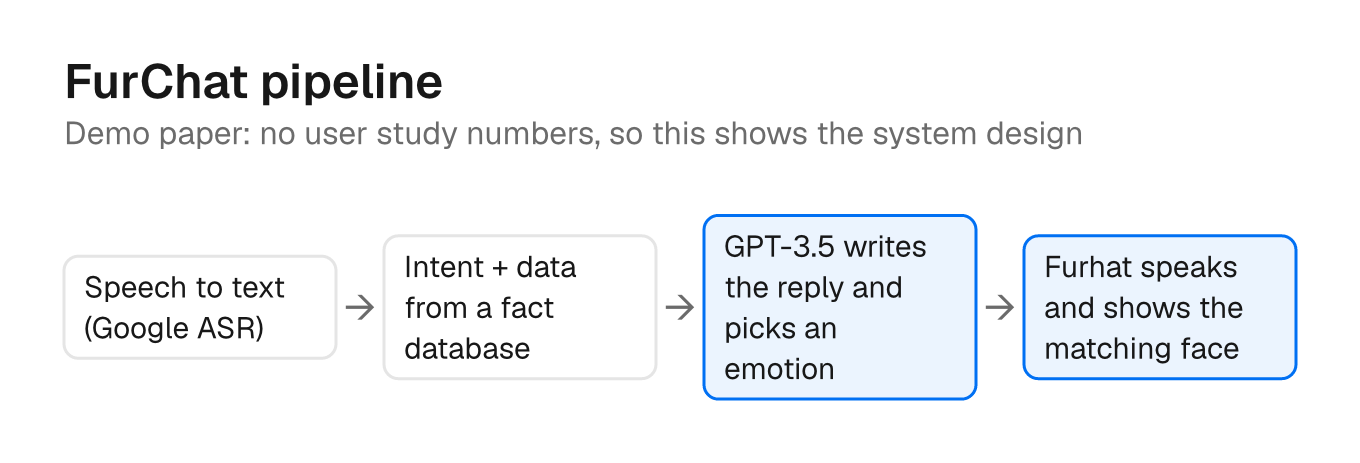
FurChat is a receptionist for the National Robotarium, running on a Furhat robot with a projected face. GPT-3.5 writes the replies, using facts scraped from the Robotarium website to reduce made-up answers. The model also picks an emotion for each reply, and the robot shows the matching face while it speaks.
What they found
This is a short demo paper with no user study, so there are no results to report. What it shows:
- One pipeline: speech recognition, intent detection, GPT-3.5 reply, text-to-speech.
- The LLM’s chosen emotion maps to one of a fixed set of Furhat facial gestures.
- A fact database is used because GPT-3.5 can make things up.
How Pico builds on it
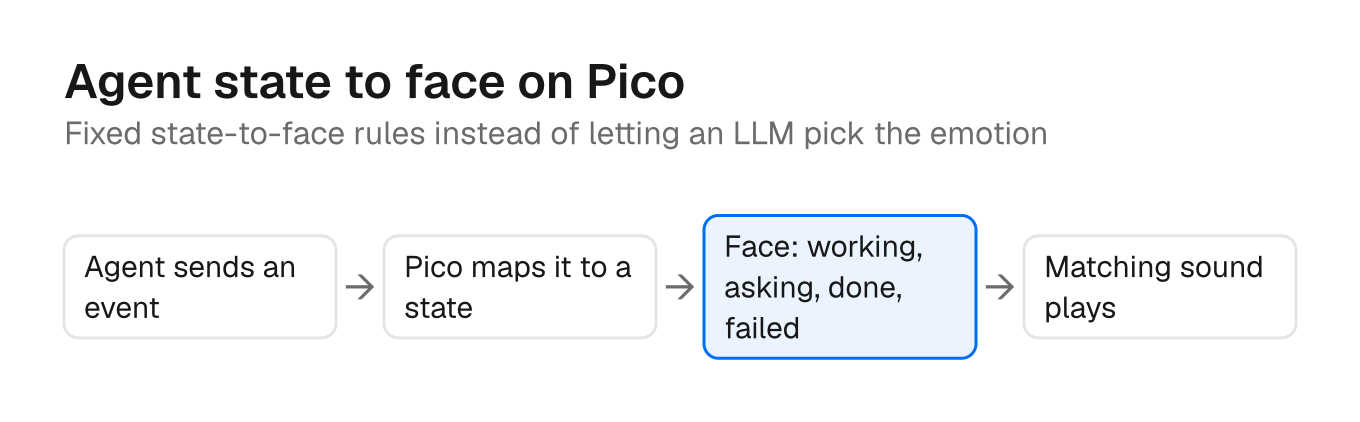
FurChat shows that a face on a physical device makes an AI feel present. Pico uses faces too, but they come from fixed rules for each agent state (working, asking, done, failed). This is more predictable than letting a model pick the emotion, and it matters when a face is a warning.

Concept image of Pico, generated with Codex.
Source
Neeraj Cherakara, Finny Varghese, Sheena Shabana, Nivan Nelson, Abhiram Karukayil, Rohith Kulothungan, Mohammed Afil Farhan, Birthe Nesset, Meriam Moujahid, Tanvi Dinkar, Verena Rieser, Oliver Lemon, “FurChat: An Embodied Conversational Agent using LLMs, Combining Open and Closed-Domain Dialogue with Facial Expressions,” SIGDIAL 2023, 24th Meeting of the Special Interest Group on Discourse and Dialogue · Heriot-Watt University and Alana AI, 2023. DOI: 10.18653/v1/2023.sigdial-1.55.
08
When Code Authors Are Agents: A Large-Scale Study of Human–Agent Collaboration in Pull Requests
What they did
The authors compared pull requests written by five autonomous coding agents with pull requests written by people on GitHub. They looked at merge outcomes, the shape of the code changes, and how reviewers talked about each pull request.
What they found
These findings are from the abstract; the full text could not be downloaded.
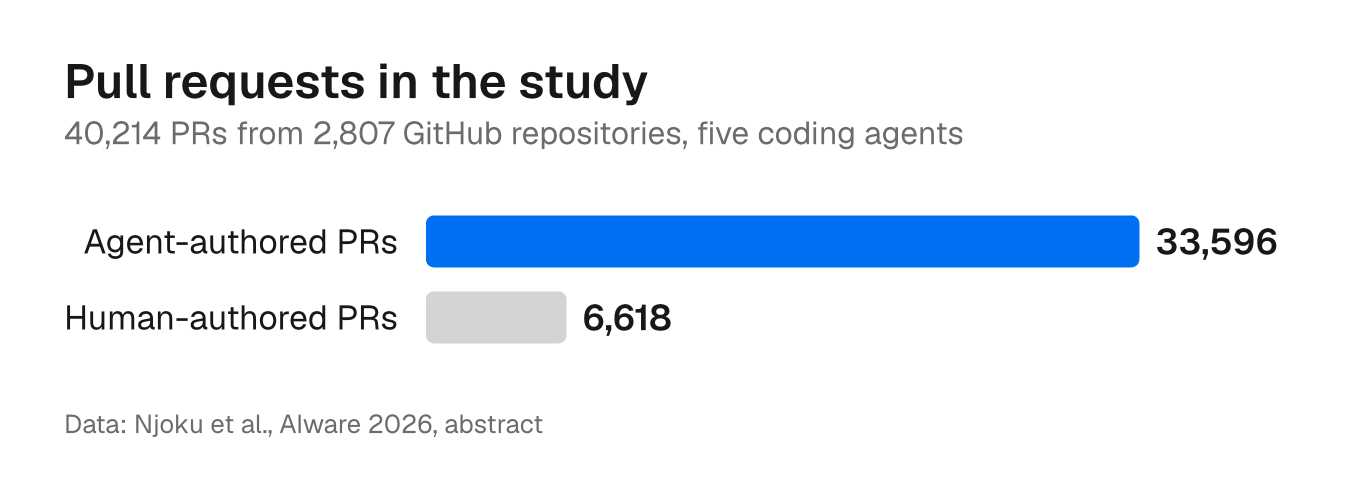
- The study covers 40,214 pull requests from 2,807 repositories: 33,596 by agents and 6,618 by humans.
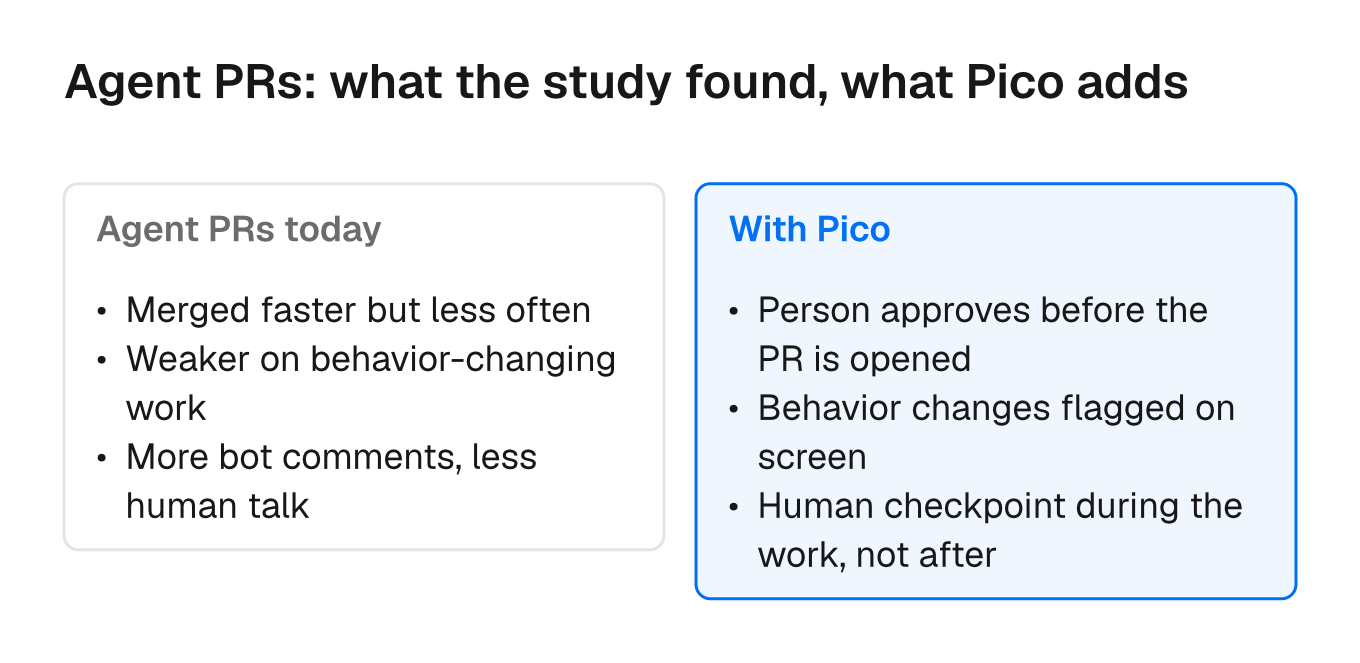
- Agent pull requests were integrated faster but merged less often.
- Agents did better on documentation tasks and worse on changes that alter behavior.
- Agent pull requests got more bot comments and less social, more analytic review talk.
How Pico builds on it
The study shows that agent work often reaches people only at review time, when it is too late to steer. Pico adds a check earlier: the person approves before the pull request opens, and changes that alter behavior are flagged on screen. Pico cannot fix review quality itself, but it brings the human in while the agent is still working.
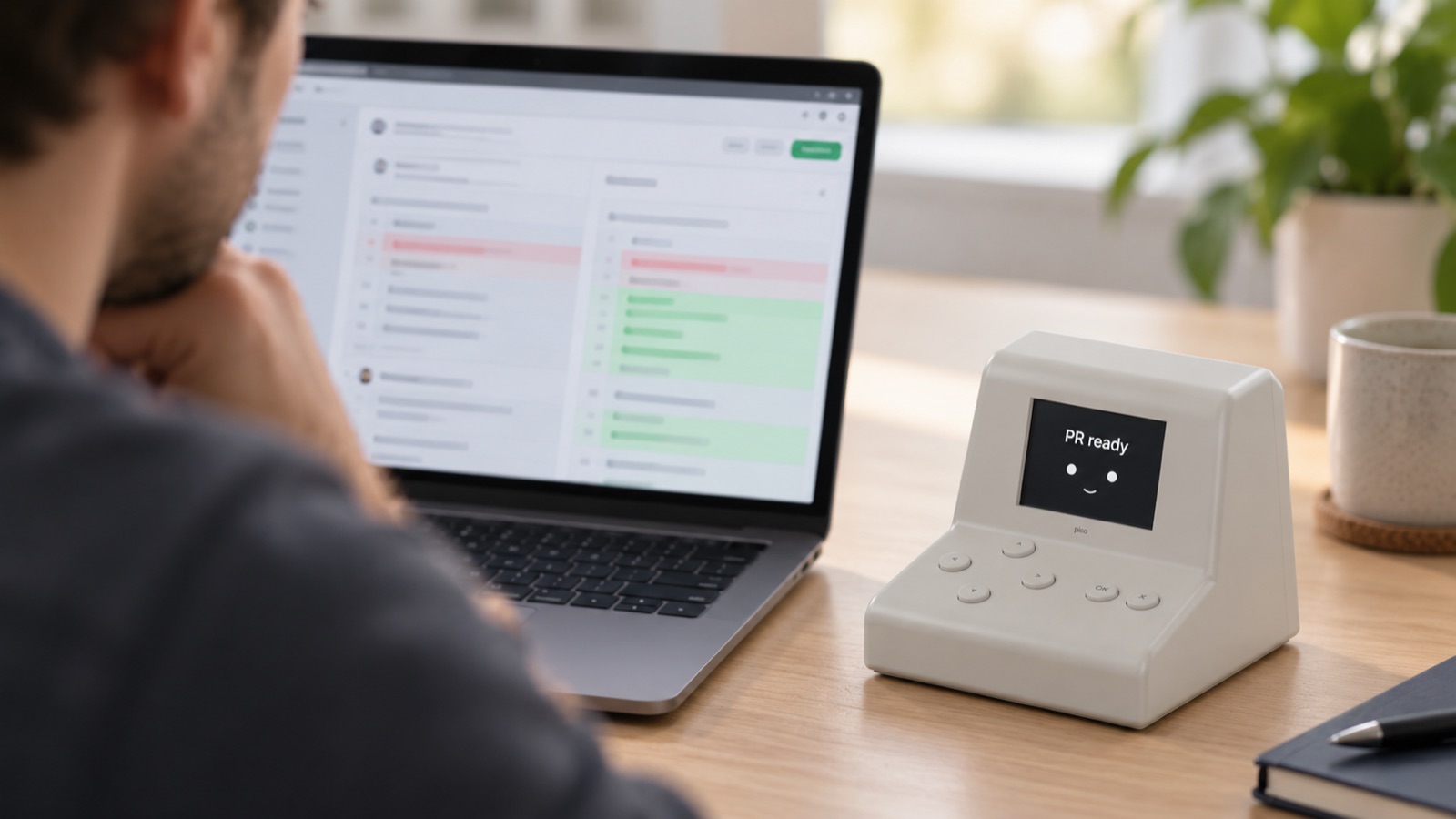
Concept image of Pico, generated with Codex.
09
Design of an ESP32 Compatible Development Board for Mobile Robot Control in Social Robotics
What they did
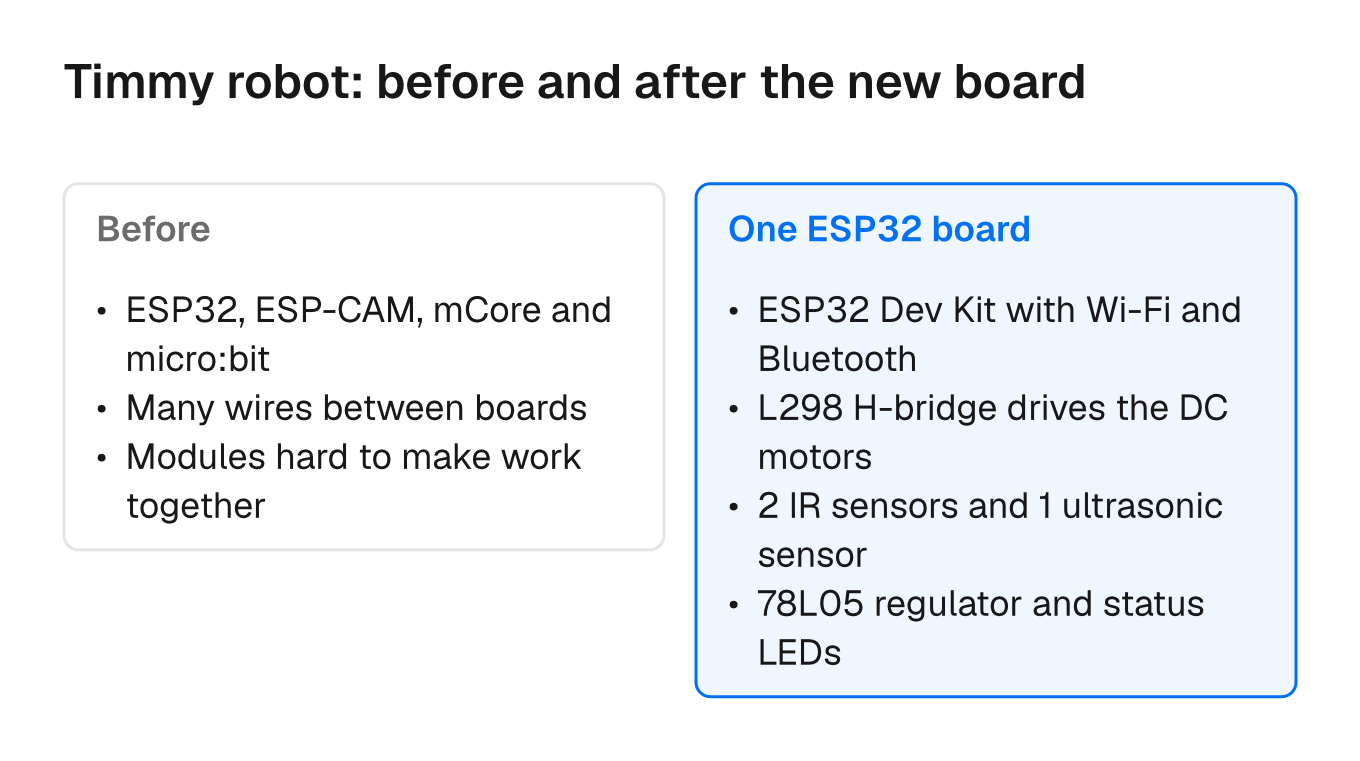
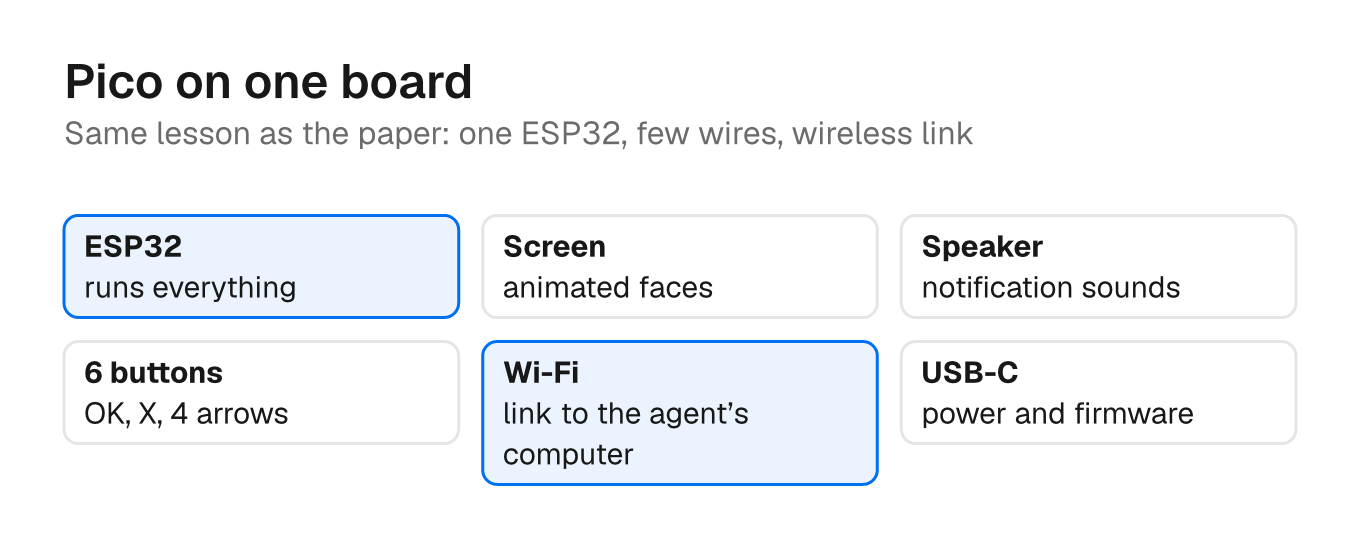
The team was building Timmy, a mobile social robot, using four separate boards (ESP32, ESP-CAM, mCore and micro:bit). That meant many wires and modules that did not work well together. They designed one ESP32 board that drives the motors, reads the sensors and talks over Wi-Fi and Bluetooth. The paper is written in Spanish.
What they found
This is a hardware design paper with no measured results. The authors say themselves that their claims about energy and control still need proper tests. What it reports:
- 1 board replaces 4 boards and modules.
- An L298 H-bridge for the DC motors, plus 2 IR sensors and 1 ultrasonic sensor.
- A 78L05 regulator and status LEDs for power and motor direction.
How Pico builds on it
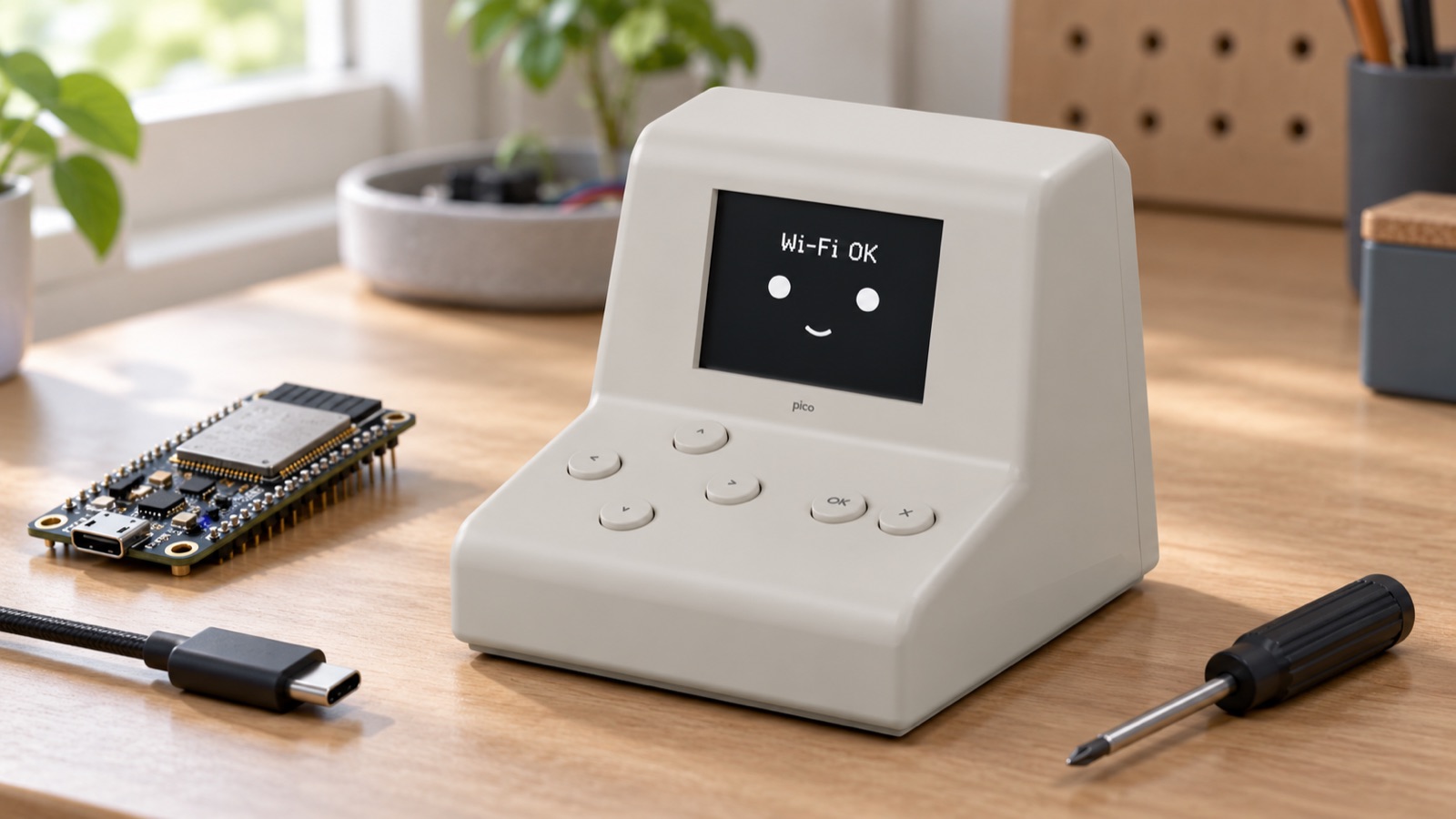
The paper confirms what Pico already does: one ESP32 handles everything, and Wi-Fi replaces cables to other devices. Pico has no motors, so it is simpler. It only needs a screen, a speaker and six buttons on the same board.
Concept image of Pico, generated with Codex.
Source
Neftali Elorza Lopez, Maria Isabel Cuevas Avila, Julio Uriel Velazquez Montalvo, Victor Javier Gonzalez Villela, Fernando Macedo Chagolla, “Design of an ESP32 Compatible Development Board for Mobile Robot Control in Social Robotics,” LACCEI 2025, 23rd LACCEI International Multi-Conference for Engineering, Education and Technology · UNAM, Mexico, 2025. DOI: 10.18687/LACCEI2025.1.1.2362.
10
Agentic Refactoring: An Empirical Study of AI Coding Agents
What they did
The authors studied how coding agents like OpenAI Codex, Claude Code and Cursor refactor real Java projects. They found 15,451 refactorings in 12,256 agent pull requests from the AIDev dataset. They compared the types, reasons and code-quality effects with earlier studies of human refactoring.
What they found
- Agents refactored on purpose in 26.1% of their commits.
- Most edits were small: change variable type (11.8%), rename parameter (10.4%), rename variable (8.5%).
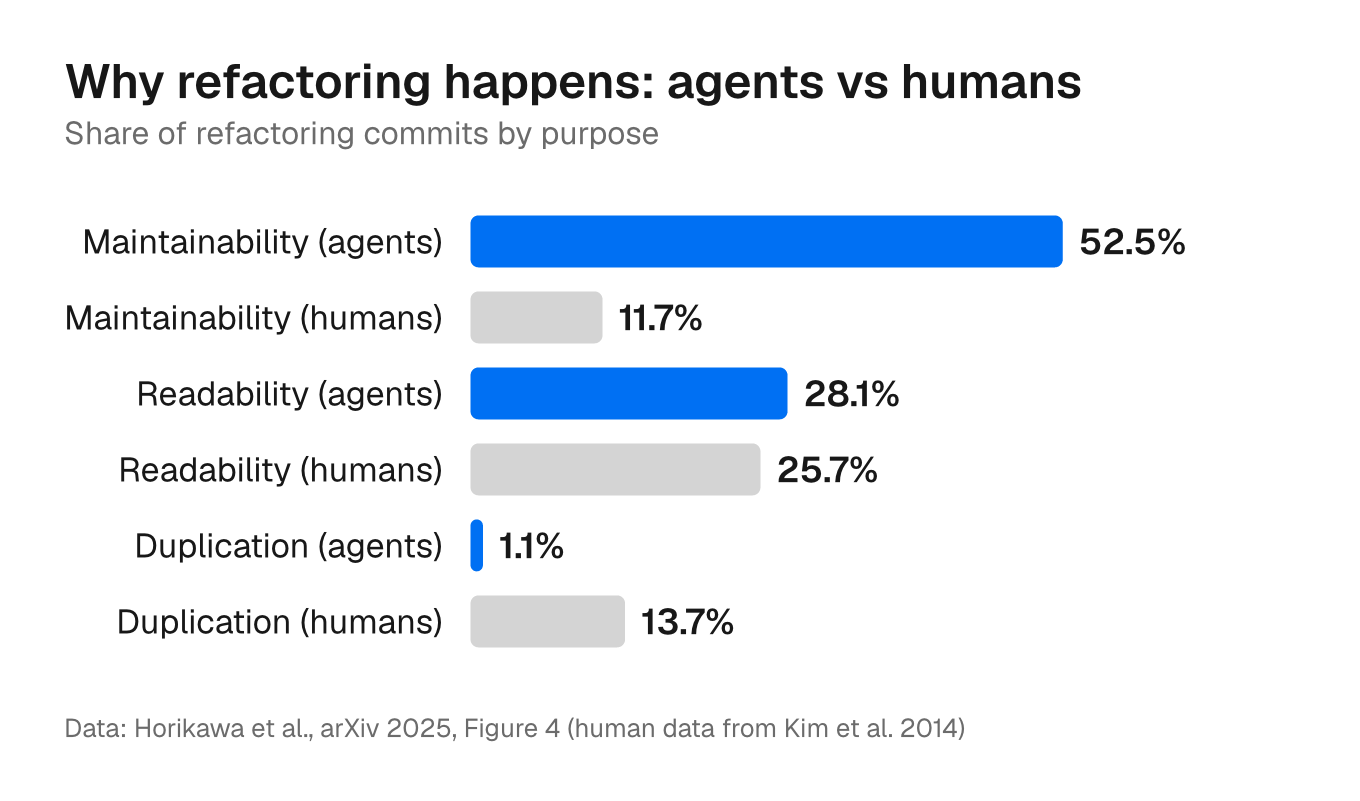
- The main reason was maintainability (52.5%), against 11.7% for humans. Duplication was only 1.1%, against 13.7% for humans.
- Classes got slightly smaller (median −15.25 lines for medium-level refactors), but code smells barely changed.
How Pico builds on it
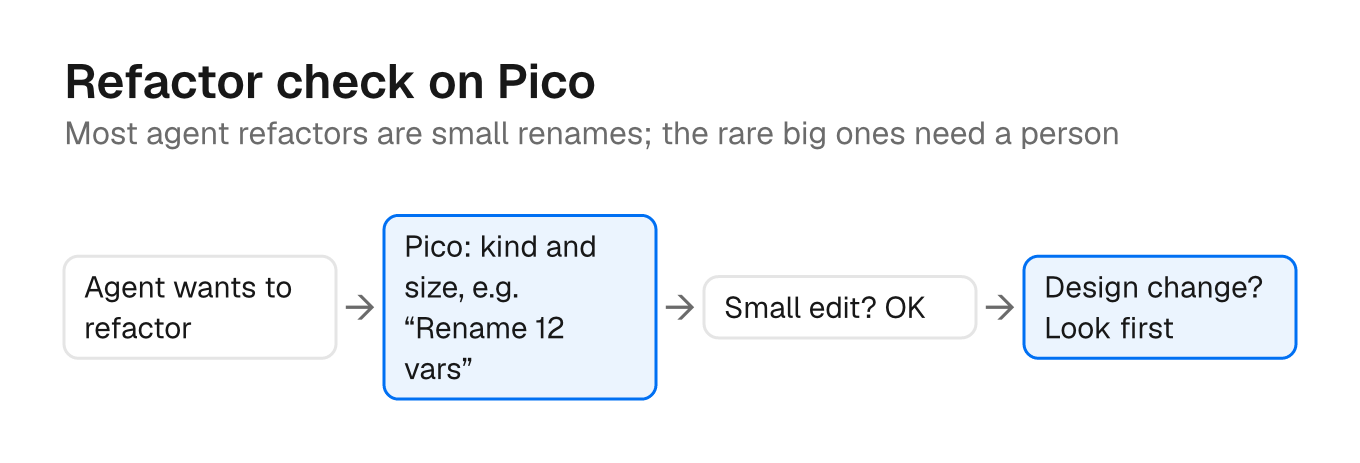
Agents mostly make small, safe renames, so asking about each one would be noise. Pico can show the kind and size of a refactor (“Rename 12 vars”) and let small ones pass with one OK. It should ask the person to look only when the agent wants a design-level change.
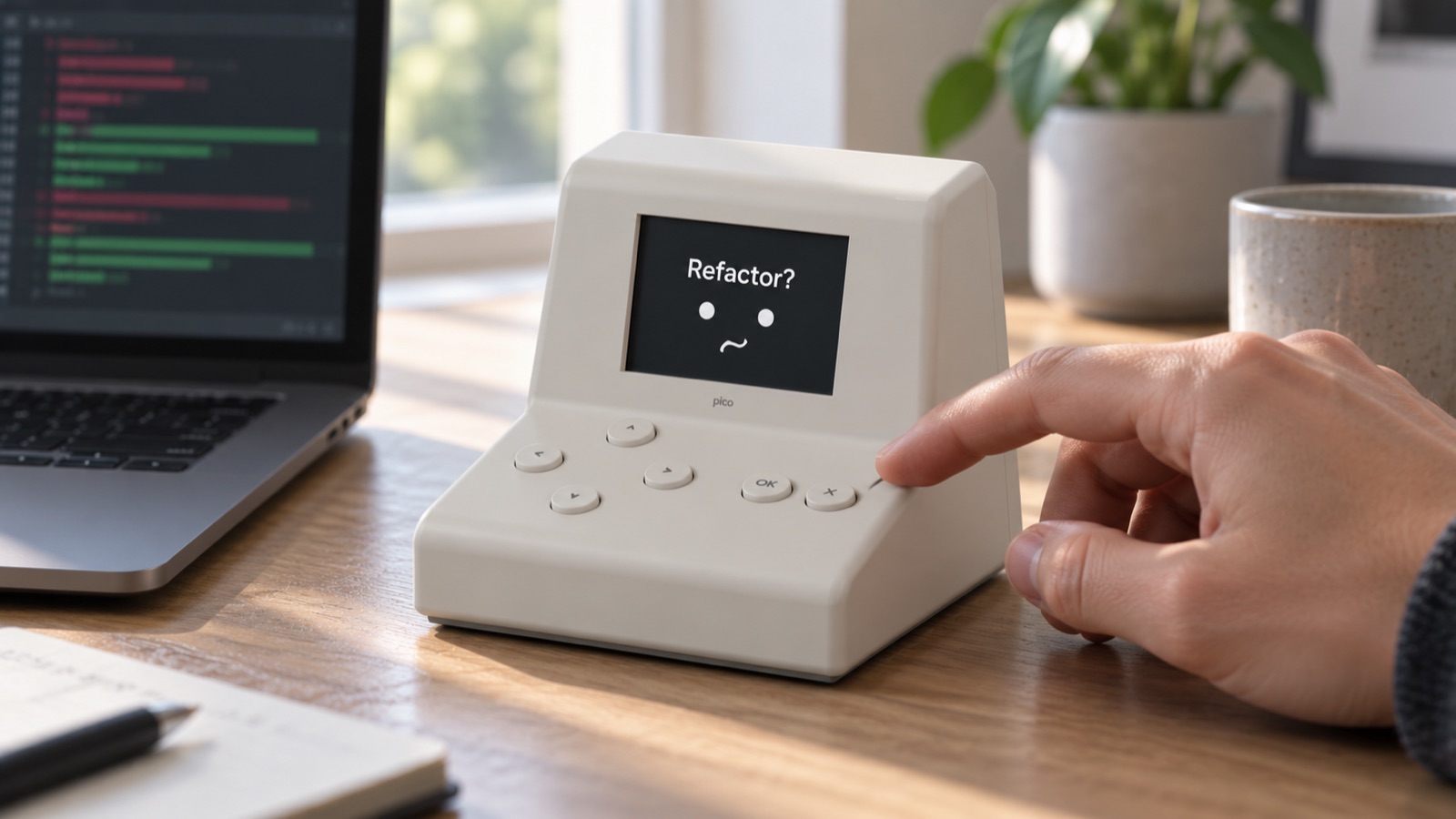
Concept image of Pico, generated with Codex.
Source
Kosei Horikawa, Hao Li, Yutaro Kashiwa, Bram Adams, Hajimu Iida, Ahmed E. Hassan, “Agentic Refactoring: An Empirical Study of AI Coding Agents,” arXiv preprint (submitted to ACM TOSEM) · Nara Institute of Science and Technology and Queen's University, 2025. DOI: 10.48550/arXiv.2511.04824.
11
Human-in-the-Loop Embodied Intelligence With Interactive Simulation Environment for Surgical Robot Learning
What they did
The authors extended SurRoL, a surgical robot simulator, so people can control it with two Touch haptic devices, like a surgeon’s controls. They recorded 100 demonstrations each from experts, non-experts and a script. Then they used each set to train a robot policy for a needle-picking task.
What they found
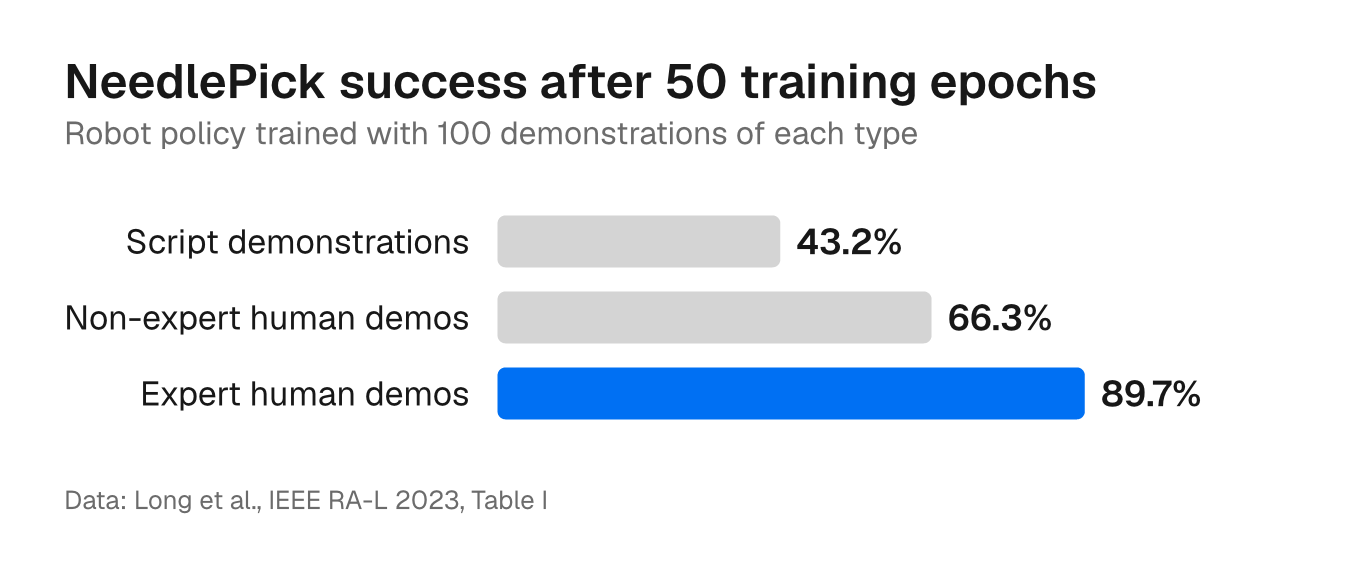
- After 50 training epochs, expert demos reached 89.7% success, against 66.3% for non-experts and 43.2% for the script.
- Expert-trained policies finished in 39.2 steps, against 101.8 for the script.
- After 100 epochs, expert demos still led with 99.3% success.
- Five new surgical training tasks were released.
How Pico builds on it
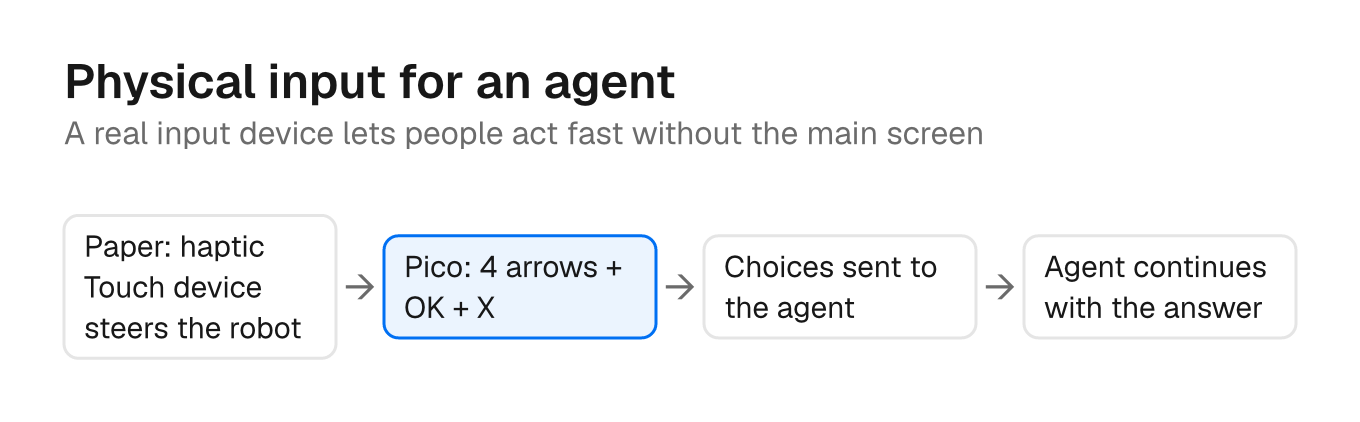
The paper shows that a real input device brings good human input into an autonomous system. Pico’s buttons are much simpler than haptic controls: four arrows and OK or X to choose between the agent’s options. That is enough for quick choices, but not for teaching new skills the way demonstrations do.
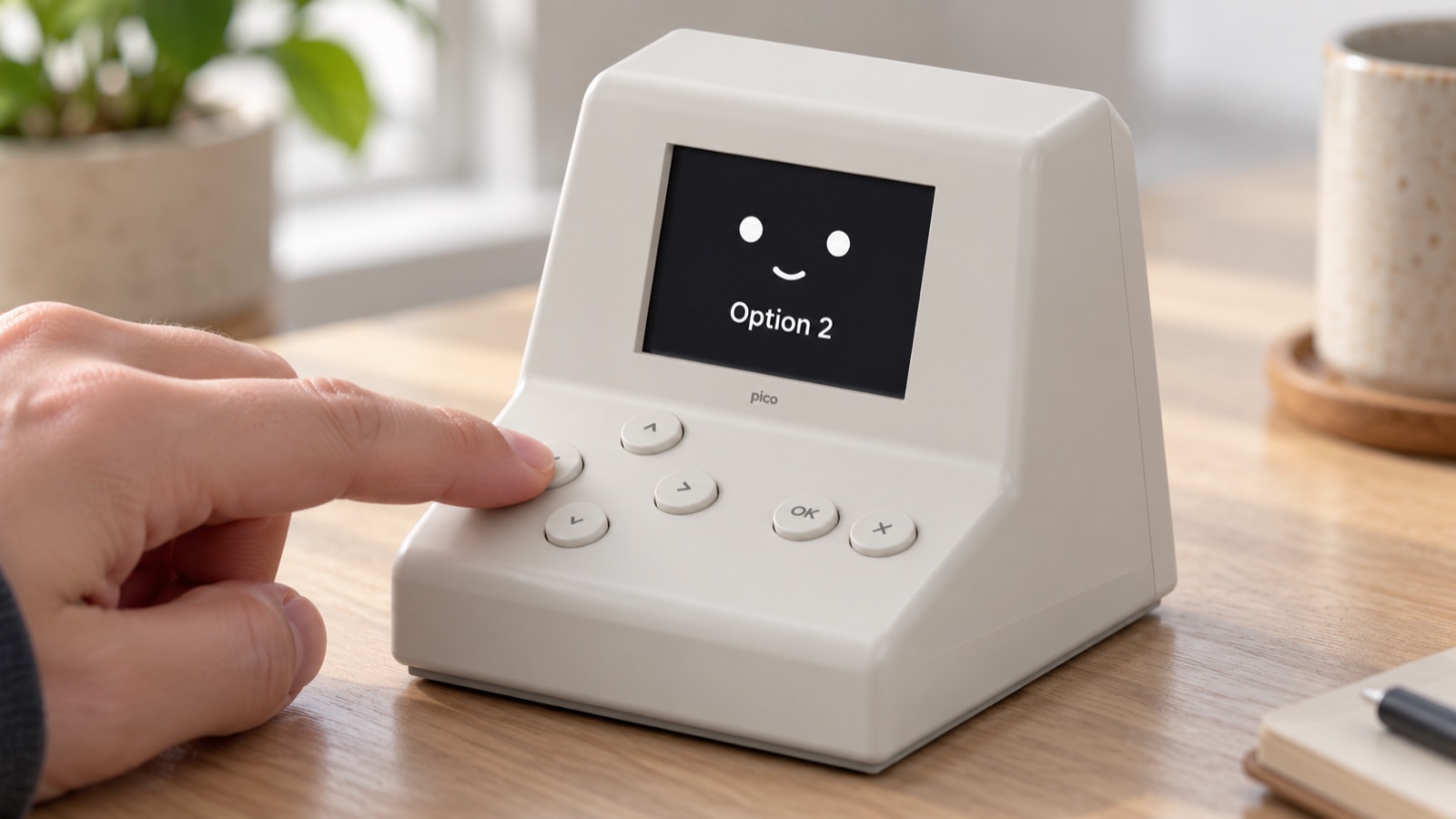
Concept image of Pico, generated with Codex.
Source
Yonghao Long, Wang Wei, Tao Huang, Yuehao Wang, Qi Dou, “Human-in-the-Loop Embodied Intelligence With Interactive Simulation Environment for Surgical Robot Learning,” IEEE Robotics and Automation Letters (RA-L), vol. 8 · The Chinese University of Hong Kong, 2023. DOI: 10.1109/LRA.2023.3284380.
12
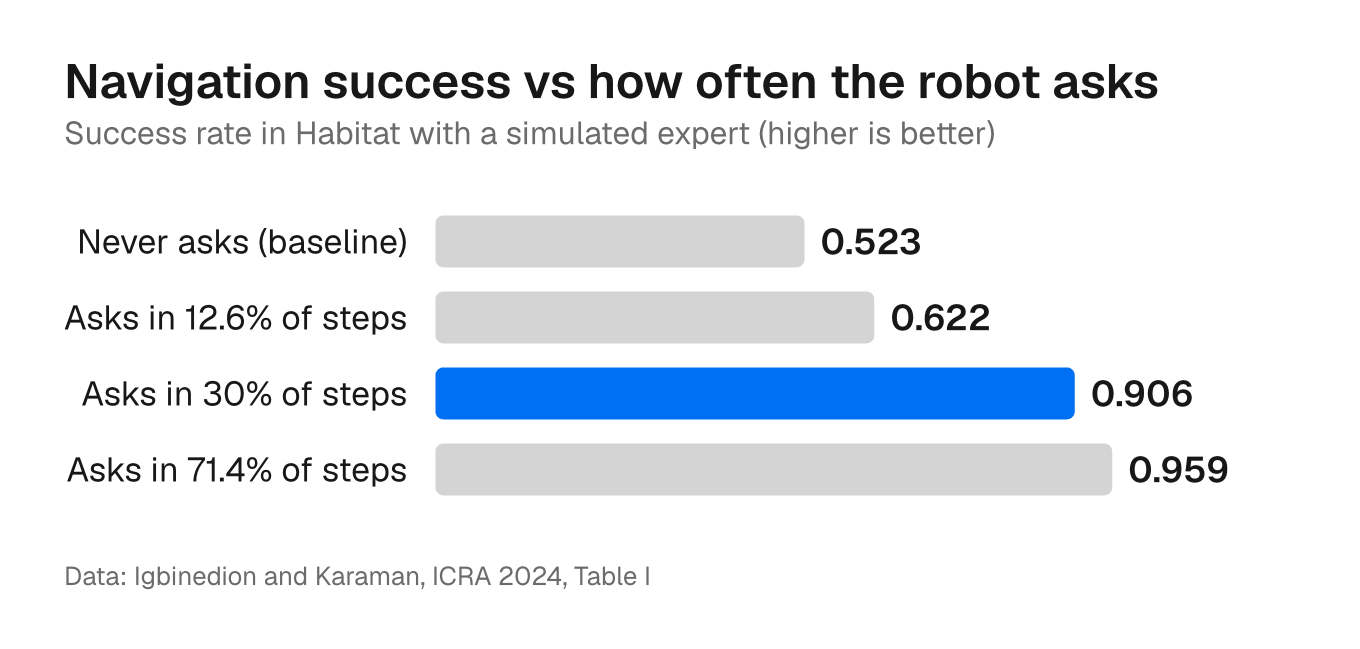
Learning When to Ask for Help: Efficient Interactive Navigation via Implicit Uncertainty Estimation
What they did
A navigation robot learns when to ask a human for help. A small extra policy estimates how unsure the robot’s vision features are and then decides to keep going or hand control to a person. The authors trained it in the Habitat simulator, then tested it with a real person in a new simulated building.
What they found
- Success went from 0.523 with no help to 0.906 when the robot asked in 30% of steps.
- Asking in 71.4% of steps only raised success to 0.959.
- In the new building, the robot alone succeeded only 0.07 of the time. With a real human it reached 0.929 while asking in 23% of steps.
- The robot did not ask when it was confident.
How Pico builds on it
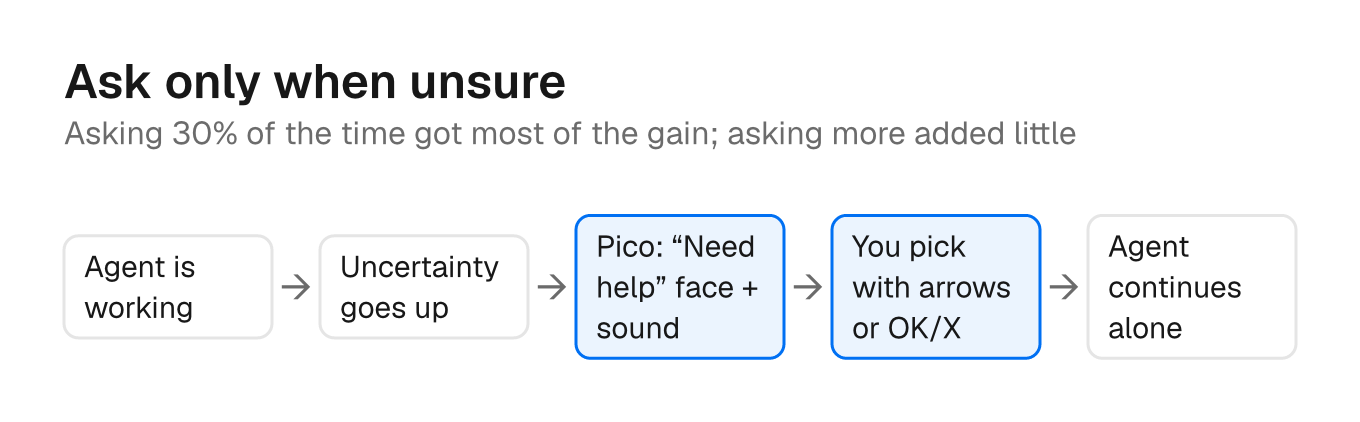
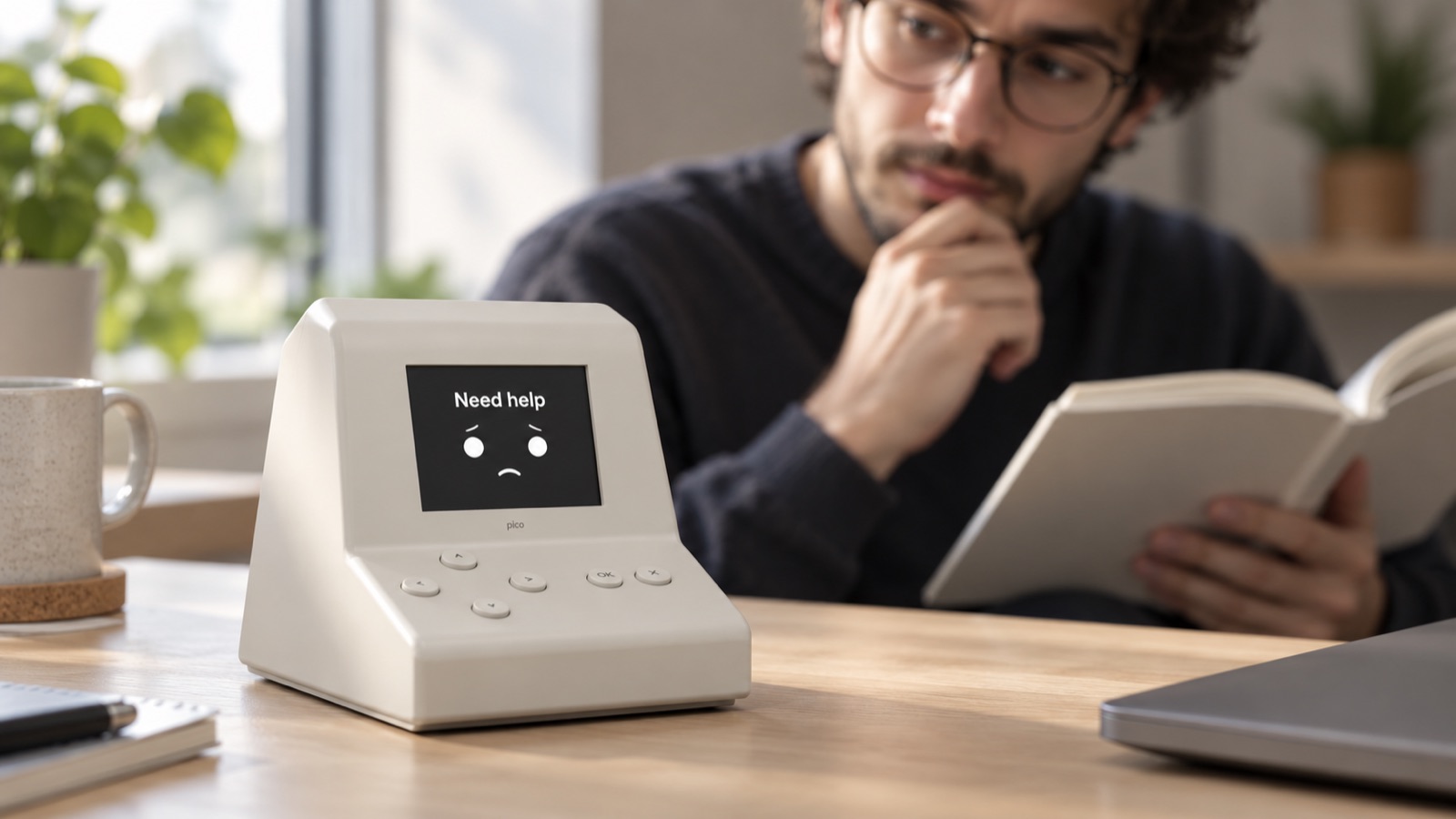
This paper supports Pico’s main loop: interrupt the person only when the agent is unsure, and let it work alone otherwise. Pico shows a “Need help” face and plays a sound at those moments. The answer comes back from the arrows or OK and X. Coding agents do not yet give a clean uncertainty signal, so Pico relies on the agent’s own requests.
Concept image of Pico, generated with Codex.
Source
Ifueko Igbinedion, Sertac Karaman, “Learning When to Ask for Help: Efficient Interactive Navigation via Implicit Uncertainty Estimation,” ICRA 2024, IEEE International Conference on Robotics and Automation · MIT Laboratory for Information and Decision Systems, 2024. DOI: 10.1109/ICRA57147.2024.10610965.
13
Balancing User Control and Perceived Robot Social Agency through the Design of End-User Robot Programming Interfaces
What they did
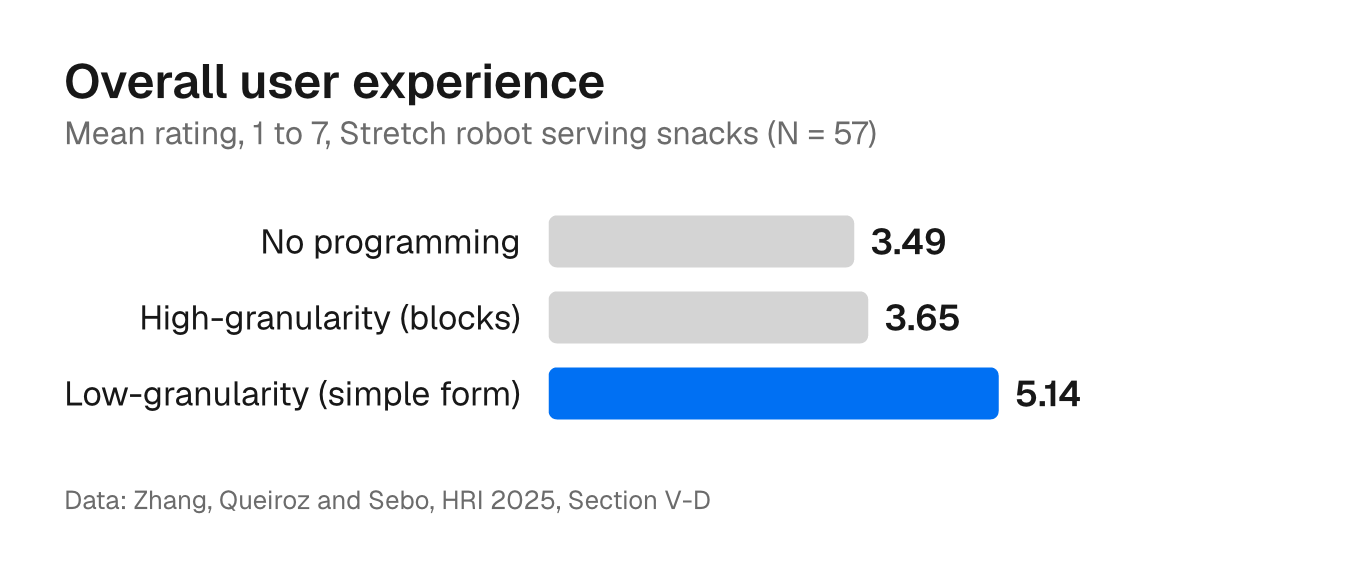
57 people set up a Stretch robot that served them a snack. One group used detailed block programming, one used a simple form (persona, speed, stopping distance) and one could not customize at all. The authors measured how well the robot matched people’s wishes and how alive and social it felt.
What they found
- Overall experience was best with the simple form (5.14 of 7), against 3.65 for blocks and 3.49 for no customizing.
- Both customizing options matched people’s wishes better than none (5.39 and 4.80 vs 3.19).
- With blocks, the robot felt less autonomous (2.85 vs 4.33) and less socially intelligent.
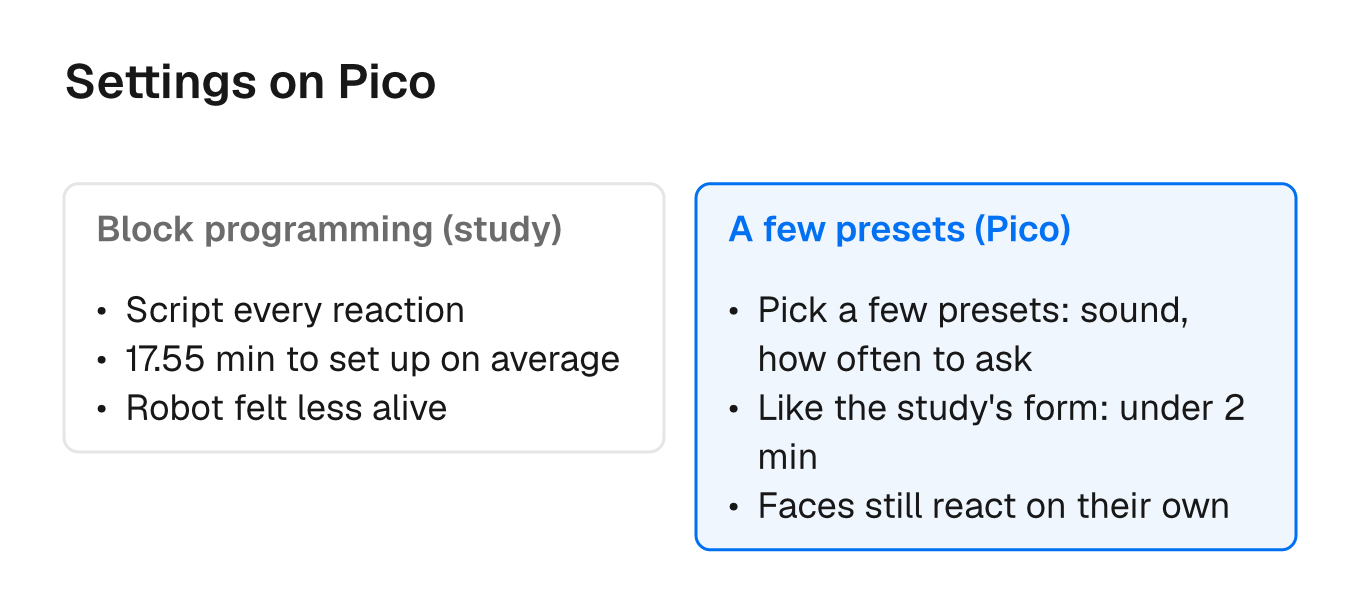
- Setup took 17.55 minutes with blocks and under 2 minutes with the form.
How Pico builds on it
The study suggests Pico should give a few simple presets, such as sound and how often to ask, instead of a full rule editor. Pico’s faces should still react on their own. This keeps Pico feeling alive while the user stays in control of what matters.
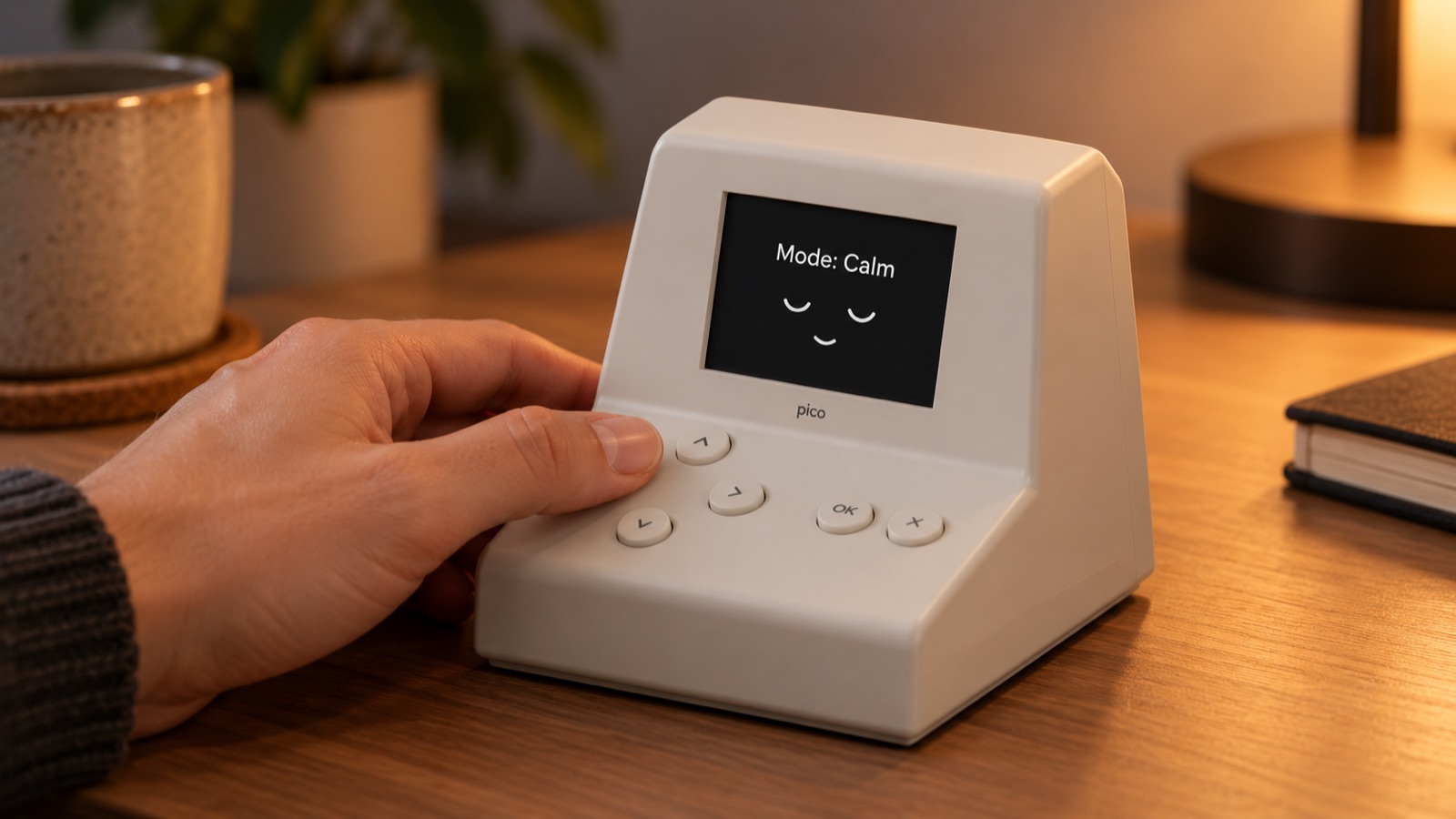
Concept image of Pico, generated with Codex.
Source
Alex Wuqi Zhang, Rafael Queiroz, Sarah Sebo, “Balancing User Control and Perceived Robot Social Agency through the Design of End-User Robot Programming Interfaces,” HRI 2025, 20th ACM/IEEE International Conference on Human-Robot Interaction · University of Chicago, 2025. DOI: 10.1109/HRI61500.2025.10974063.